
Singapore architecture is a captivating blend of history, culture, and innovation, reflecting its unique position as a vibrant city state in Southeast Asia. The influence of British colonial rule and Sir Stamford Raffles is evident in the city’s early architecture, with colonial-era buildings and urban planning shaping the foundation of Singapore’s built environment. The transition to independence in 1965 marked a turning point, inspiring new directions in architectural development and national identity.
Singapore’s architecture draws from different places, incorporating multicultural and global influences that enrich its urban landscape. The Japanese occupation during World War II also left a significant impact on Singapore’s built environment and historical narrative. Over the decades, architects and planners have actively created a distinctive urban landscape, blending heritage with innovation.
From colonial-era national monuments to pioneering contemporary architecture, Singapore’s built heritage and skyline tell stories of its past and visions for the future. This article invites you to explore the city’s architectural gems, from iconic buildings and galleries to residential complexes and parks, uncovering the rich heritage and modern developments that define this island.
Introduction to Built Heritage
Singapore’s built heritage unfolds as an exquisite sanctuary where the city-state’s profound legacy, curated cultural tapestry, and architectural refinement converge in serene harmony. As you wander these contemplative streets, you’ll discover a thoughtfully orchestrated symphony of colonial-era edifices, contemporary monuments reaching skyward, and meticulously restored landmarks that whisper stories of Singapore’s artisanal evolution through time.
The National Gallery Singapore, nestled within the heritage embrace of the former Supreme Court and City Hall, stands as a luminous testament to this curated legacy. Within its sacred halls, visitors encounter a carefully selected collection of Southeast Asian artistry, offering gentle revelations into the creative soul and cultural exchanges that have shaped this region with patient craftsmanship. Whether you find yourself contemplating the neoclassical facades or immersing in the gallery’s thoughtful exhibitions, Singapore’s built heritage extends a quiet invitation to explore the mindful intersection of art, architecture, and history in the tranquil heart of Asia.
Route 1: Civic District – National Gallery Singapore and the Former Supreme Court
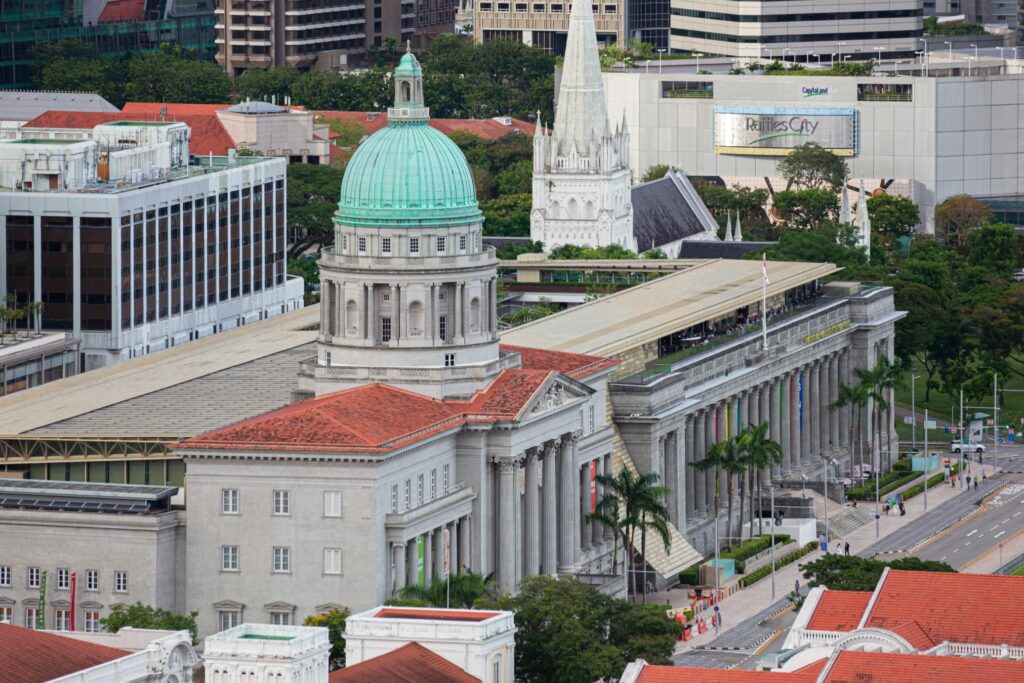
Begin your architectural journey in Singapore’s Civic District, home to some of the city’s most treasured national monuments. At the heart of this historically significant site lies the National Gallery Singapore, an exceptional museum housed in the old Supreme Court and City Hall buildings. These historic buildings, restored with care, showcase Singapore’s built heritage and offer a stunning setting for art exhibition displays that integrate seamlessly with the architectural space.
- Starting Point: City Hall MRT Station (Exit B).
- Best Time to Visit: Late afternoon, when the golden light enhances the facade and the Marina Bay skyline is visible from the rooftop padang deck.
National Gallery Singapore and Former Supreme Court
The National Gallery Singapore is a landmark project that seamlessly integrates historic architecture with modern galleries. Visitors can explore a vast range of artworks and exhibitions that celebrate the region’s rich artistic heritage. Don’t miss the opportunity to take a guided tour or a virtual tour to discover the stories behind the artworks and the building’s architecture at your own pace.
The Arts House and Victoria Concert Hall
Nearby, the Arts House—once Singapore’s Parliament House—and the Victoria Theatre & Concert Hall stand as testaments to the city’s colonial past and vibrant arts scene. The concert hall, with its iconic clock tower and elegant facade, continues to host world-class performances, blending heritage with contemporary culture.
Route 2: Joo Chiat & Katong – Shophouses and Built Heritage
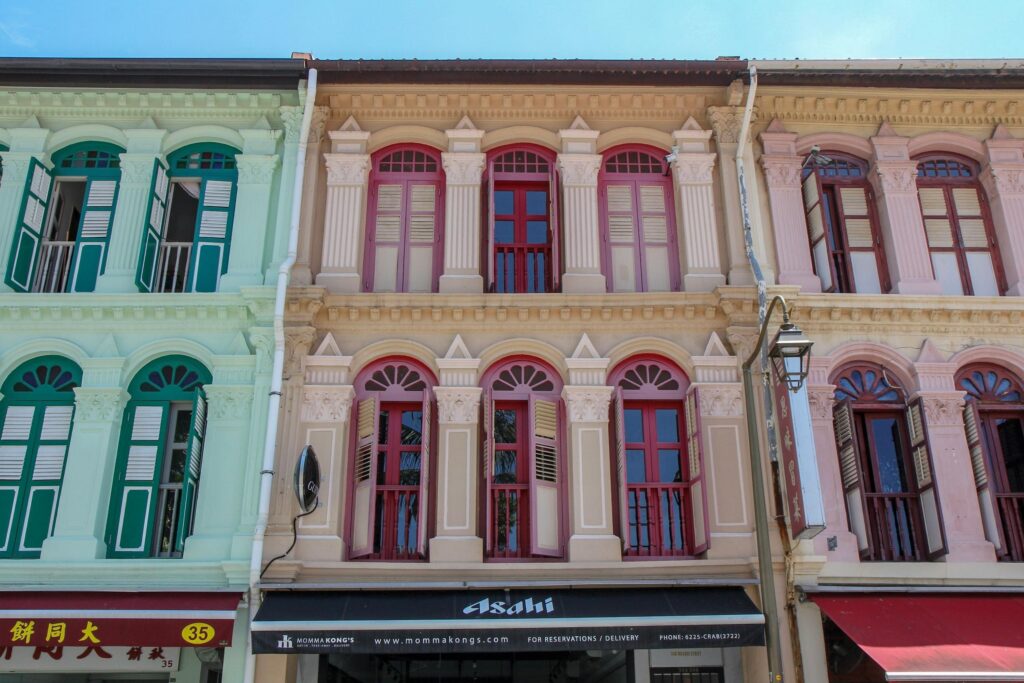
Travel east to Joo Chiat and Katong, neighborhoods famed for their colourful Peranakan shophouses. These houses reflect a fusion of Chinese, Malay, and European influences, embodying Singapore’s multicultural heritage and architectural diversity. The area is also home to heritage shops that contribute to the vibrancy and unique character of Singapore’s historic districts.
- Starting Point: Paya Lebar MRT Station.
- Best Time to Visit: Morning or late afternoon for the best light on the vibrant facades.
Shophouses of Koon Seng Road and Joo Chiat Road
Walk along Koon Seng Road to admire the intricate ceramic tiles and floral motifs that adorn these heritage houses. The iconic “five-foot ways” provide shaded walkways, a design feature influenced by Singapore’s tropical climate and urban master plan.
Holy Infant Jesus Church and Marine Parade Conservation Area
The Holy Infant Jesus Church, a designated national monument, exemplifies Singapore’s religious and architectural heritage. Nearby, the Marine Parade Conservation Area features mid-20th century Art Deco residential complexes and old buildings that highlight the city’s post-war development.
Route 3: Tiong Bahru – Modernist Architecture and Streamline Moderne Living
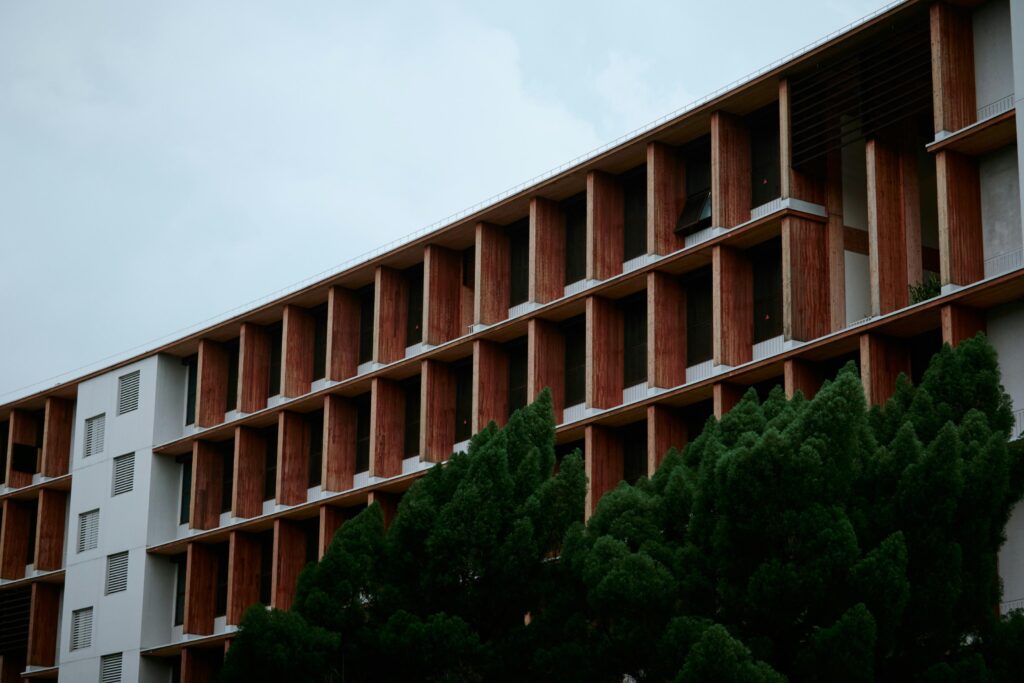
Tiong Bahru is one of Singapore’s oldest housing estates and a showcase of modernist architecture by renowned architects such as Tan Cheng Siong. Alongside its iconic residential buildings, the neighborhood also features offices and commercial spaces that contribute to its vibrant urban character. Its Streamline Moderne style is characterized by clean curves, spiral staircases, and features designed to optimize natural ventilation in the tropical climate. At one point, the sweeping view from the upper floors offers a striking perspective of the district’s unique blend of heritage and modernity.
- Starting Point: Tiong Bahru MRT Station.
- Best Time to Visit: Weekend mornings, paired with brunch at local cafes.
The Horseshoe Block and Post-War Flats
Explore the distinctive U-shaped “Horseshoe” block and the post-war walk-up flats, which reflect Singapore’s rapid construction efforts following World War II. The neighborhood’s murals and market building celebrate the memories and community spirit of this unique area.
Marina Bay Developments: Icons of the New Millennium
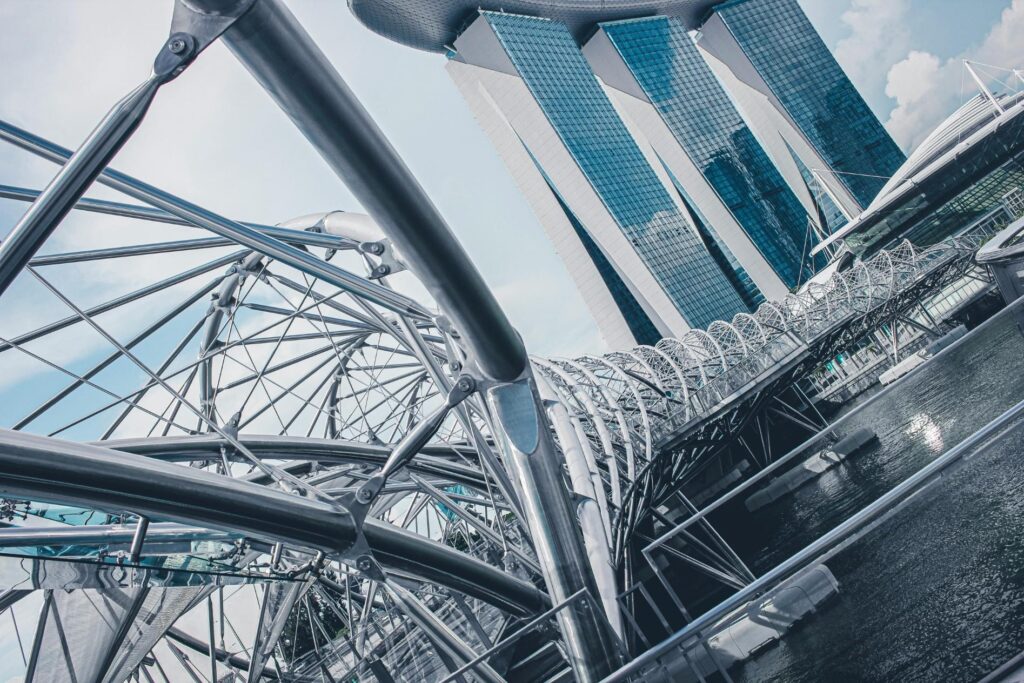
Marina Bay has blossomed as a sanctuary of Singapore’s contemplative vision, where architectural heritage meets artisanal innovation in a carefully curated collection of design sanctuaries. At its serene heart stands Marina Bay Sands, a testament to Moshe Safdie’s refined craftsmanship—three towers ascending toward tranquility, crowned by a sky park that invites quiet contemplation amidst meticulously tended gardens.
This landmark, alongside the contemplative curves of the ArtScience Museum, the spiraling meditation of the Helix Bridge, and the lush serenity of Gardens by the Bay, has transformed Marina Bay into a refined sanctuary for cultural reflection and mindful gathering.
These developments offer more than mere vistas; they provide curated spaces where both locals and discerning visitors may pause, wander through artisanal landscapes, and savor the sophisticated essence of Singapore’s urban heritage. The area’s thoughtful integration of natural elements with architectural refinement has established new standards for contemplative city planning throughout Southeast Asia.
Contemporary Architecture: Shaping Singapore’s Skyline
Singapore’s architectural landscape unfolds as a contemplative sanctuary of curated design, where the city’s devotion to artisanal craftsmanship and visionary aesthetics finds its most profound expression. In recent seasons, master craftsmen of space have transcended conventional boundaries, birthing structures that whisper both visual poetry and environmental reverence.
The Solaris edifice, conceived through the refined vision of CPG Consultants, emerges as a meditation on sustainable artistry—its innovative embrace of verdant technology and mindful features creating an atmosphere of serene functionality. Orchard Central, manifested by the contemplative hands of DP Architects, reimagines commercial sanctuary through its vertical gardens and breath-filled spaces, inviting visitors into a curated experience of open-air tranquility.
These architectural offerings, among countless others carefully selected across the cityscape, reflect Singapore’s unwavering devotion to sustainable refinement and design excellence. The city’s ever-evolving silhouette reveals itself as a living gallery of sophisticated contemplation—a sanctuary where modernist heritage and contemporary artistry converge in harmonious dialogue, establishing Southeast Asia’s most profound architectural meditation.
Sustainable Architecture: Green Visions for the City
Sustainability forms the very sanctuary of Singapore’s architectural heritage, where visionary artisans cultivate serene, contemplative spaces that harmonize with nature’s own refined wisdom. At the forefront stands the meticulously crafted Parkroyal on Pickering, where WOHA’s contemplative design unfolds cascading gardens, elevated terraces, and artisanal water features that blur the boundaries between built sanctuary and living landscape.
Among the carefully curated exemplars, Khoo Teck Puat Hospital emerges as a healing sanctuary renowned for its contemplative gardens and thoughtfully crafted energy stewardship, while the School of Art, Design and Media at Nanyang Technological University graces the cityscape with its signature sloping verdant crown.
These architectural sanctuaries illuminate the refined craftsmanship and contemplative vision of Singapore’s master artisans, who are curating a city where sustainability and beauty exist in serene harmony. As you wander through Singapore’s thoughtfully composed spaces, you’ll discover that this commitment to green architecture transcends mere fashion—it represents the very essence of the city’s contemplative urban identity, carefully cultivated and artisanally preserved.
Singapore’s Urban Planning and Conservation: Balancing Development and Heritage
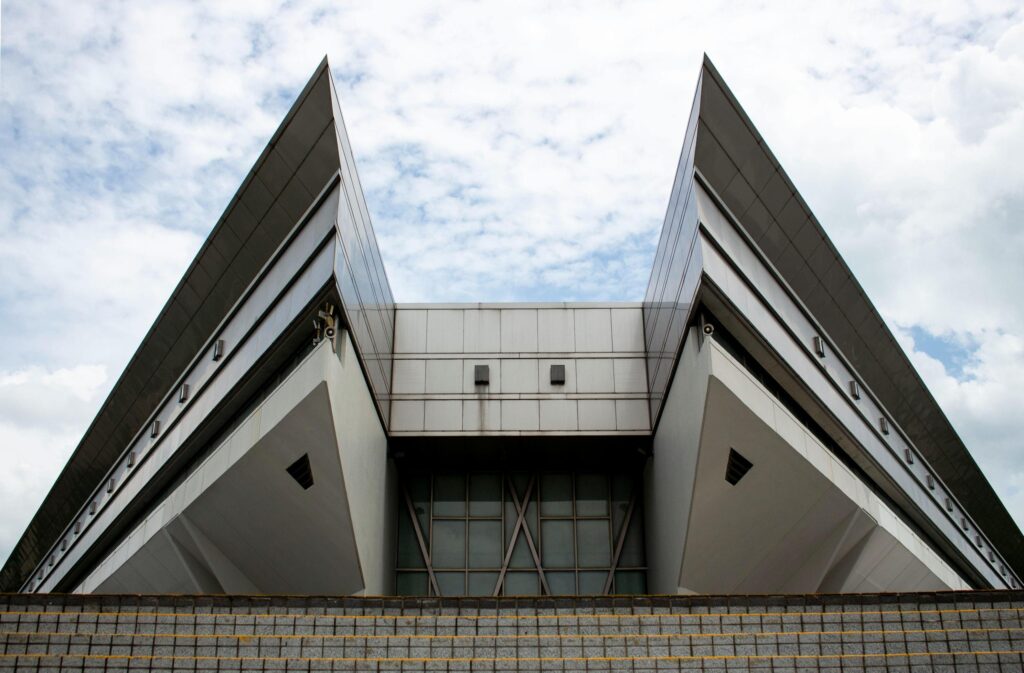
Singapore’s Urban Redevelopment Authority has played a pivotal role in conserving the city’s built heritage while facilitating contemporary development. Notably, Government Hill (now Fort Canning Park) stands as a significant historical site, reflecting Singapore’s colonial past and its importance in urban planning and conservation efforts. The influence of these planning and conservation initiatives is evident in Singapore’s architectural landscape, shaping the city’s unique blend of heritage and modernity.
The master plan ensures that heritage sites, parks, and nature coexist harmoniously with new construction projects, preserving the stories embedded in Singapore’s architecture and creating a city in a garden. Many conserved parks and green spaces also feature trails, offering nature walks and heritage paths for visitors to explore.
Discover Singapore’s Architectural Gems at Your Own Pace
These tours offer a starting point to explore Singapore’s diverse architecture—from historic streets and colonial landmarks to contemporary skyscrapers and green parks. Whether you visit galleries, museums, or residential complexes, you’ll find a rich range of attractions, food experiences, and shopping opportunities that bring the city’s heritage and modernity to life.
Lace up your shoes, charge your camera, and embark on your own architectural adventure across this remarkable island in Asia and read more on Neighbourhood Life SG, where every building and street tells a story of Singapore’s past, present, and future.