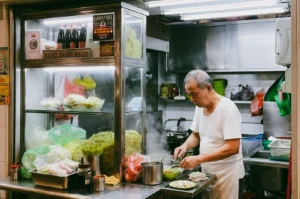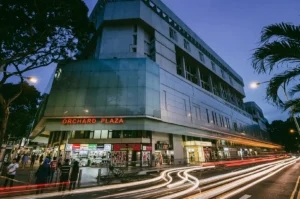
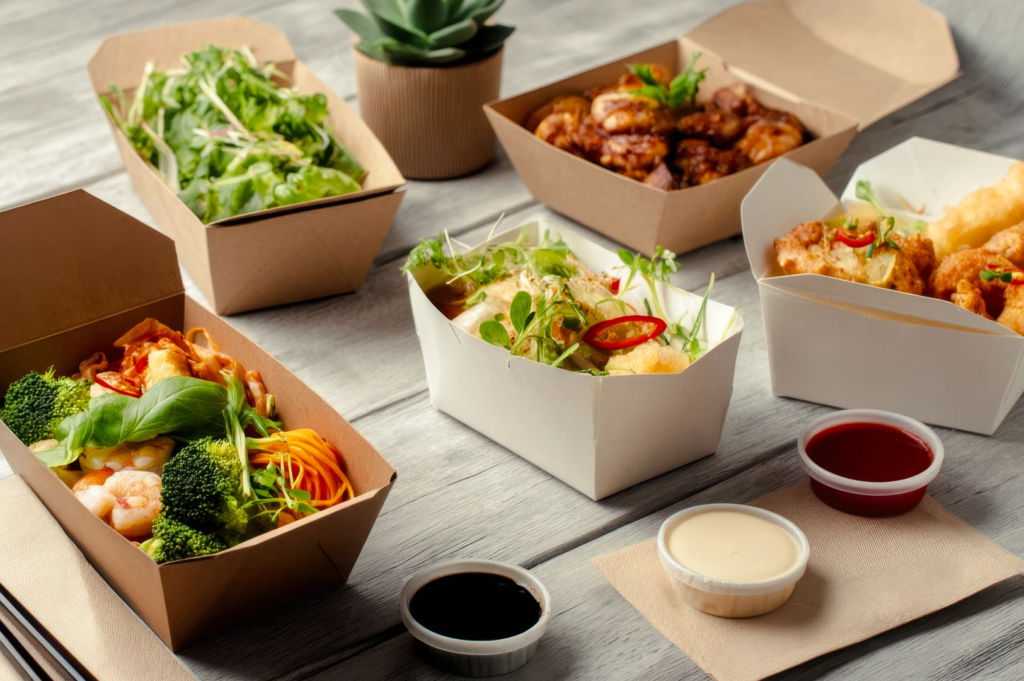
I still remember the first time I was tasked with a family-sized tapau mission. It was a rainy Saturday evening, and my mum handed me a list and some cash, sending me to the nearby hawker centre to bring back dinner for five. I fumbled my order food in a mix of English and broken Mandarin, stood in the wrong place while waiting, and ended up with a precariously balanced tower of plastic bags filled with steaming hot soup. One of the drink bags, tied with that iconic red plastic string, gave way just as I reached my lift lobby. The mess of milky teh C peng on the floor was my first lesson in the art of the takeaway.
Hawker centers in Singapore are outdoor food courts with various small stalls and a common seating area, central to daily life and offering affordable local dishes.
Tapau, the Singaporean term for taking food away, is more than convenience; it’s a way of life deeply embedded in the tapau culture Singaporeans embrace. It feeds families on busy nights, brings lunch to desks, and cares for elderly parents. This cultural ritual has its own language, etiquette, and unwritten rules.
Singapore’s food culture moves between fast-paced hawker queues and deeply contemplative dining traditions. At one end is tapau culture; at the other are intimate counters like sushi masa by ki-setsu, where a chef serves each course with meticulous attention to seasonality and technique.
If you’ve felt anxious watching the chaos of a hawker centre during peak hour, this guide is for you. Mastering tapau is one of the quickest ways to feel like a true local. Carrying cash at hawker centres gives you freedom to enjoy various food options without relying on credit cards. Let’s break down the lingo and logistics so you can carry your cai png with confidence.
Decoding the Tapau Culture Singapore: Common Questions & Anxieties at Hawker Stalls
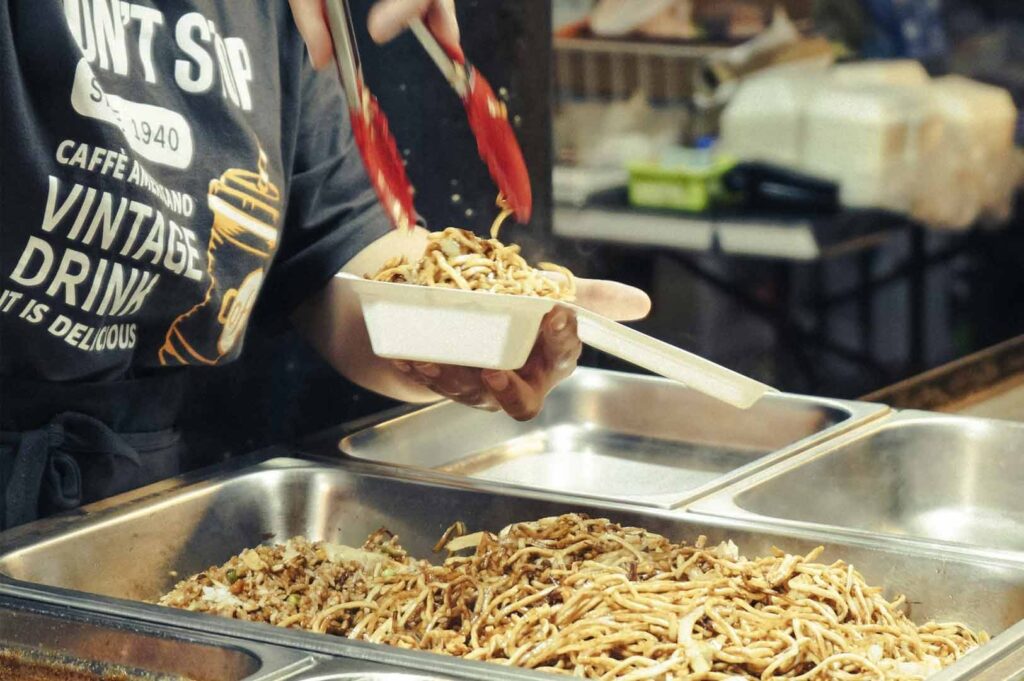
When I first started, I had a million questions. Is it rude to ask for no bean sprouts when the queue is a mile long? Do I have to pay extra for the container? What if I spill soup on the MRT? Let’s address these common fears head-on. The biggest misconception is that tapau is free. It’s not. Most hawker stalls charge an extra $0.20 to $0.50 per item for packaging, covering the cost of foam boxes, plastic containers, or paper wrappers.
For first-timers, the main anxiety is holding up the queue. Don’t worry, hawker stalls are used to it. A simple “takeaway, please” works perfectly. Be ready with your order and payment, as most hawker centers don’t accept credit cards, so bringing cash is essential. Ordering is typically straightforward and quick since vendors serve many customers rapidly. Understanding these basics will help you navigate the bustling hawker center with confidence and enjoy the rich tapau culture Singaporeans cherish.
When you order food for tapau, it is usually prepared and packed for you to take away.
Insider Knowledge: The Lingo
Tapau / Da Bao (打包): The magic words. Use them when you place your order.
Kopi / Teh: Coffee / Tea. Specify how you want it: peng (iced), C (with evaporated milk), siew dai (less sugar). A simple “Kopi C peng, tapau” will get you an iced coffee with evaporated milk to go.
Mai Hiam: No chili. Crucial if you can’t take the heat.
Jia La: Add chili.
After eating, it is customary to clean your table, and you should use a tray to return your used utensils to the designated return points.
Navigating a Tapau Mission
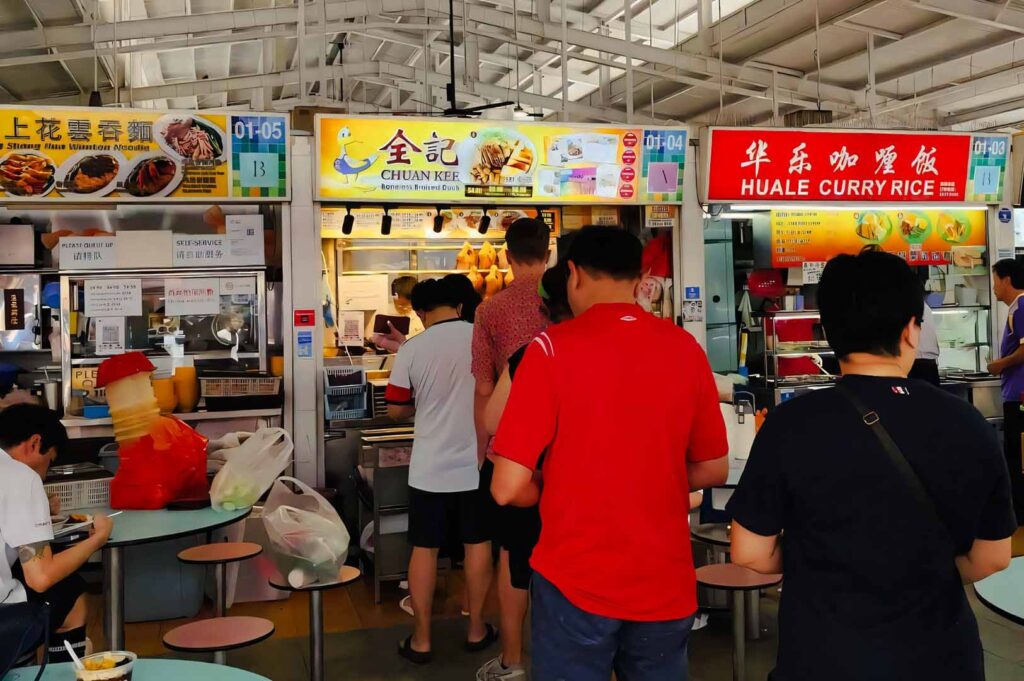
Imagine you’re at Ghim Moh Market & Food Centre, one of the best places to order food in Singapore, and you’re craving a packet of duck rice for lunch. Here’s how the typical tapau scenario unfolds:
Join the Queue: First, you spot the right line—some hawker stalls have separate queues for ordering and collection. You patiently wait your turn, noticing the long queue at this popular stall is a good sign that the food is worth the wait.
Place Your Order Clearly: When it’s your turn, you make eye contact with the uncle behind the counter and confidently say, “One duck rice, breast meat. Mai Hiam. Tapau.” Leading with the main item, adding any modifications, and ending with “tapau” signals you want your meal packed to go. Many dishes here are expertly seasoned, so don’t hesitate to ask for recommendations if you want something especially flavorful.
Confirm Price and Pay: The uncle repeats the price, which includes the packaging surcharge. For example, a $4.50 packet of chicken rice might cost around $4.70. Having small change on hand is appreciated, especially at older, cash-only stalls.
Step Aside and Wait: After paying, you step away from the ordering counter to avoid blocking the flow. You find a spot where you can see the stall but don’t block an empty table or a seat reserved with a tissue packet or water bottle.
Listen for Your Order: The uncle calls out “Duck rice takeaway!” or catches your eye and nods. You approach, collect your neatly packed meal, and do a quick mental checklist—did you get cutlery? Is the chili packed separately? If you ordered soup, is the lid secure? This final check saves you from surprises like missing soup for your bak chor mee.
Share and Enjoy: Back at your table or office, you might share your dishes with friends so everyone can sample a variety of flavors without getting too full. There’s a lot to explore—from rice and noodles to seasoned meats—so sharing lets you try more in one visit.
By picturing this typical tapau culture Singapore moment, you can navigate the bustling hawker center like a pro, embracing a local ritual that’s both practical and deeply rooted in Singapore’s food scene.
In the local lingo section, note that the Oxford English Dictionary added several local Singaporean terms in its March 2025 update.
Hawker centers provide a communal dining experience where people can share different dishes with friends.
Practical Tips for Tapau Success and Exploring Nasi Lemak and Other Local Dishes
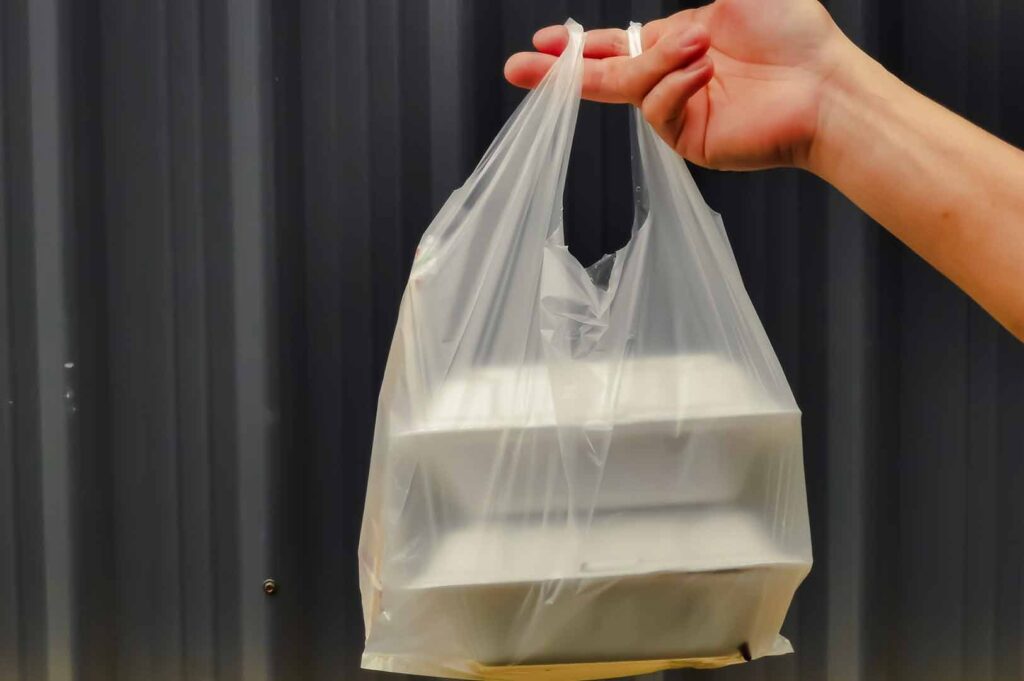
Carrying your food home is the final challenge. Over the years, I’ve developed a system to avoid another teh C peng disaster.
Choose Dishes That Travel Well: If you have a long journey, I think dry noodles (like wanton mee) are a better bet than soupy ones (like laksa or fish head curry, which is known for its Chinese culinary influence). Rice dishes like nasi lemak, with its fragrant rice cooked in coconut milk and wrapped in banana or palm leaves, are almost always a safe option—especially when paired with seafood mixed accompaniments or fresh vegetables for a healthier choice. Popular dishes to try at hawker centers include Hokkien mee, char kway teow, chicken rice, and nasi lemak. Fried items like carrot cake or oyster omelettes tend to get soggy after about 30 minutes, so I only tapau those if I’m eating them quickly.
Bring Your Own Bag: The thin plastic bags provided are often flimsy. I always carry a reusable tote bag. It’s sturdier, better for the environment, and makes it easier to carry multiple packets. Food ordered for tapau is commonly packed in traditional brown paper, plastic bags, or plastic containers.
The Art of Carrying Drinks: Those drinks in plastic bags with a string handle are an engineering marvel, but a precarious one. I’ve found that placing a folded tissue packet at the base of the bag where the string is knotted can help reinforce it. For larger orders, I’d suggest using a cardboard drink carrier, which many drink stalls provide if you ask.
Separate Your Chili: If you like spicy food but hate sogginess, always ask for the chili to be packed separately (“hiam jio buay zai” in Hokkien). Most hawker stalls do this automatically for dishes like char kway teow, but it never hurts to ask.
Pro Tip: The Multi-Stall Family Tapau
When you’re buying for the whole family from three or four different stalls, strategy is key. My personal approach is to order food from the stall with the longest queue first. While waiting, I go to the other stalls with shorter queues to place my other orders. This minimizes my total waiting time. Planning my route through the hawker centre helps me avoid crisscrossing the crowded space with bags of hot food.
The practice of tapau involves packing food from hawker centres to be eaten elsewhere, such as at home or the office. Tapau culture is a reflection of the fast-paced, urban, and food-obsessed lifestyle in Singapore.
Dining In vs. Tapau: Food Courts and Restaurants in Singapore
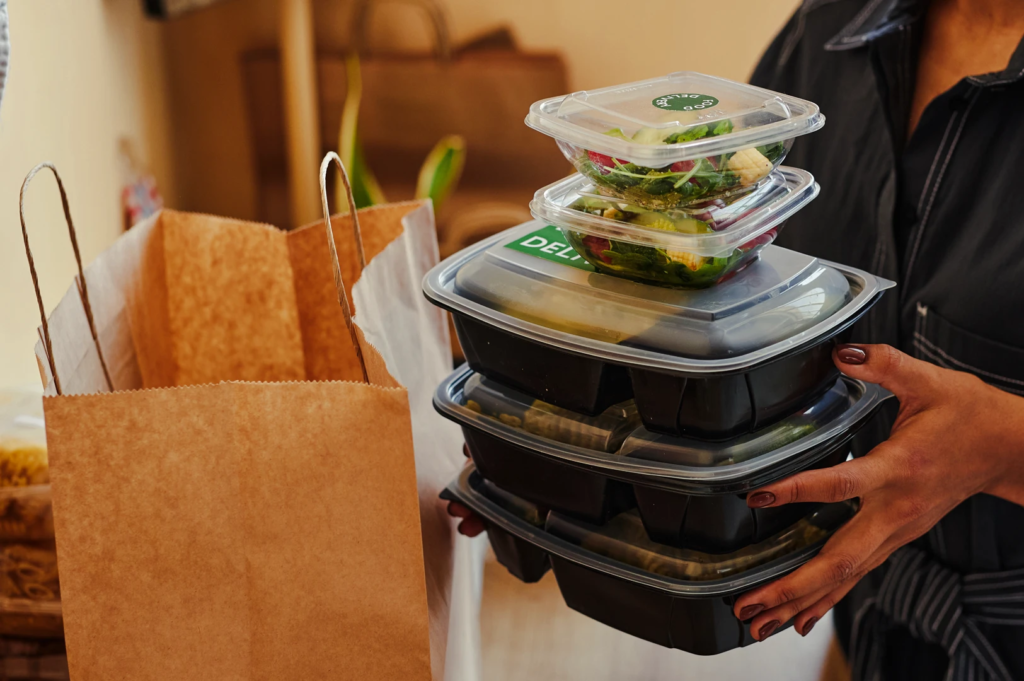
Is it okay to tapau from a sit-down restaurant or food courts? Absolutely. In fact, it’s become even more common since COVID. Most casual restaurants are perfectly fine with it and won’t charge extra. Fancier establishments might have specific policies, so it’s best to ask. Some places, like Dumpling Darlings, even offer fancy dumplings for takeaway, appealing to those looking for something a bit more indulgent.
Many restaurants now offer island wide delivery, making it super easy to enjoy local dishes like kaya toast, half boiled egg, or even pizza from the comfort of your home. For example, Fat Prince is an Istanbul-inspired cafe and kebabery in Tanjong Pagar with takeaway options, Publico Ristorante offers a 20% discount on their pizzas for takeaway orders, Bakalaki Greek Taverna provides island-wide free delivery for authentic Greek cuisine, Naga Imo is known for fresh sushi and gyoza available via WhatsApp, and Swee Choon offers island-wide delivery for their dim sums, baos, and buns.
When comparing food courts and hawker centers, keep in mind that the competitive nature of hawker centers often leads to better food quality compared to food courts.
Tapau Etiquette: Unwritten Rules Every Pro Should Know
Across Singapore’s neighbourhood food centers, tapau reflects a shared understanding of courtesies between vendors and patrons. Takeaway options vary among hawker stalls and restaurants, especially for specialty food items like small rice cakes boiled in woven palm leaves or dishes wrapped in banana or palm leaves. Many interactions begin with the simple question, “Can tapau?”
Ordering now often includes specific preferences for chili, sauces, or half boiled eggs served with main dishes. For items like ground fish mixed with coconut milk and other seafood, or dishes cooked over open charcoal fires, patrons and vendors discuss special requirements. Condiments, utensils, and extras like tissue packets or water bottles are commonly provided.
Before leaving, customers usually verify their packed orders to ensure all components—rice, accompaniments, sauces, and sides such as roasted peanuts are included, especially when collecting multiple meals. Environmentally conscious patrons bring reusable containers, sometimes receiving extra portions in appreciation.
This tapau culture embodies neighbourhood values of consideration and respect. Common practices include stepping aside after ordering, keeping clear pathways, and expressing gratitude to stall operators. Whether collecting meals wrapped in palm leaves or simple kaya toast and half boiled eggs, these customs support the smooth flow of Singapore’s vibrant hawker culture.
The Cultural Heartbeat: Why Tapau Matters in Singapore’s Food Scene
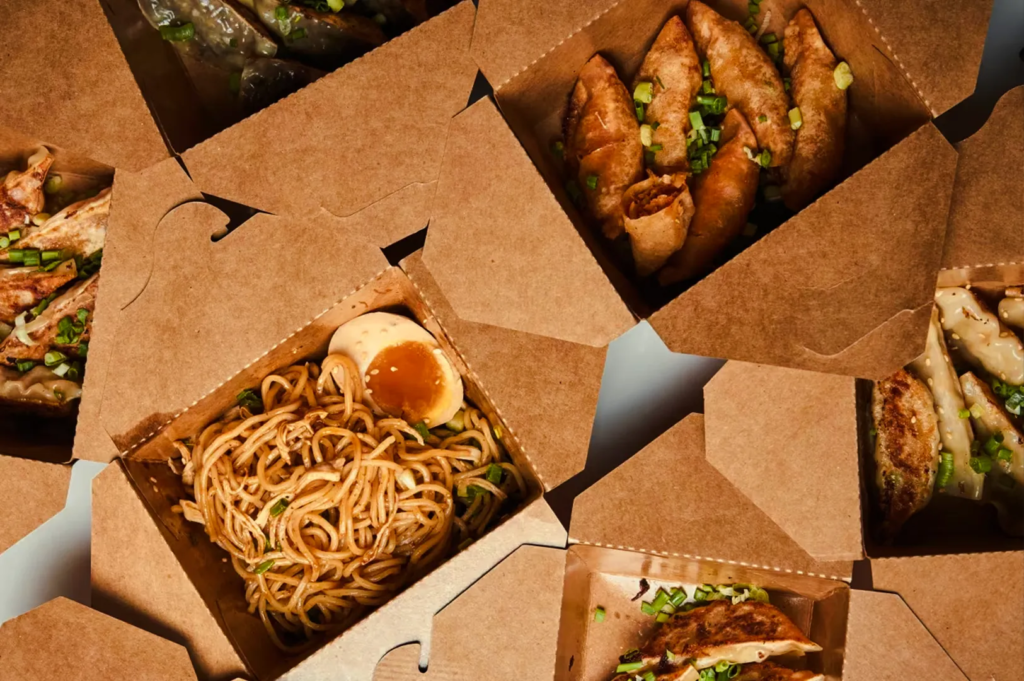
Tapau is so much more than just grabbing a meal to go. It reflects the structure of our society. The culture of buying dinner for the family is a nod to our multi-generational households, where working parents can ensure their children and their own elderly parents get a hot, home-style meal without anyone having to cook after a long day.
It’s an economic indicator, a tiny transaction that supports the hundreds of small, family-run hawker stalls and restaurants that form the backbone of our food scene. The 30-cent packaging charge is a perfect example of the micro-economics at play.
Observing the evening tapau rush in any HDB heartland from about 5:30 PM to 7:00 PM tells you a story about the neighbourhood’s rhythm. It’s a quiet ritual of care, the invisible labour of a parent or child carrying dinner home, a warm offering for the family table.
Final Thoughts: Embrace the Da Bao and Explore Singapore’s Best Places to Eat
The hawker centre can be an intimidating place, but it is also one of the most authentic and rewarding. Don’t worry about making mistakes. I promise you, the hawker stalls and restaurants are more forgiving than you think, and the reward is a delicious, affordable meal to enjoy in the comfort of your own home or while dining in, is well worth any initial awkwardness.
So next time, take a deep breath, walk up to that hawker stall with the long queue, and say with confidence, “Uncle, one plate of chicken rice. Jia la. Tapau.” You’re not just ordering food; you’re participating in a ritual that defines what it means to live, and eat, in Singapore.