
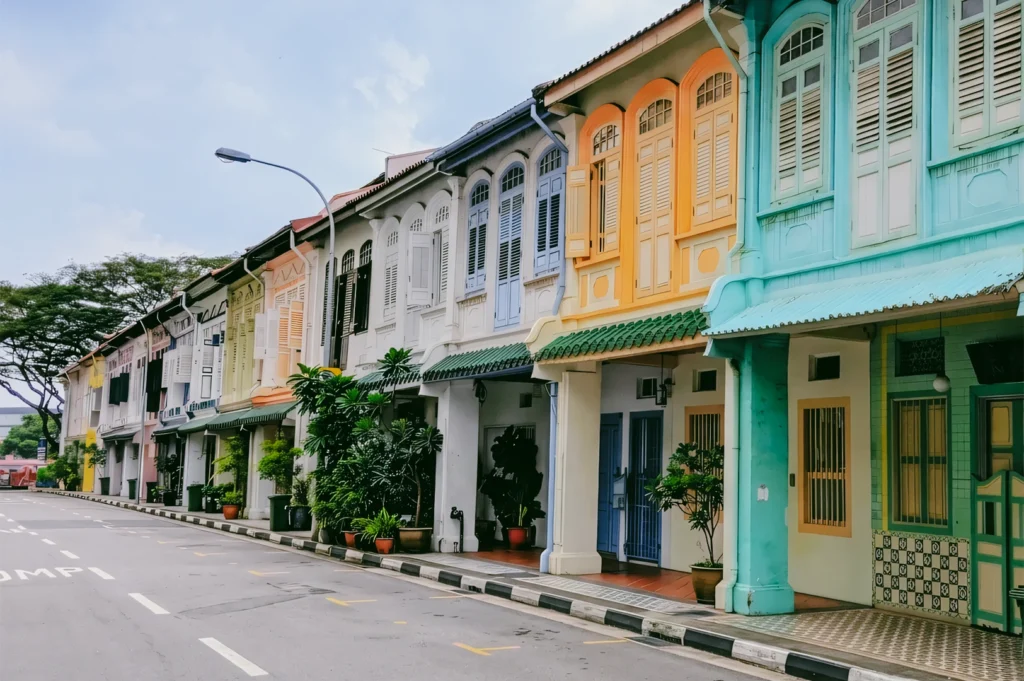
Step onto the sheltered pavement of a traditional five-foot way, and the noise of the modern city instantly shifts. The heavy glare of the midday sun gives way to a cool, continuous stretch of shade. Here, walking down a single row of heritage shophouses feels like flipping through the pages of a neighborhood’s living diary.
If you slow your pace and truly look at the facades, you start to read the stories these buildings hold.
You see history in the intricate plasterwork of blooming lotuses sitting right above a minimalist glass storefront. You feel it in the smooth, worn ceramic tiles under your feet, laid down decades ago by immigrant craftsmen.
Each building stands shoulder-to-shoulder, yet every single one wears a distinct personality. The peeling pastel paint of a traditional medicinal hall sits perfectly at ease next to the sleek, dark exterior of a modern design studio.
This architectural friction forms the heartbeat of our street-level commerce. These structures were originally built for dual purposes—business on the ground floor, family life above. Even today, that rhythm remains.
As you walk, you hear the sharp, rhythmic chopping from a decades-old roast meat stall, immediately followed by the low hum of an espresso machine from a new cafe.
The rich scent of roasted coffee beans tangles with the sharp aroma of burning incense from a small red altar set carefully by a doorway.
The shophouse is much more than a beautiful backdrop for photographs. It serves as a vital anchor for community life. The shared walkway forces us to navigate around stacked cardboard boxes, leaning bicycles, and neighbors stopping for a quick chat.
It creates an unavoidable, necessary closeness that modern shopping malls simply cannot replicate.
As we continue to build taller and faster across this island, it’s these colorful, low-rise rows that remind us where the city’s true character lies: on the ground. The next time you pass a row of shophouses, pause. Look up at the wooden shutters. Listen to the layered sounds of commerce and community. The street is always speaking, if only we take a moment to listen.