
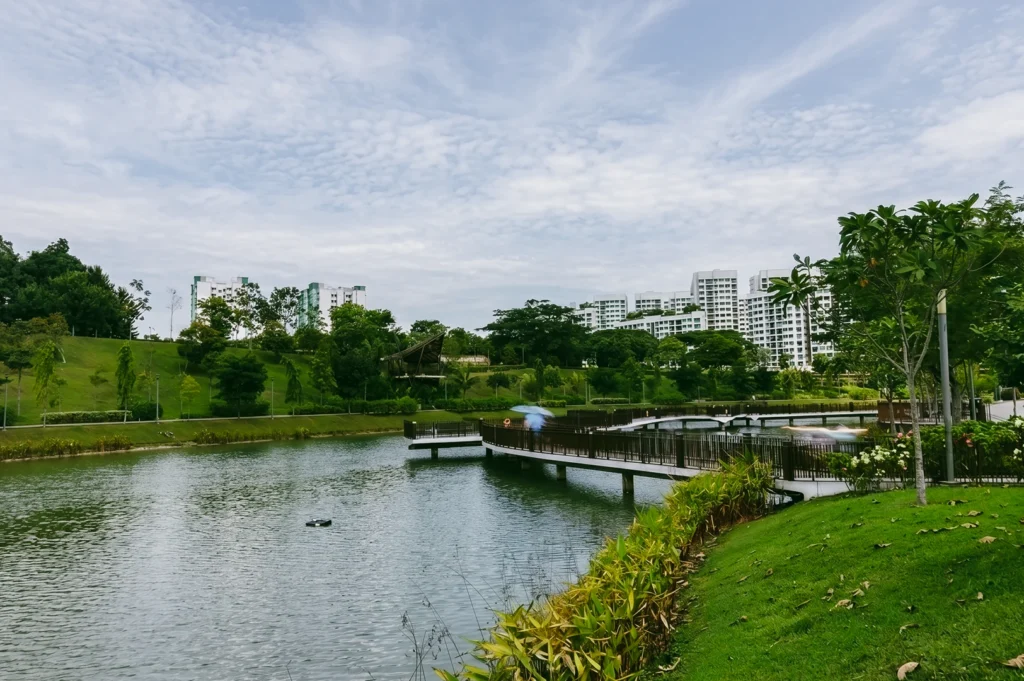
The water was still when I got there, just before six, and I found myself wondering—what is it about these quiet morning moments that makes a neighbourhood reveal its truest self?
A thin mist hung over the Punggol Waterway Park, and the light arrived tentatively, the way it does before the sun commits to another day. A jogger passed, her breathing steady and rhythmic, part of the morning choreography that plays out here every day. Somewhere in the trees behind me, birds began their conversation—one voice calling, then another responding. The pavement carried that clean scent of last night’s rain, and I breathed it in, thinking about all the mornings this place has witnessed.
For those curious about Singapore’s northern coastline, Woodlands Waterfront offers a similar sense of calm, community, and connection to the water, where everyday life unfolds against the backdrop of Malaysia across the straits.
From Fishing Village to Modern Eco Town: The Transformation of Punggol's Waterfront
Standing at the railing, watching the water mirror the sky’s soft grey, I couldn’t help but reflect on how this stretch of Singapore’s north east region was once an entirely different kind of quiet. Not so long ago, this was a fishing village tucked away at the island’s edge, known mainly to the families who built their lives along these shores, casting nets and tending to the rhythms of tide and season.
Now, condominiums and HDB flats catch the early light across the water, their windows beginning to flicker with signs of waking life. A cyclist’s bell chimed somewhere behind me. Here was something beautiful about this moment—past and present sharing the same space, neither rushing the other, both essential threads in the neighbourhood’s evolving story.
The Town That Was Drawn Twice: Housing and Development Board’s Vision for Punggol Town
Have you ever wondered what happens when a community’s grand vision meets unexpected reality?
Punggol’s contemporary story almost unfolded very differently. The first ambitious plan for the area emerged in the 1990s—a waterfront town designed for tens of thousands of families, full of promise and possibility. Then the regional financial crisis arrived, and that dream slowed to something barely recognizable. For years, the half-built hope sat waiting, more blueprint than neighbourhood, while residents wondered what their community would ultimately become.
When planning resumed, led by the Housing and Development Board (HDB) and the government’s development board agencies, something had shifted in the approach. This time, Punggol wouldn’t simply be another public housing estate serving the country’s growth. Instead, it would be designed around water and greenery, conceived to feel less like a place where people merely slept and more like a neighbourhood where they could truly live and connect.
That second vision is the Punggol eco town most of us experience today, and at its heart runs something quite remarkable.
A Waterway Carved Through a Neighbourhood: Punggol Waterway Park as Urban Design Model
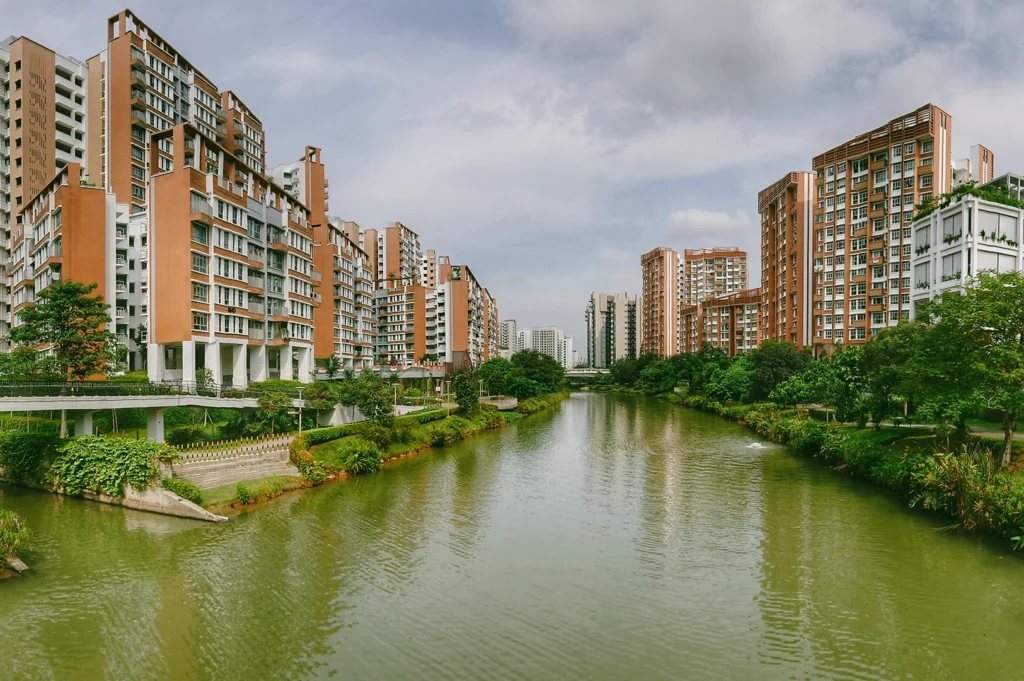
What happens when a community is designed around connection rather than just convenience? The Punggol Waterway Park, opened in October 2011, is a carefully crafted channel stretching through the town’s heart, linking reservoirs and serving as the neighbourhood’s organizing principle. Homes face the waterway, bridges span it, and walking paths trace its curves, making it the vibrant spine of the community.
This waterway is more than a scenic route—it manages stormwater, connects green corridors, and embodies Punggol’s sustainable development. Early mornings see joggers and tai chi practitioners, while afternoons fill with families and children enjoying the space, showing how the waterway supports both function and beauty in daily life.
By integrating nature and urban living, Punggol Waterway Park demonstrates how thoughtful design can create a community where residents connect with each other and their environment, making it a model for sustainable and livable neighbourhoods.
Living Lightly, by Design: Sustainability and Innovation in Punggol Eco Town
Can a community’s physical design change how residents live and connect with their environment?
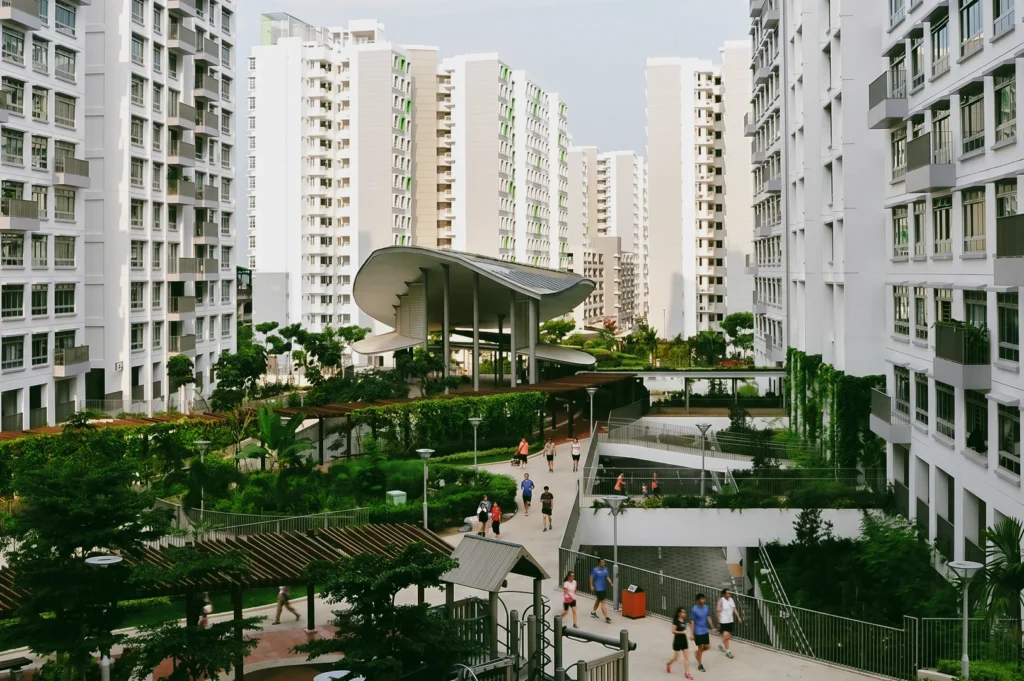
“Punggol eco town” may sound like marketing, but spending time here reveals its true intent. Solar panels adorn rooftops, rainwater systems operate quietly, and cycling paths connect meaningful places, allowing residents to move without cars.
Greenery is integral, creating cool shade and spaces for children and elders alike. Walking here feels pedestrian-friendly, with smooth paths and gentle ramps in newer areas. Older parts near Punggol Road show rougher textures, reflecting the neighbourhood’s evolving story.
This transformation is about more than new buildings; it’s a new relationship between community and environment, balancing progress with memory and efficiency with humanity.
The Rhythms People Bring: Life in Punggol Town Centre and Beyond
But what transforms urban planning from concept into genuine community?
A neighbourhood’s infrastructure can only accomplish so much. What makes Punggol feel alive and authentic are the people who fill its spaces with their daily rhythms, their small traditions, their way of claiming and caring for shared places.
The future arrived here, but it didn’t sweep away the small rituals that make any place feel like home.
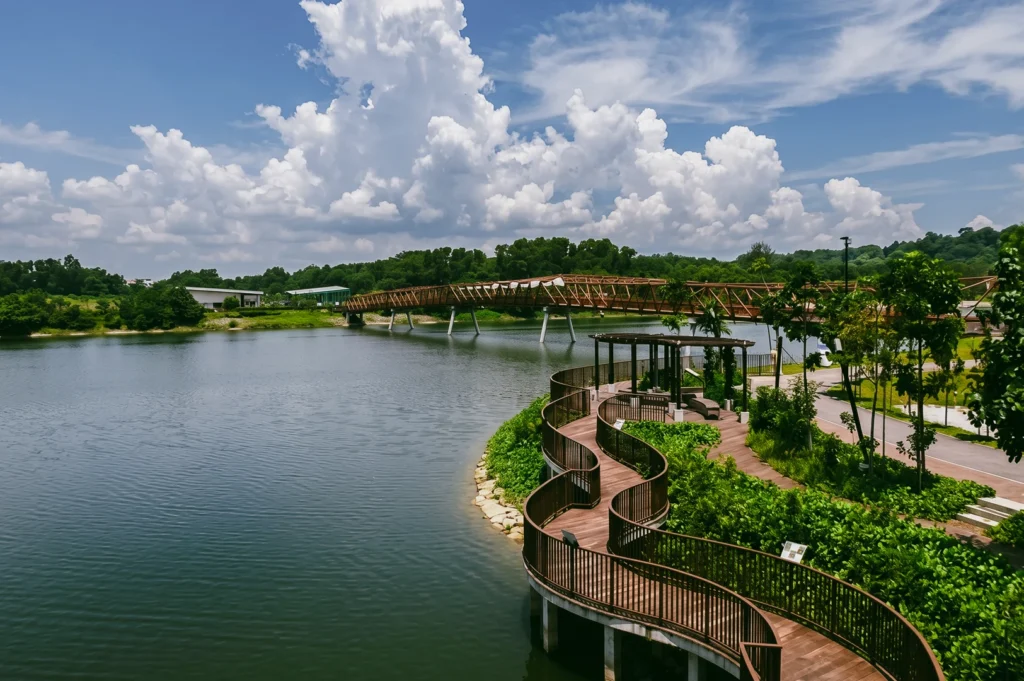
Out at Punggol Point Park and the surrounding gardens, the mood shifts into something more contemplative. The boardwalk extends toward water where fishermen once cast their nets and hauled in their hopes. In the evenings now, families fly kites, their bright colours dancing against the sky. Older couples walk slowly together, hands clasped behind their backs, perhaps remembering other shorelines, other seasons of their lives. Sometimes I notice someone sitting alone, simply watching the sea, and I wonder what memories they’re holding, what this shore means to them now.
Holding Two Stories at Once: The Collaboration Behind Punggol’s Sustainable Development and Education Hub
Is it possible for a neighbourhood to honour its past while wholeheartedly embracing its future?
What continues to fascinate me about Punggol is how it carries multiple stories without apparent effort or contradiction. The waterway pulses with new life and possibility, while the point quietly remembers fishing boats and darker chapters of wartime. Residential towers rise clean and contemporary, while the hawker centre preserves flavours and social rhythms that connect this community to the broader island’s culinary heritage.
Punggol Digital District: A Hub of Innovation and Sustainability
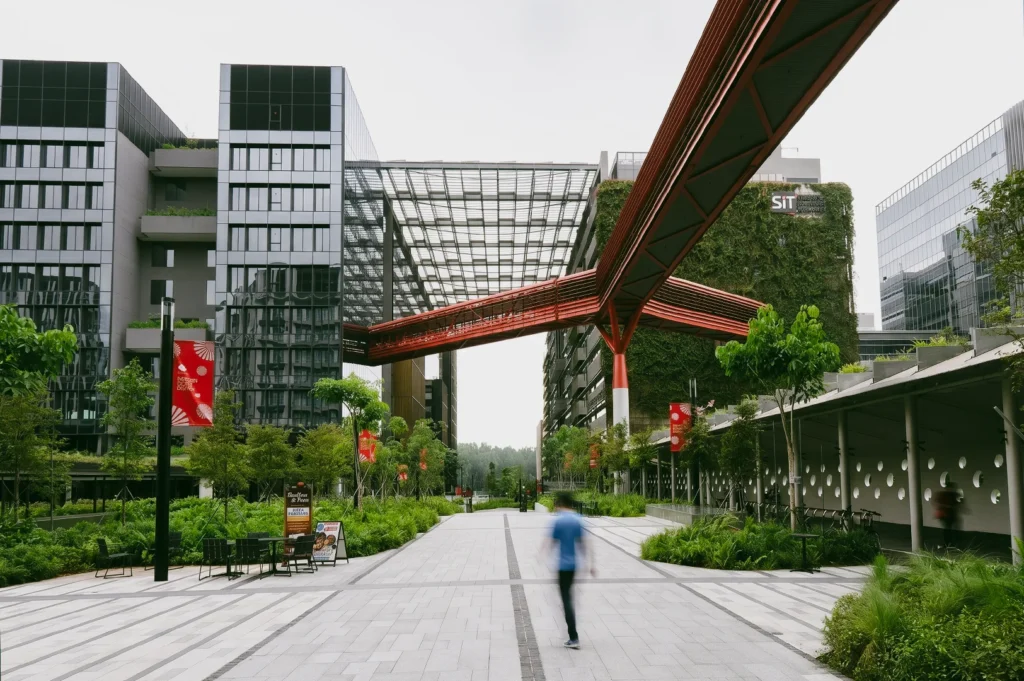
At the heart of Punggol’s vibrant district lies the Punggol Digital District, a business park and education hub located beside the Singapore Institute of Technology campus. This development board-led initiative embodies the government’s commitment to sustainable development and innovation. The district is envisioned as a model of collaboration between technology, research, and education, creating thousands of jobs and opportunities for students and residents alike.
Nearby, Punggol Coast Mall and the bus interchange provide essential amenities and transport services, making the district well connected and accessible. The planning and urban design of this area showcase Singapore’s dedication to sustainability, energy efficiency, and vibrant community life.
Living Through Layers of History and Community
A child learning to cycle along the promenade is, in ways they may never fully realize, riding through layers of history, adding their own small chapter to this place’s continuing story.
It would be tempting to frame this transformation as simple progress—fishing village becomes model eco town, success story complete. But that narrative flattens something important about how communities actually evolve. The more honest version is both messier and more generous. Places can change almost completely while still holding space for the quiet elements that have always mattered—the way morning light falls across water, the satisfaction of work well done, the fundamental human need to belong somewhere.
Experiencing Punggol: A Neighbourhood That Reveals Itself
I left as the sun finally cleared the residential blocks, the waterway shifting from grey to soft gold. More joggers had joined the morning community, their footsteps creating a gentle percussion on the paths. Cyclists rolled past in loose formation, beginning their commutes or their weekend explorations. The day was beginning as it does here every morning now, on ground that once moved to the rhythm of tides, that now responds to the rhythms people bring.
If you’re curious about experiencing Punggol yourself, might I suggest approaching it without agenda or checklist? Skip the impulse to photograph every designated scenic spot. Instead, walk a section of the waterway slowly enough to notice the small details—the way light plays on water, how families have claimed certain benches as their own, the particular quality of evening air near the point.
Order something at the hawker centre and eat it without your phone demanding attention. Sit quietly at the point for longer than feels efficient. Let the place reveal itself gradually.
Punggol: An Authentic Neighbourhood in Progress
Punggol doesn’t need to perform for visitors—it’s too busy being an authentic neighbourhood for that. It’s still discovering what it wants to become, still writing the story of how a community can honour its past while building toward its future. And if you slow down enough to pay attention, you might just feel it happening around you, quietly and persistently, one morning at a time.