
Dining Above the City Lights at CÉ LA VI MBS
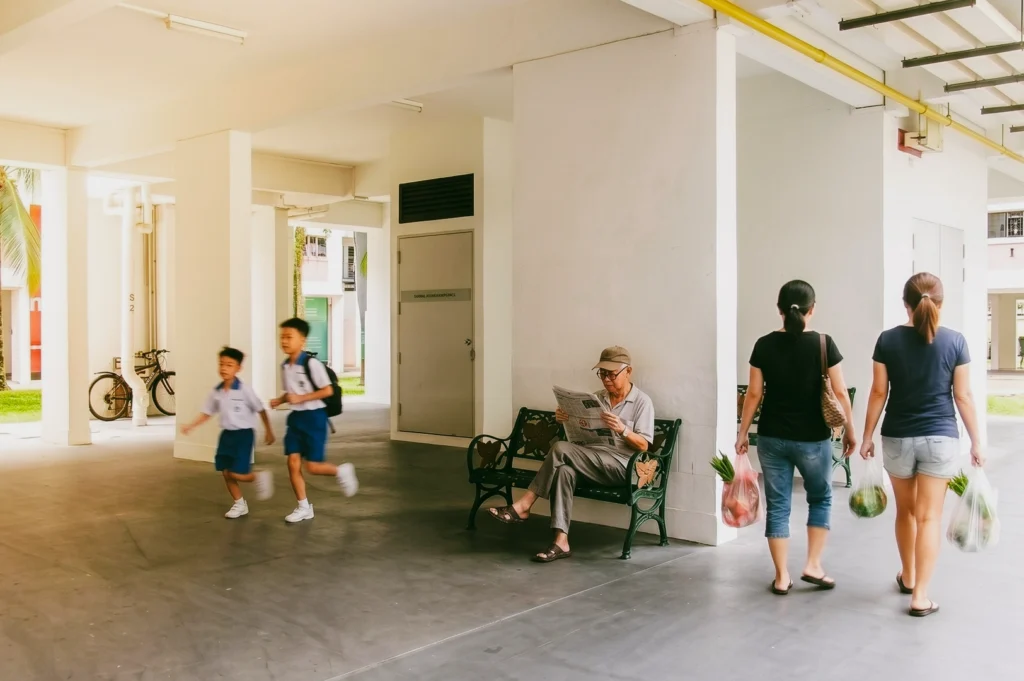
It was just past seven when the void deck started to fill.
An old man set down his newspaper on the stone table, the same table I’d seen him claim every morning. Two women in their kitchen clothes stopped to talk, plastic bags of vegetables hanging from their wrists. Somewhere above, a kettle whistled. A child in a school uniform clattered past on the way to the bus stop, half a piece of toast still in his hand.
Nobody planned any of this. And yet it happens, in some version, across the whole island every single morning.
I’ve started paying attention to these moments. Not the big ones, but the small, ordinary ones that make a place feel lived in. And the more I look, the more I notice how much of it is quietly shaped by the spaces themselves.
The Spaces That Make Us Pause
There’s a particular kind of design that invites you to stop.
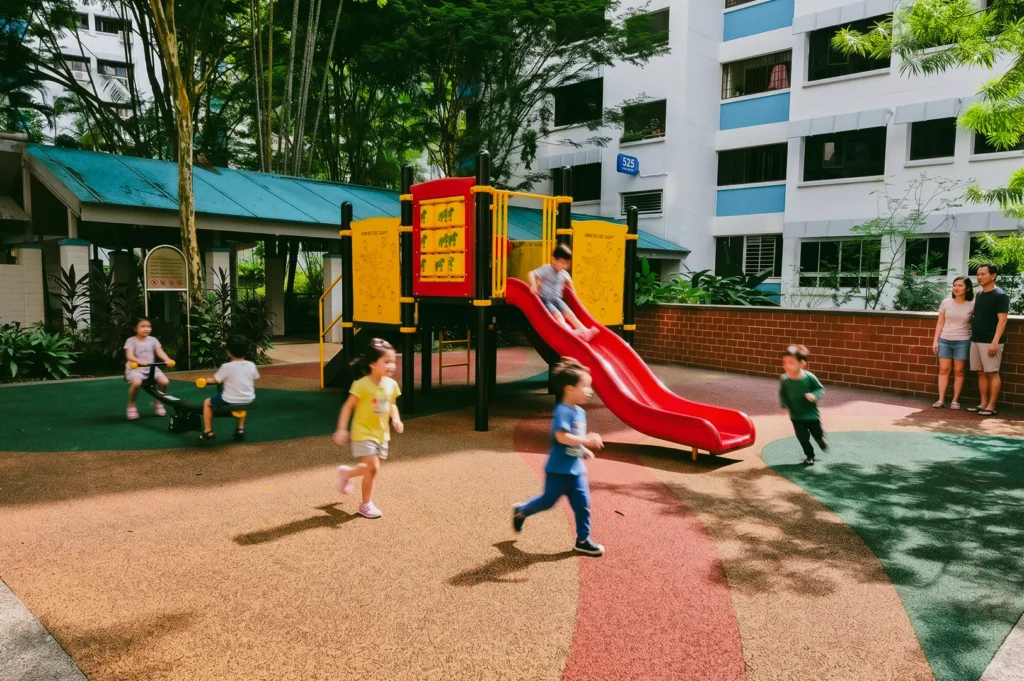
A bench in the right spot. A void deck with a breeze running through it. A playground placed where parents can see each other while they watch their kids. These aren’t accidents. Somebody decided where to put them, and that decision shapes who meets whom, and how often.
This is what I’ve come to think of as social architecture — the invisible way physical space arranges human connection. We rarely name it. We just live inside it.
In Singapore neighbourhoods, the proof is everywhere if you slow down enough to see it.
Parks and Playgrounds as Common Ground
I walked past a playground last weekend and stayed longer than I meant to.
A toddler was learning to climb the steps, his grandmother hovering close. On the bench beside her, another grandmother watched a different child. They weren’t friends, exactly. But they were talking, the easy way people talk when they’re side by side facing the same direction.
That’s the quiet genius of parks and community spaces in Singapore. They give people a reason to be in the same place without the pressure of being together. You come for the green, the shade, the exercise corner. The connection happens on the side.
The aunties doing their morning stretches. The uncles with their songbirds. The teenagers who claim the courts after dark. Each group has its hour, its corner, its rhythm. The park holds them all without anyone needing to negotiate.
Built to Live Beside Each Other
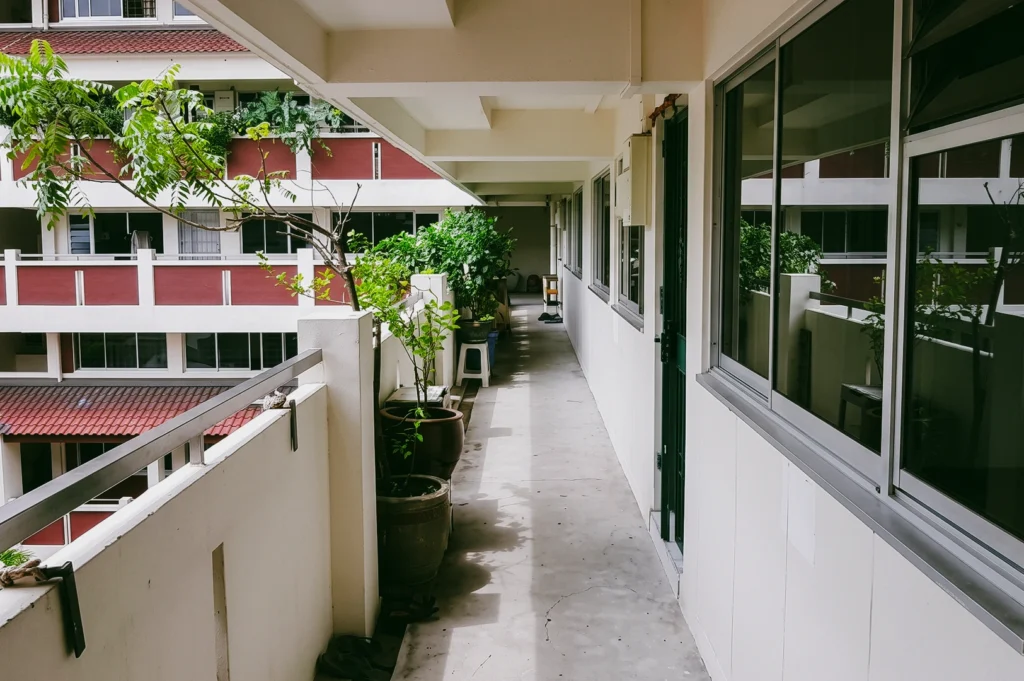
You can’t talk about HDB community life without talking about the design that surrounds it.
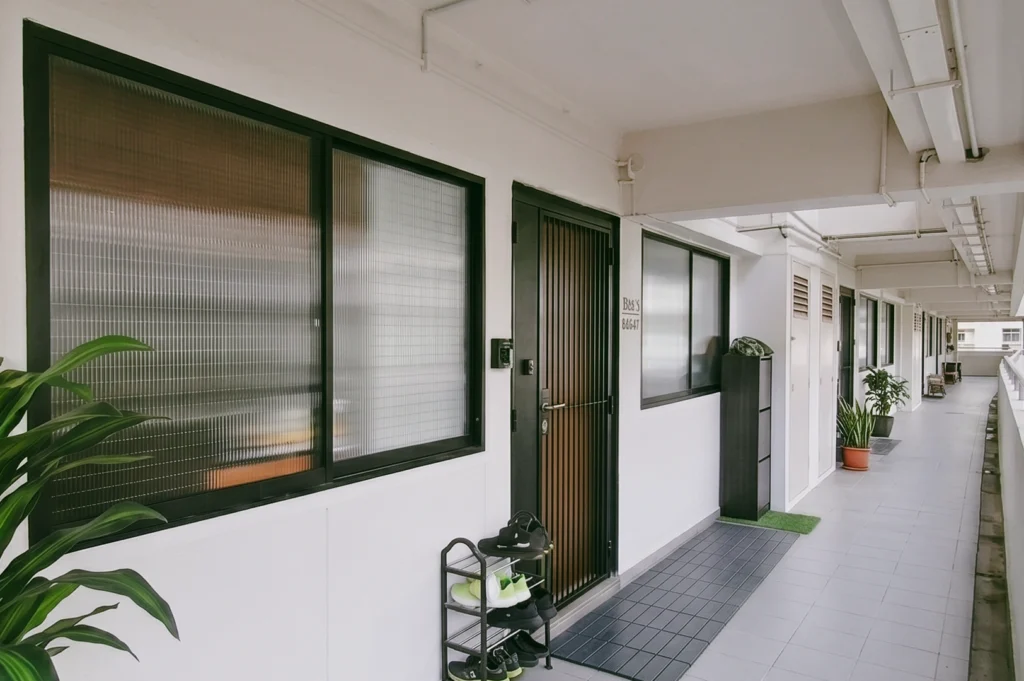
The blocks face each other across open courtyards. The corridors run long, so you pass your neighbour’s door on the way to your own. The lift opens onto a shared landing where shoes are left out and a potted plant marks someone’s small claim on the space.
None of this guarantees friendship. But it makes encounter likely. And encounter, repeated over years, is how strangers slowly become familiar.
I think that’s the heart of good urban design in Singapore. It doesn’t force people together. It just keeps leaving small openings for them to find each other.
Void Decks, Walkways, and the In-Between
The void deck is one of those things you only appreciate once you understand it.
It’s an empty ground floor, technically. No flats, no shops, just space. And yet it holds so much. A wedding one weekend. A funeral the next. A wake with white tents and plastic chairs. A study group of students hunched over their phones. The chess uncles who’ve sat there longer than I’ve been alive.
I’ve sat in void decks during sudden rain, watching the water sheet off the edges while someone else waited it out a few metres away. We didn’t speak. But there was a strange comfort in waiting together.
The sheltered walkways do similar work. They connect the blocks to the MRT, the market, the school, and they keep us dry, but they also keep us moving through the same channels. You bump into people on those walkways. You learn the faces of the morning crowd.
These in-between spaces, the ones with no obvious purpose, often carry the most life. Good public space design in Singapore seems to understand that the gaps matter as much as the rooms.
Where the Old and the New Sit Side by Side
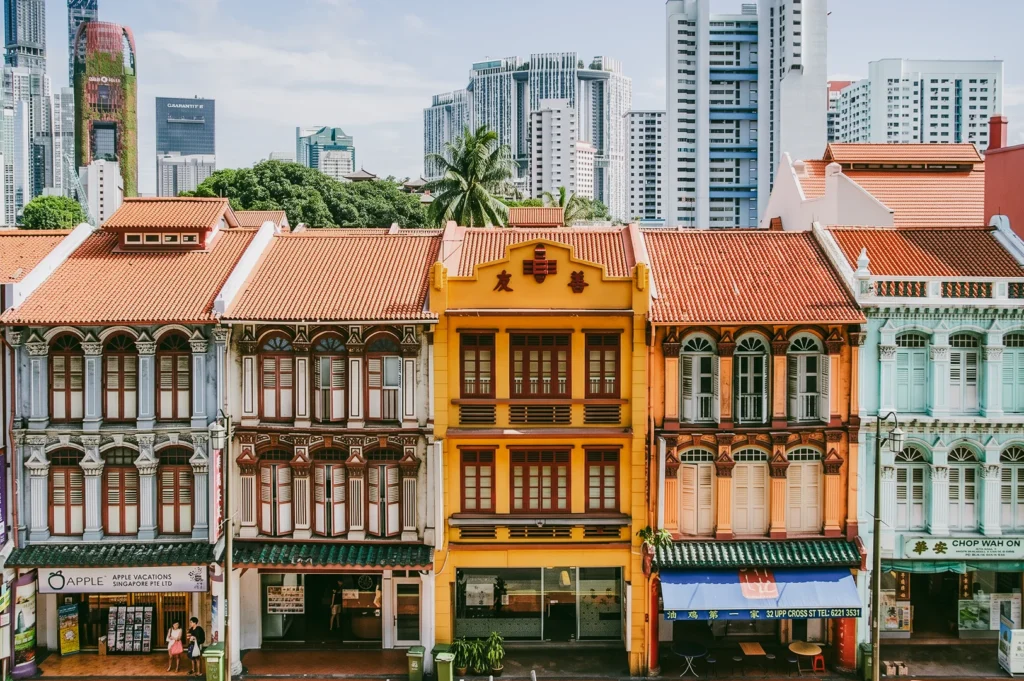
What strikes me most is how different eras share the same ground.
A heritage shophouse stands a street away from a glass condominium. A decades-old wet market hums beside a sleek new mall. The kopitiam uncle pulls his coffee through a cloth sock while, across the road, someone queues for a flat white.
It would be easy to read this as tension, old losing to new. But standing in the middle of it, that’s not quite how it feels. It feels more like layers, each one still doing its work.
The market is where I notice it most. The stallholder who remembers my mother’s order. The fishmonger calling out prices. The narrow aisles that force you close to strangers, where you mutter “excuse me” and brush past someone reaching for the same bunch of greens.
Markets are social architecture at its most honest. Nobody designed them to be charming. They just are, because people have been meeting there for so long.
The Small Things That Hold a Place Together
There’s a mural near my block that I almost never look at directly. But I’ve watched children point at it, watched an old man rest beneath it, watched it become a landmark people use without thinking. “Meet me by the painting.”
Public art does that. So do the informal meeting spots that nobody officially named — the coffee shop corner, the bench by the bus stop, the spot under the tree where the taxi uncles gather between shifts.
These places aren’t on any map. They exist because someone started showing up, and others followed.
A few patterns I keep noticing:
- The same faces appear at the same hours, anchoring the day
- Strangers share space comfortably, neither too close nor too distant
- Nobody hurries the rituals; a slow coffee can hold a table for an hour
These are unwritten rules. But they’re the texture of belonging.
The Quiet Balance
What I find most thoughtful is how these spaces hold two things at once.
There’s privacy — the closed door, the drawn curtain, the right to be left alone. And there’s community — the shared corridor, the open courtyard, the void deck that anyone can use.
A good neighbourhood doesn’t make you choose. You can retreat when you need to, and step out into company when you don’t. The design leaves room for both.
I think that balance is what makes a place feel safe without feeling closed. You’re never quite alone, but you’re never crowded either. Someone would notice if you stopped showing up. And there’s comfort in being noticed.
Noticing What We Live Inside
By the time I left the void deck that morning, the old man had finished his newspaper and the women had gone home with their vegetables.
The space emptied, then slowly filled again with the next set of lives. That’s the thing about social architecture. It works whether or not we ever name it. It just keeps holding us, morning after morning.
We tend to credit the people for a neighbourhood that feels alive. And the people matter, of course. But so does the bench placed just so. The courtyard that catches the breeze. The walkway that brings us past one another’s doors.
So the next time you’re walking home, slow down a little. Notice where people gather, and ask yourself why there and not somewhere else. Notice the spaces that invite you to pause.
You live inside an invisible design, quietly shaping how you meet the people around you. It’s worth seeing — and worth protecting.