
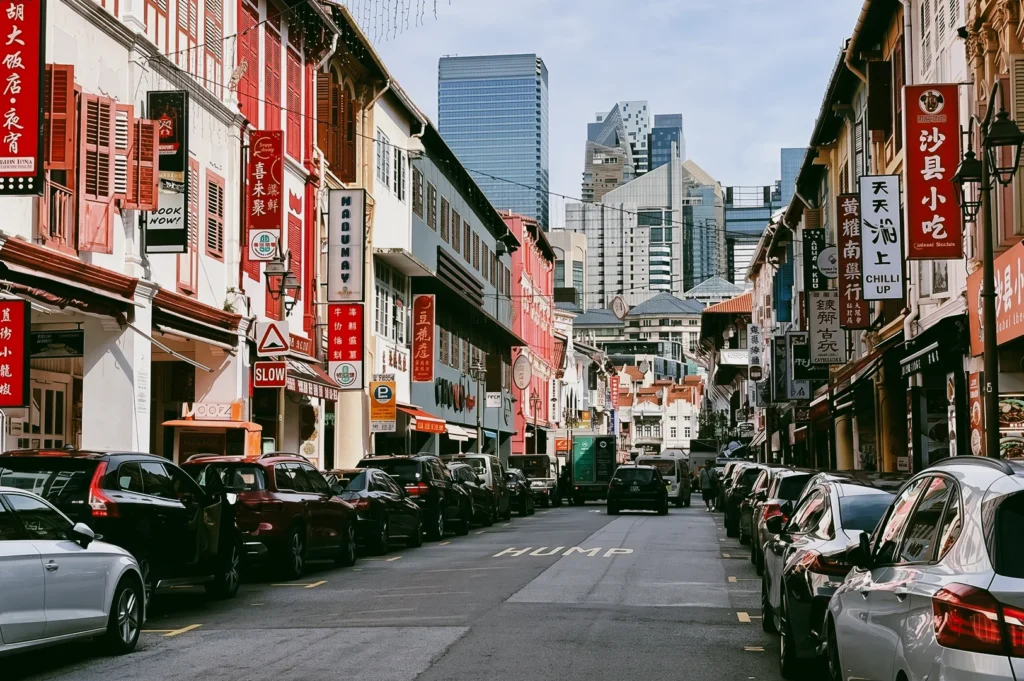
Have you ever wondered what a neighbourhood might tell you if you simply gave it the chance? It was just past seven when I arrived at Chinatown Singapore, deliberately early, before the tour groups descended and before the day’s heat began to weave itself into the narrow streets.
A shopkeeper moved with unhurried purpose outside his establishment, his broom tracing patient arcs across weathered tiles that have witnessed decades of such morning rituals. Somewhere down the street, the metallic symphony of a shutter rolling upward announced another day’s beginning.
The Senses of Chinatown: A Morning Immersion
Already, the air carried that distinctive perfume of Chinatown—incense drifting like prayers from temple doorways such as those on Temple Street, the earthy wisdom of dried herbs from traditional medicine halls, and the gentle sweetness of barbecued pork suspended in windows like edible jewels.
I hadn’t come seeking anything particular, really. How many times had I hurried through these same streets, treating them as mere passages to somewhere else? This morning felt different—I decided to surrender to curiosity rather than destination. What I discovered was that neighbourhoods, much like people, have extraordinary stories to share once you stop long enough to listen.
These stories of tradition meeting modern life are explored further as seen in this article, highlighting how Chinatown balances heritage, community, and contemporary rhythms.
The Stories Pressed Between the Shophouses of Chinatown History
Isn’t it remarkable how much changes when you adjust your pace to a place’s natural rhythm?
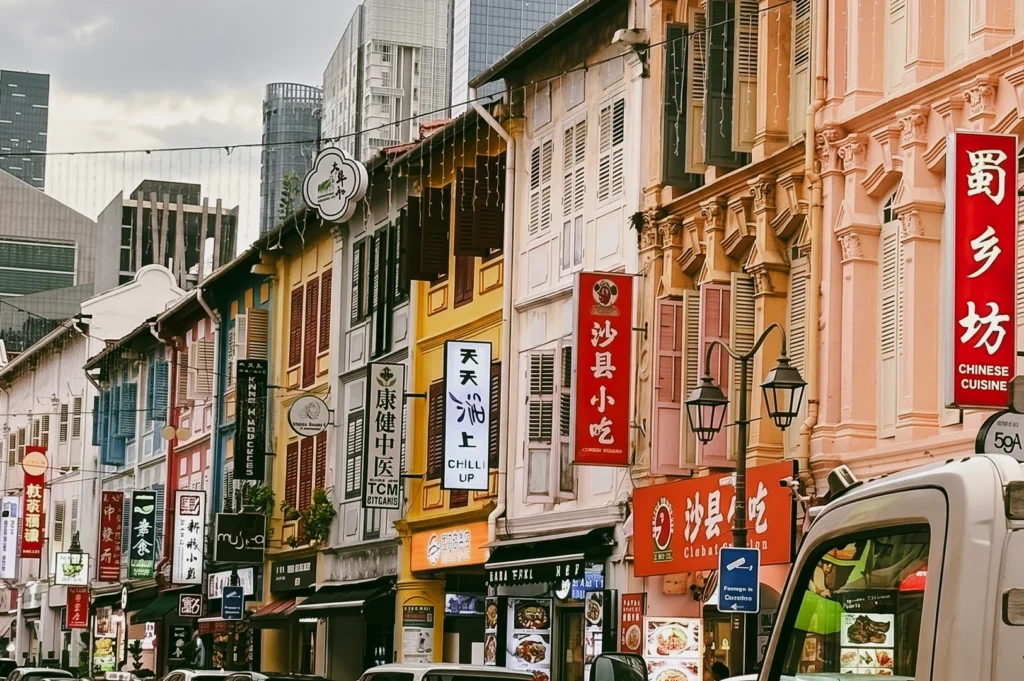
For years, I saw these shophouses as mere backdrops, but lingering reveals their stories. The narrow fronts, worn timber shutters, and faded, mismatched paint tell tales of adaptation and endurance in this culturally vibrant ethnic quarter.
Some shophouses are restored with polished tiles and fresh historical colors; others show gentle cracks and everyday life with laundry hanging from windows. What captivates me most are those caught between—still alive, sheltering ordinary days, part of the neighborhood’s present, not just its past.
In a quiet alley off Sago Lane, I found a small crimson altar with offerings burning incense—an unassuming act of devotion sustaining Chinatown’s vibrant culture through generations. Here, the true historic Chinatown lives—not in grand facades, but in these small, ongoing acts of care that reflect the legacy of early Chinese immigrants and traditional trades.
Where Memory Lives in Smoke and Stone: Temples and Heritage
If you want to feel the full weight of community memory, step inside one of the older temples or visit the Chinatown Heritage Centre near Chinatown MRT Station.
I slipped from the bright morning street into cool shadows filled with decades of whispered prayers. Smoke hung thick beneath the eaves, coils of incense spiraling downward, each tagged with small red labels bearing names and hopes left to burn slowly.
An elderly woman knelt
Temples and Cultural Anchors in Chinatown
Nearby, the Buddha Tooth Relic Temple, built with Tang Dynasty architecture and opened in 2007, stands as a testament to Chinatown’s evolving heritage. It houses sacred relics and offers meditation rooms and museums that deepen understanding of Singapore’s history.
Chinese heritage in Singapore runs deepest in these temples and the Chinatown Heritage Centre, which immerses visitors in early immigrant life by the Singapore River. These sites were more than places of worship—they were anchors for immigrants arriving with little but hope, offering gathering spaces and solace amid unfamiliar surroundings.
A Neighbourhood You Can Taste: Hawker Stalls and Chicken Rice at Maxwell Food Centre and Smith Street
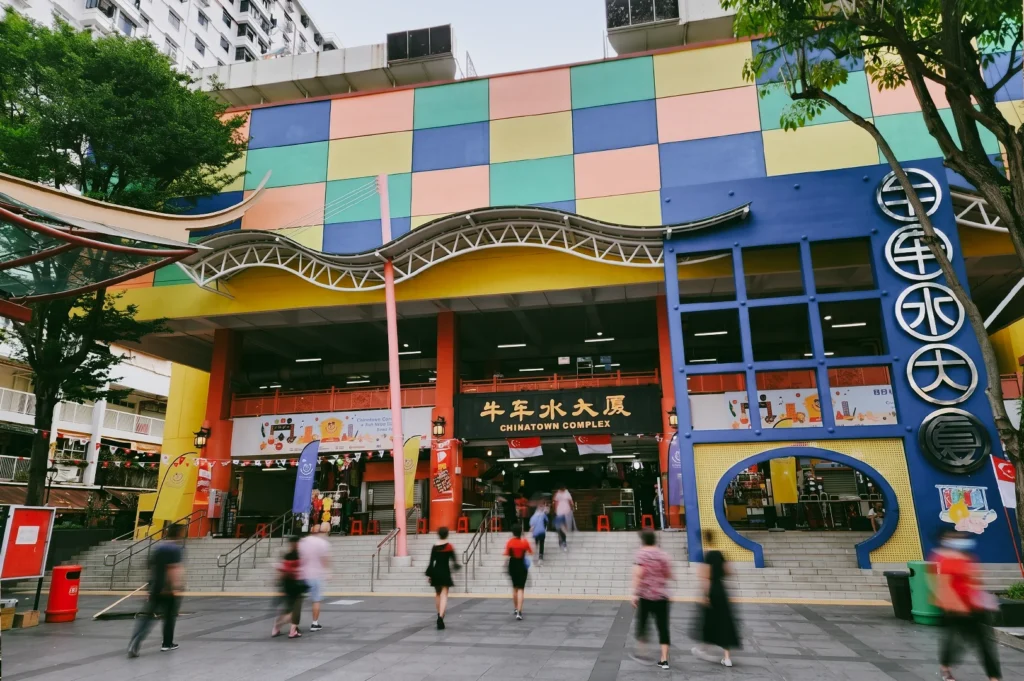
By late morning, food aromas filled the streets. I found a hawker stall where an auntie served bowls of noodles with practiced ease. Regulars queued—uncles in singlets, an office worker, a grandmother with a worn shopping bag. I ordered without fully knowing what to expect. The bowl arrived steaming, with slices of char siu and a comforting dark sauce. Eating at a wobbly metal table, I felt grounded in Chinatown’s everyday reality.
Nearby, Chinatown Complex and Smith Street buzzed with hawker stalls offering local favourites. Maxwell Food Centre, a short walk away, is famous for its chicken rice—a must-try for visitors seeking authentic Singapore food culture.
This is the Chinatown many miss—not the tourist-packed queues, but quiet stalls feeding familiar faces daily. The food exists as routine, nourishing and connecting the community.
Old and New, Sharing the Same Street: Kreta Ayer, Bukit Pasoh, and Revitalised Chinatown Singapore
Chinatown isn’t frozen in time. On one corner, a specialty coffee shop thrives in a restored shophouse, with young people sipping flat whites and working on laptops. Across the street, a traditional kopitiam serves kopi-o and toast, its uncle still brewing coffee the old-fashioned way.
This isn’t conflict but collaboration—two ways to gather and fuel daily life. Heritage preservation here balances continuity and change, keeping Chinatown’s pulse alive.
Decades of history show in the buildings of Pagoda Street, Trengganu Street, and Upper Cross Street. Ancestral languages spill from clan house doorways near Telok Ayer and South Bridge Road, blending past and present.
What’s There If You’re Willing to Look: Chinatown Singapore’s Living Heritage
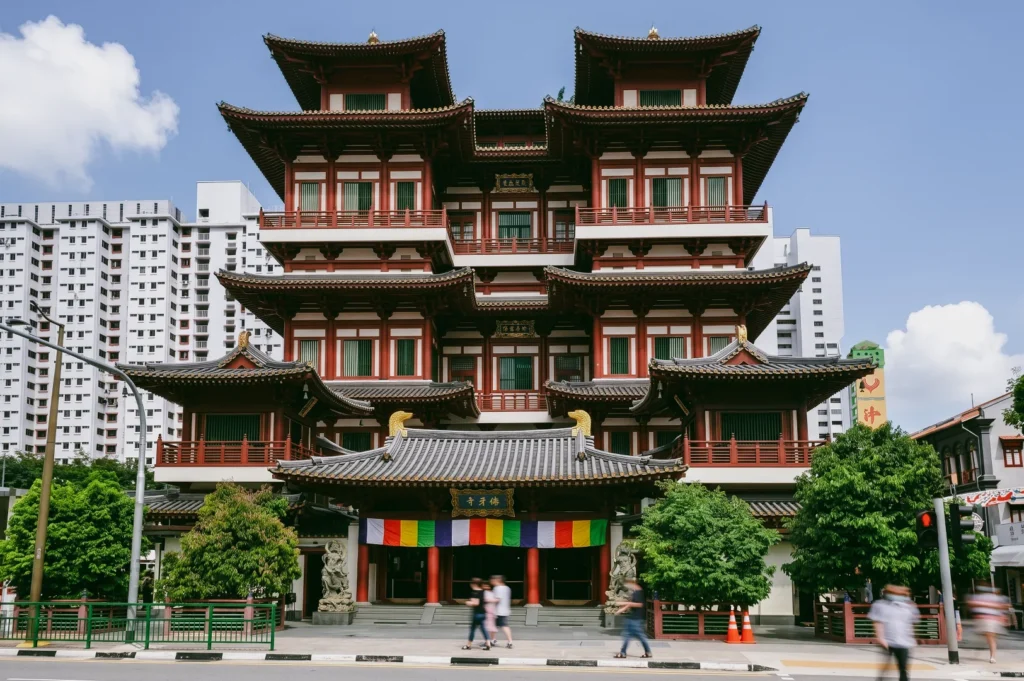
As tourists arrived, heading to landmarks like Buddha Tooth Relic Temple and Sri Mariamman Temple, I thought back to the quiet altar in the alley, the clan house tea, and the auntie’s simple noodles. These unassuming moments held the truest essence of Chinatown.
Next time you visit Chinatown Singapore, try slowing down. Choose a back alley over main streets like Telok Ayer Street or Sago Street. Step into a temple and simply absorb the atmosphere. Eat at a food stall or hawker stall where hospitality is quiet and genuine. Explore the Chinatown street market and notice the murals that tell stories of a large number of early Chinese settlers and the town committee that shaped this Chinese settlement.
Chinatown won’t perform for you—it has quietly thrived for generations through the bustling street hawkers and the echoes of the bullock water cart days. It will reveal more if you match its patient pace on a walking tour that uncovers its rich history from the times of World War II to the present day in this vibrant city of Southeast Asia.