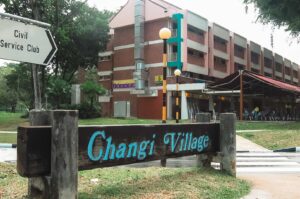
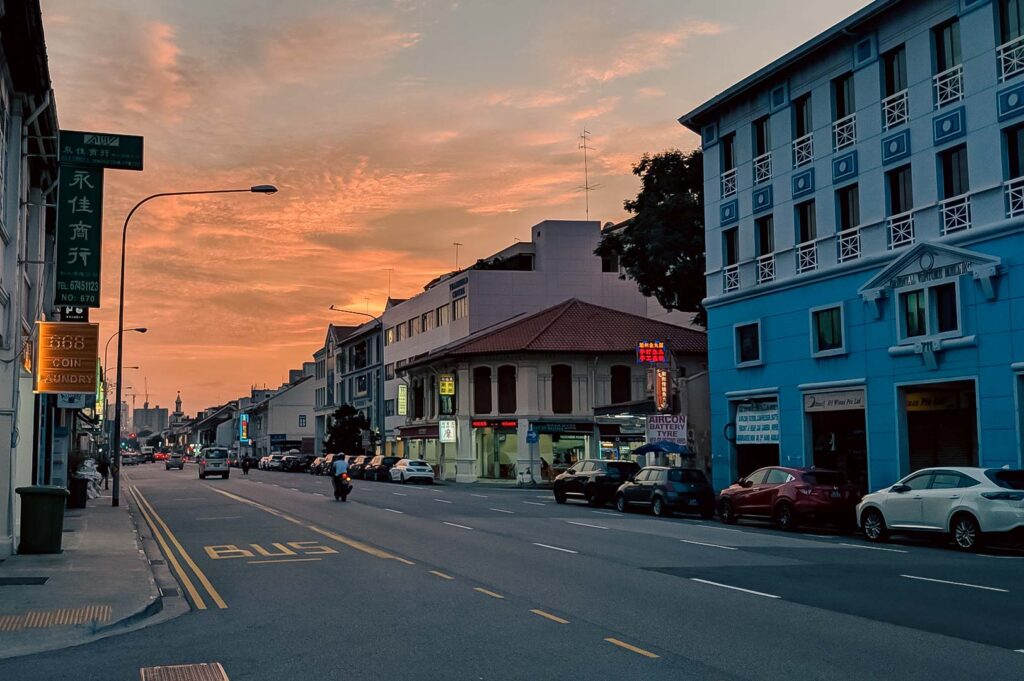
The rhythm of a neighbourhood has always been most visible in the transition between late afternoon and early evening. For decades, this period—roughly between 6 PM and 8 PM—followed a predictable script. Void decks filled with returning workers, wet market produce was washed and prepped, and the scent of cooking oil signaled the simultaneous preparation of thousands of dinners.
Today, however, the cadence of the Singaporean evening is shifting. The change is not sudden, but cumulative, driven by the quiet encroachment of convenience culture and the subtle restructuring of the workday. What was once a synchronized communal ritual has fractured into a series of individual timelines, reshaped by takeaway containers, delivery riders, and the glow of smartphone screens.
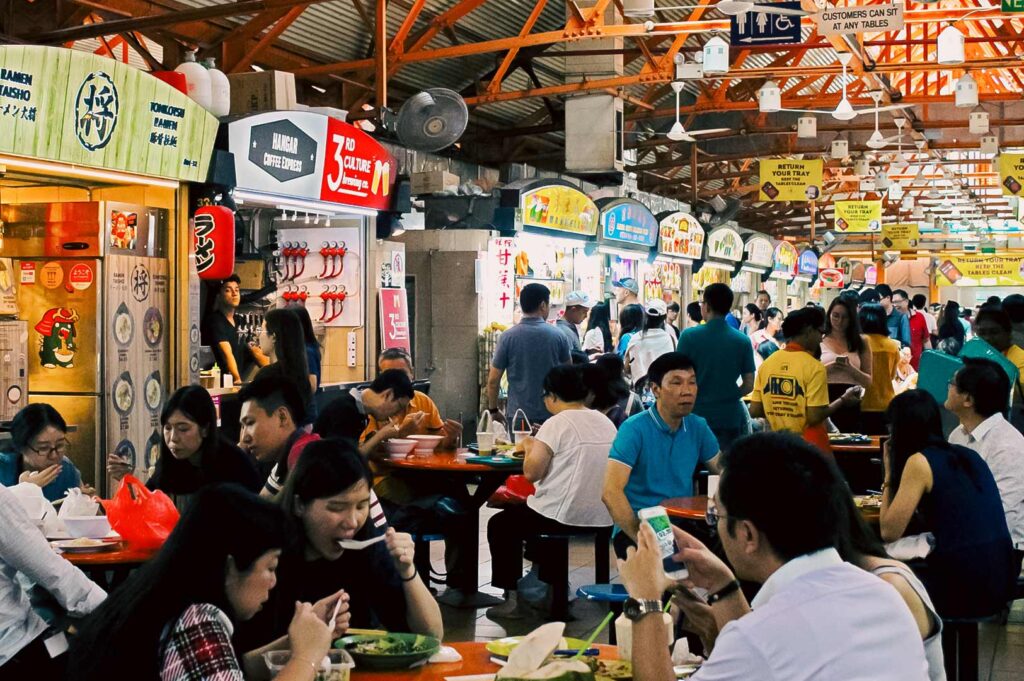
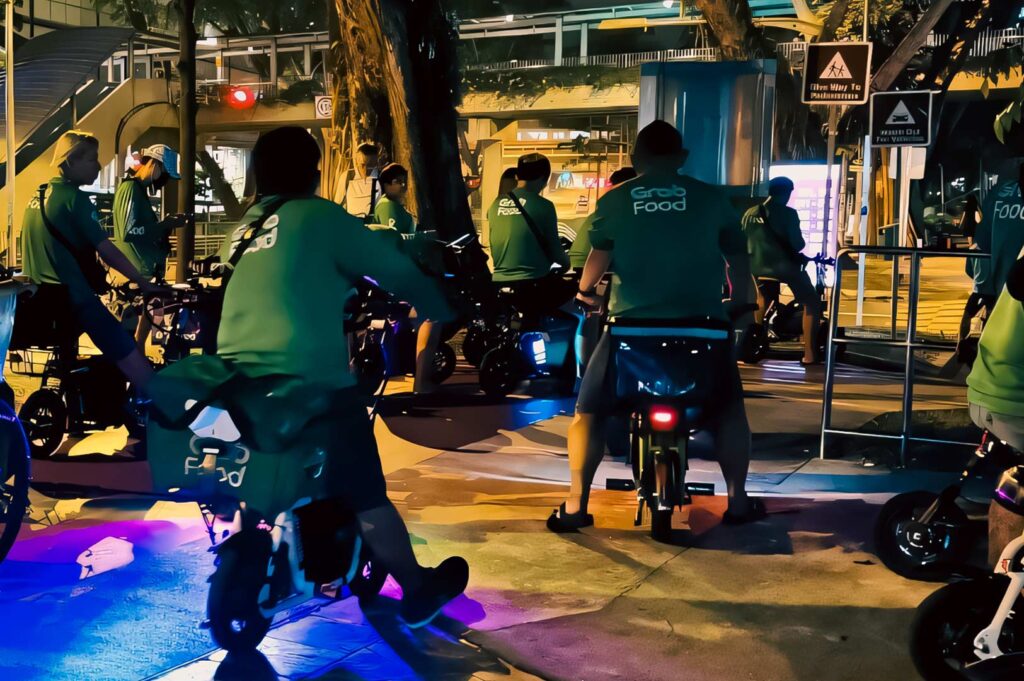
The most observable shift is the spatial redistribution of the dinner hour. The queue at the hawker centre, once the primary barometer of neighbourhood activity, has now split. While the physical line remains, a secondary, invisible queue exists on digital platforms. The sight of delivery riders clustering near popular stalls is now as common as the diners themselves. This introduces a new layer of logistics to the heartland evening: the neighbourhood is no longer just a place where residents return to eat, but a distribution hub where food is constantly in transit.
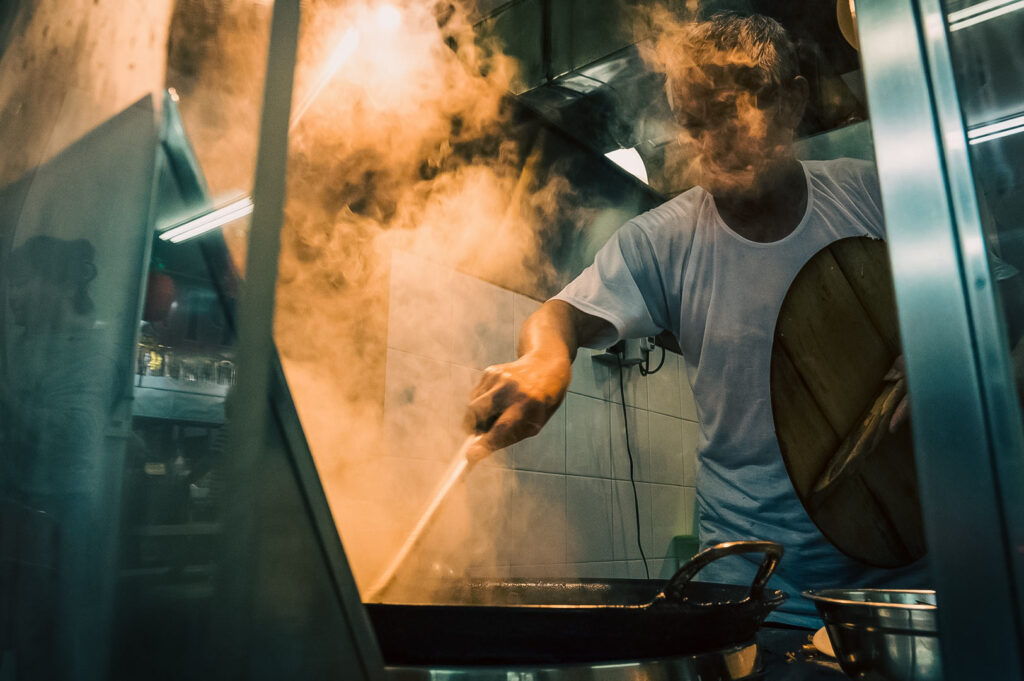
This reliance on takeaway and delivery has altered the sensory landscape of our estates. The sound of woks clanging in home kitchens is arguably less ubiquitous than it was a generation ago. In its place is the rustle of plastic bags and the quiet arrival of brown paper packages. The dining table, once the undisputed center of the evening, now competes with the coffee table and the work desk. Dinner has become mobile, modular, and increasingly solitary for some demographics, decoupled from the rigid timing of the family meal.
Timing itself is drifting. The definition of “dinnertime” has expanded significantly. As work hours bleed past the traditional 5:30 PM dismissal, the evening meal is pushed later. Eateries that once wound down by 9 PM now see a steady stream of patrons well into the night. This temporal shift affects the social fabric of the neighbourhood; the communal overlap—where neighbours might bump into each other during the post-dinner stroll—is shrinking as schedules desynchronize.
Yet, these changes do not signal the erosion of community so much as its evolution. The “kampung spirit” is adapting to a high-efficiency environment. We see it in the way neighbours coordinate group buys to save on delivery fees, creating digital micro-communities within blocks. We see it in the way certain 24-hour supermarkets have become the new town squares for late-night dwellers.
As we observe these evolving habits, it becomes clear that the modern evening is defined by flexibility. The rigid structures of the past have given way to a fluid, on-demand lifestyle. While we may cook less and eat later, the fundamental need for sustenance and comfort remains the anchor of the neighbourhood—even if that comfort now arrives on two wheels instead of from the kitchen stove.