
There’s a rhythm to my morning walks through the neighbourhood. It starts with the familiar ping of a bicycle bell as a delivery rider passes, followed by the scent of freshly brewed coffee drifting from the corner stall.
I pause, nod to the barista, and notice the morning greetings exchanged among regulars. It’s these small, repeated gestures that quietly structure the day.
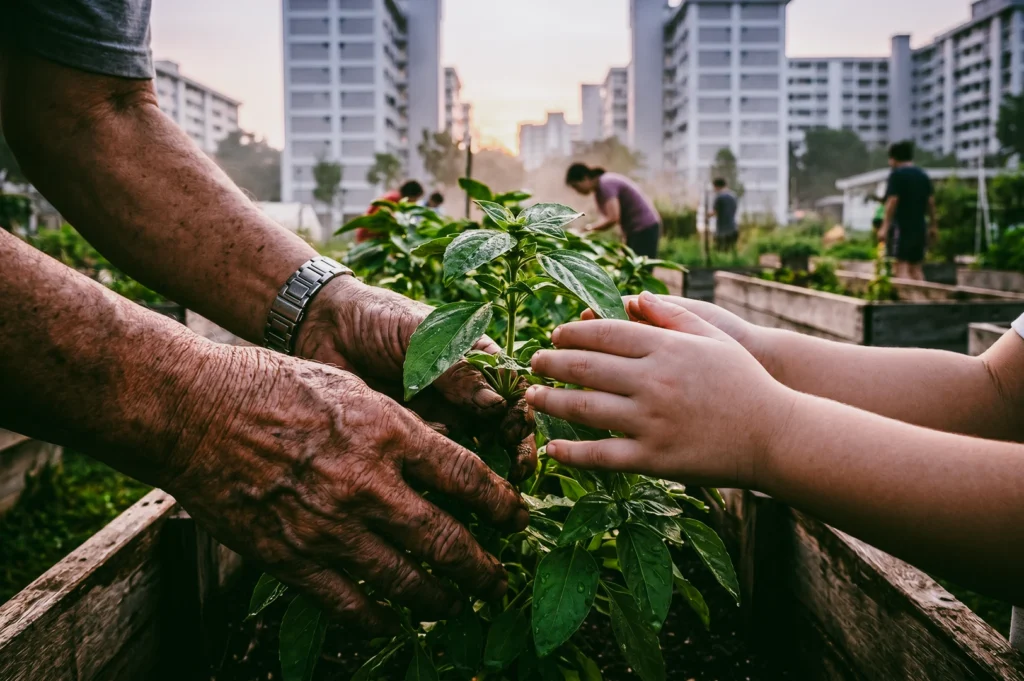
At the community garden down the lane, elders tend to vegetables and herbs with careful hands.
I watch as children tiptoe around the plots, learning not only which plants are safe to touch, but also the gentle patience of shared care.
The garden doesn’t just grow produce—it cultivates interaction, responsibility, and quiet respect for routines that span generations.
Walking past the wet market, I overhear vendors exchanging words in familiar dialects with early shoppers. Orders are already expected; names remembered.
One stallholder smiles at a customer before they even speak, a recognition that stretches beyond the immediate transaction. It’s subtle, almost imperceptible, yet it anchors a sense of continuity and belonging that no shiny high-rise can replicate.
These small actions accumulate. A neighbour helps carry groceries, a stranger pauses to rescue a loose shopping bag, a child waves from a bicycle. Individually, each gesture seems insignificant.
Together, they form a tapestry that is distinctly local—an invisible thread binding the community through kindness, attention, and presence.
In Singapore, these daily practices are often overlooked amid the hum of city life. But they matter.
They transform streets, parks, and food stalls into living spaces where relationships grow organically.
They make neighbourhoods familiar and comforting, where people are seen and recognised.
Perhaps that is why, even in a modern, fast-paced city, it feels good to pause, look around, and engage.
To smile at someone, to linger over a simple cup of coffee, to tend a shared garden plot.
In these moments, the social fabric of a neighbourhood isn’t abstract—it’s tangible, warm, and alive.
Every day, without fanfare, these small acts weave together the identity, memory, and connection that define the life of a community.
And it’s in noticing, participating, and appreciating these routines that we become part of the story ourselves.