
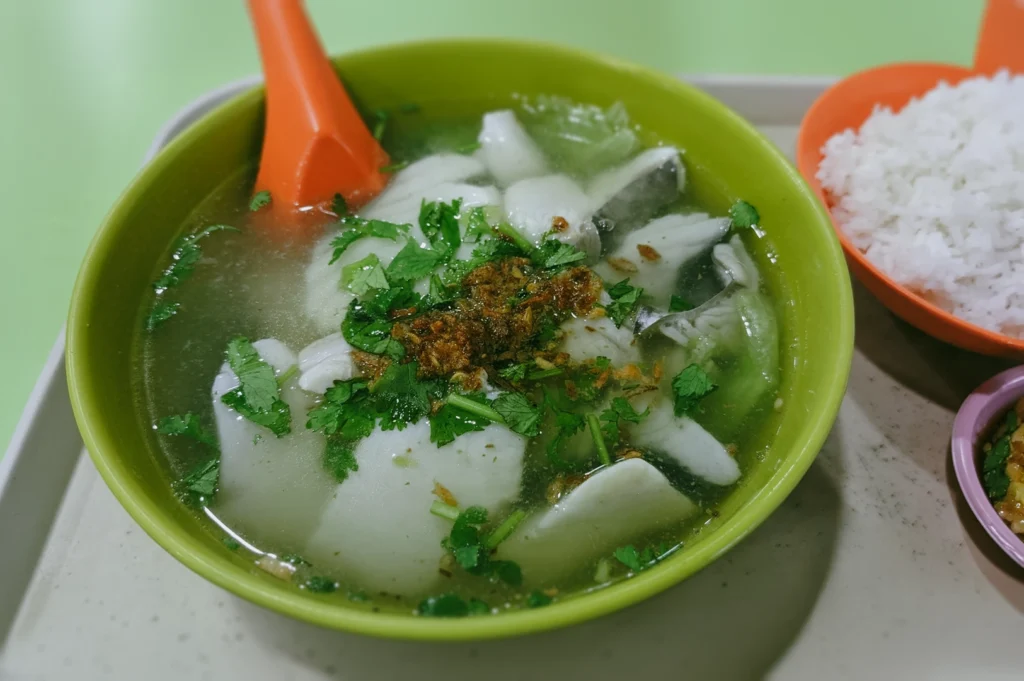
The other day, I found myself ordering a bowl of fish soup without really thinking about it.
I wasn’t particularly craving fish soup. I wasn’t even that hungry. But it was raining, and somehow my feet carried me straight to the same stall I used to visit with my father when I was a kid.
As I sat there waiting, I realised something: many of the foods we love are not choices we consciously make. They are habits we inherit.
Growing up, there were certain dishes that appeared whenever life felt slightly off balance. If someone in the family was sick, there was always a pot of porridge bubbling away in the kitchen. If exam results were good, we celebrated with chicken rice. During birthdays, there were noodles for longevity. During festive periods, entire tables filled with dishes that only seemed to appear once a year.
Nobody sat me down and explained these traditions. They simply became part of life.
Even now, I catch myself repeating them.
When I feel under the weather, I automatically look for soup. When I need comfort, I gravitate toward the same old hawker stalls that my parents brought me to decades ago. Sometimes I order exactly what they used to order. Not because I planned to, but because those flavours have quietly become part of how I understand comfort.
I think this is one of the reasons neighbourhood food feels so powerful.
It is also why hawker centres remain such important memory keepers in Singapore. At Neighbourhood Life SG, these everyday food spaces are often seen not just as places to eat, but as shared dining rooms where family habits, old favourites, and neighbourhood routines quietly live on.
A plate of nasi lemak is never just a plate of nasi lemak. A bowl of bak chor mee is never just noodles. Somewhere inside those meals are memories of Saturday mornings, family dinners, coffee shop conversations, and grandparents who always insisted we eat a little more.
The older I get, the more I realise that food memories are often inherited long before we recognise them. They arrive through routine, repetition, and shared tables. They become part of our identity without asking for permission.
Maybe that’s why certain smells stop us in our tracks. The scent of pandan, chicken broth, fried garlic, or kopi can transport us years into the past in a matter of seconds.
Food fills our stomachs, but it also carries people with it.
And sometimes, when we sit down for a familiar meal, we’re not just tasting a dish. We’re tasting a small piece of the people who taught us to love it.