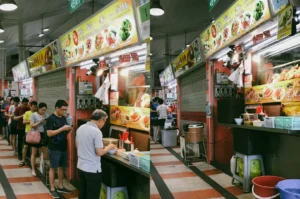
You are standing in the middle of a crowded hawker centre, one of the many vibrant hawker centres where Singapore chicken rice thrives. The ambient heat of the afternoon mixes with the roar of industrial exhaust fans and the clatter of melamine plates. You have exactly forty-five minutes before your next meeting. You scan the glowing signboards—fishball noodles, mixed economy rice, Western chop chops—but your brain is too fatigued to make a real choice.
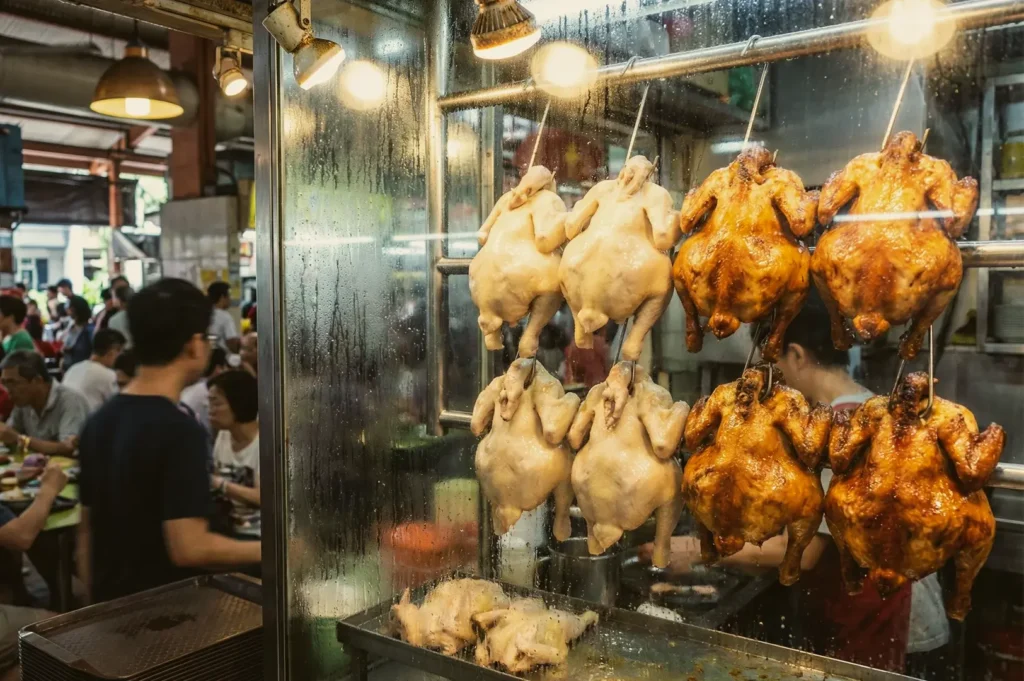
Your eyes land on a row of pale, plump chickens hanging by their necks behind a glass pane. You join the queue at one of the popular chicken rice stalls. The dish is typically served as chopped chicken, prized for its tenderness and juiciness, neatly arranged on a plate alongside fragrant rice and a bowl of clear broth. When you reach the front, the exchange is brief, almost a reflex: “Chicken rice, roasted, eat here.”
Hainanese chicken rice is considered Singapore’s national dish and is a staple in hawker centers across the city. It is enjoyed by people from all walks of life and can be found everywhere from bustling hawker centers to upscale hotels.
Yet, this deceptively simple dish, which feels so intrinsically woven into the fabric of Singaporean life, was not born here. It is a product of migration, born from necessity, shaped by available resources, and refined by decades of relentless daily repetition. The story of Hainanese chicken rice in Singapore is the story of how something entirely foreign becomes ordinary through adaptation.
From Hainan to Singapore — The Migration Story of Hainanese Chicken Rice
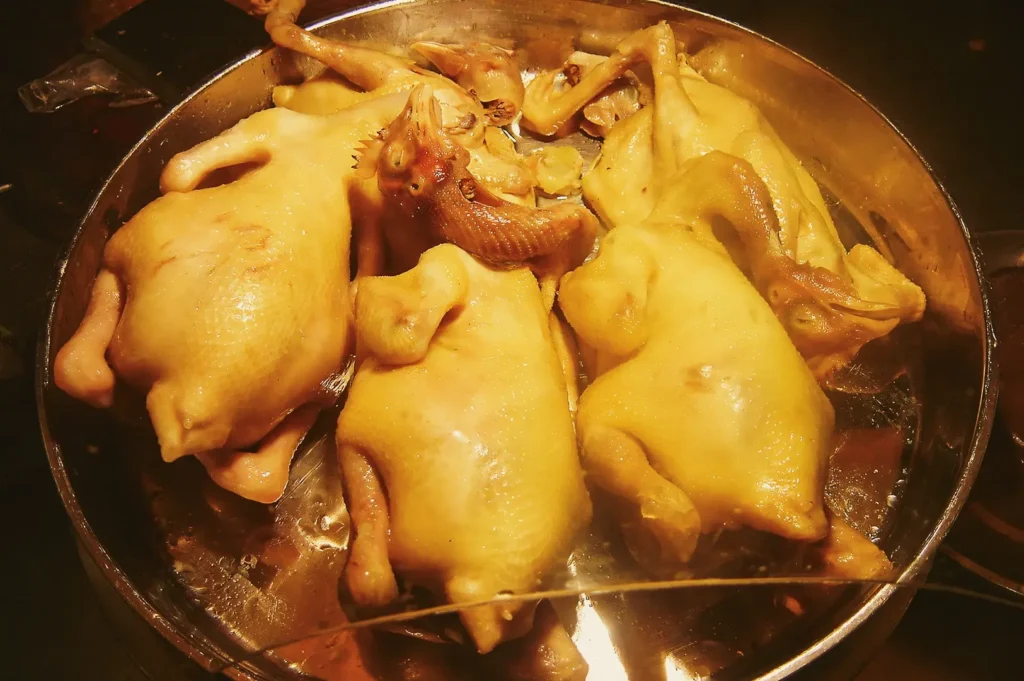
To understand this dish’s origins, we look to Hainan island in southern China, where Wenchang chicken—the original Hainanese chicken—was a festive delicacy made with a specific free-range breed known for its firm texture and earthy flavor. The chicken was gently poached, and its broth used to cook fragrant rice.
When Hainanese migrants arrived in Singapore and Malaya in the late 19th and early 20th centuries, they brought this recipe with them. Working initially as cooks for Peranakan families and British colonials, they later opened street food stalls, adapting the dish to local conditions. They used younger, fleshier local chickens and adopted the Cantonese technique of plunging cooked chicken into ice water to halt cooking and tighten the skin, evolving the dish into the Singaporean staple we know today.
How Hainanese Chicken Rice Adapted to Local Life in Singapore
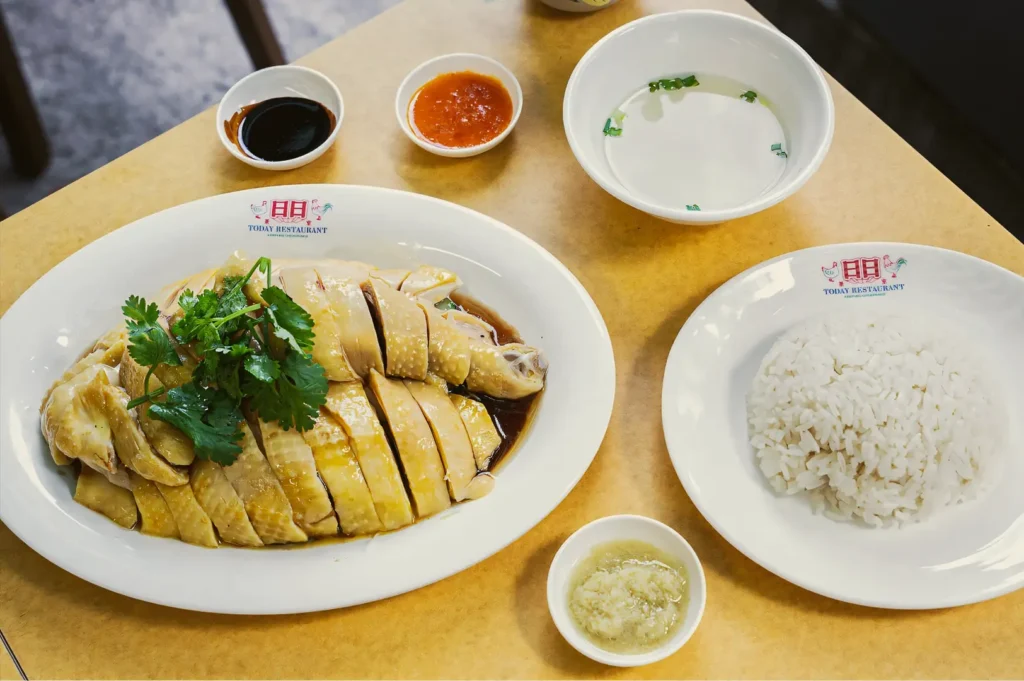
The transformation of Hainanese chicken rice from a celebratory dish to an everyday staple was driven by pragmatism. As Singapore urbanized, the dish scaled perfectly for mass feeding: chickens were poached before dawn, hung to dry, and chopped to order quickly. The preparation involves scalding the chicken and dipping it in ice-cold water to maintain tenderness, giving poached chicken rice its signature silky texture and juiciness.
The flavor profile adapted to local tastes. The rice, originally subdued, became intensely fragrant by frying raw grains in chicken fat, garlic, ginger, pandan leaves, and spices like lemongrass before cooking in chicken broth. Infused with ginger and scallions, the rice became a star component.
Variations like kampung-style chicken rice and soya sauce chicken rice emerged, with poached chicken rice remaining popular for its delicate flavor. The chilli sauce evolved into a bright, acidic, and spicy condiment made from red chilies, raw garlic, ginger, and calamansi lime juice, balancing the rich chicken and fragrant rice.
Chicken Rice as a Social and Cultural Connector in Singapore's National Dish
Beyond its role as a beloved meal, Hainanese chicken rice serves as a vibrant social and cultural connector in Singapore. Hawker centres, where chicken rice stalls are ubiquitous, function as communal gathering spots where people from all walks of life converge. Hawker centers in Singapore are known for their affordable and diverse food options, including Hainanese chicken rice, which can be found at various price points. Here, strangers share tables, stories, and experiences over plates of this iconic dish, fostering a unique sense of community and belonging.
Chicken rice transcends generational divides, uniting elderly regulars who have frequented the same chicken rice spots—popular local restaurants and hawker stalls highly recommended by Singaporeans—for decades with younger food lovers discovering the dish anew. It acts as a culinary thread weaving together Singapore’s diverse ethnic tapestry, reflecting the nation’s multicultural identity through its Hainanese roots and local adaptations.
For a closer look at how some of these beloved places continue to serve the city today, Hainanese Chicken Rice Singapore: 5 Spots Serving the City’s Most Familiar Dish highlights a handful of stalls where this shared experience still plays out daily.
The Craftsmanship Behind the Plate of Singapore Chicken Rice
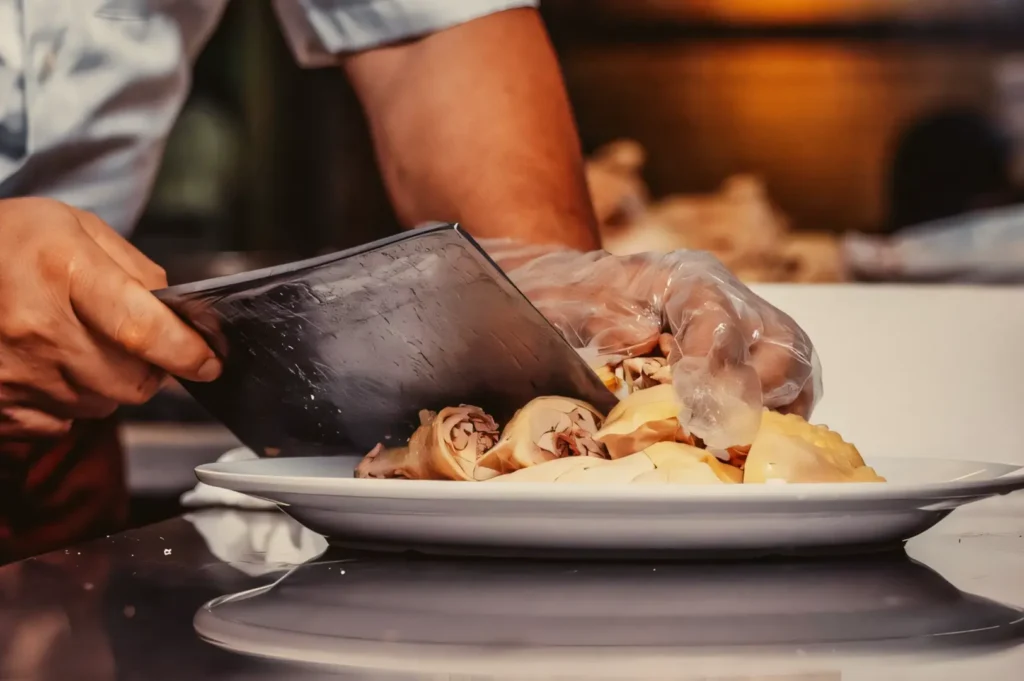
The mastery behind a perfect plate of Hainanese chicken rice lies in the skill and dedication of the hawkers and the head chef, whose expertise ensures every element is executed to perfection. From selecting fresh, quality chickens to meticulously preparing the signature boiled chicken, poached chicken, steamed chicken, or roasted chicken, every step demands precision.
The rice, often pre-fried in chicken fat, garlic, and ginger before being steamed in fragrant chicken broth, showcases the delicate balance of flavors that define the dish. Deep-fried shallots are commonly used as a garnish, adding a crunchy texture, and sauces such as light soy sauce or sesame oil are artistically drizzled over the chicken or rice to enhance both flavor and visual appeal.
While tradition guides much of the preparation, innovation also finds its place. Some hawkers experiment with new sauces or cooking techniques, ensuring that the dish continues to evolve while honoring its roots. This blend of heritage and creativity keeps Hainanese chicken rice relevant and beloved in Singapore’s dynamic food scene.
Hainanese Chicken Rice Became a Staple: Practical Breakdown
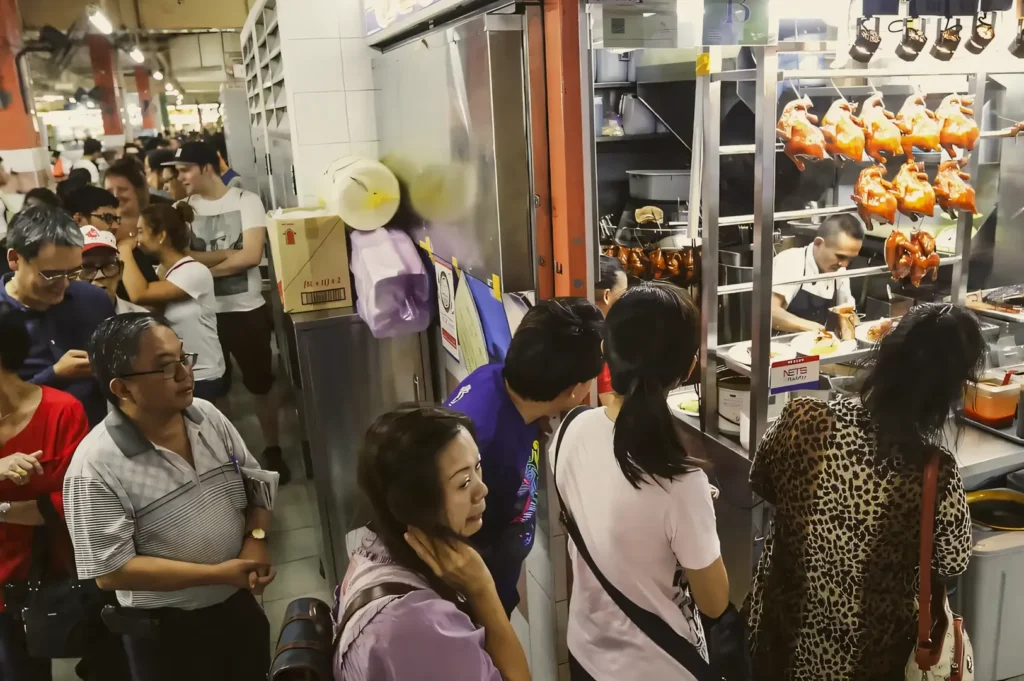
In a city with an overwhelming density of food options, the enduring dominance of chicken rice comes down to behavioral economics. It did not become a staple just because it tastes good. We default to it for a few highly practical reasons:
Consistency: A plate of chicken rice rarely surprises you. Whether it is excellent or just average, it generally tastes like chicken rice. You know exactly what you are getting.
Accessibility: It is nearly impossible to be in an urbanized area of Singapore and not be within a five-minute walk of a chicken rice stall. It is physically everywhere.
Speed: The assembly requires mere seconds. The chicken is pre-cooked; the fragrant rice is warm in the cooker. A skilled hawker can chop and plate a portion in under a minute, making it the ultimate fast food.
Price: Despite the rising costs of living, it remains one of the most affordable complete meals available, providing a highly effective ratio of cost to caloric intake.
Familiarity: It demands very low mental effort. When decision fatigue sets in at the end of a long workday, ordering chicken rice is a reflex that requires no menu reading. Hainanese chicken rice can also be considered comfort food that transcends social and economic divides, making it a beloved choice for people from all walks of life.
When it comes to preparation, both roasted and poached versions of Hainanese chicken rice are equally good—each offering a different texture and flavor profile, so the choice often comes down to personal preference.
From Hawker Stall to National Identity: Singapore's National Dish
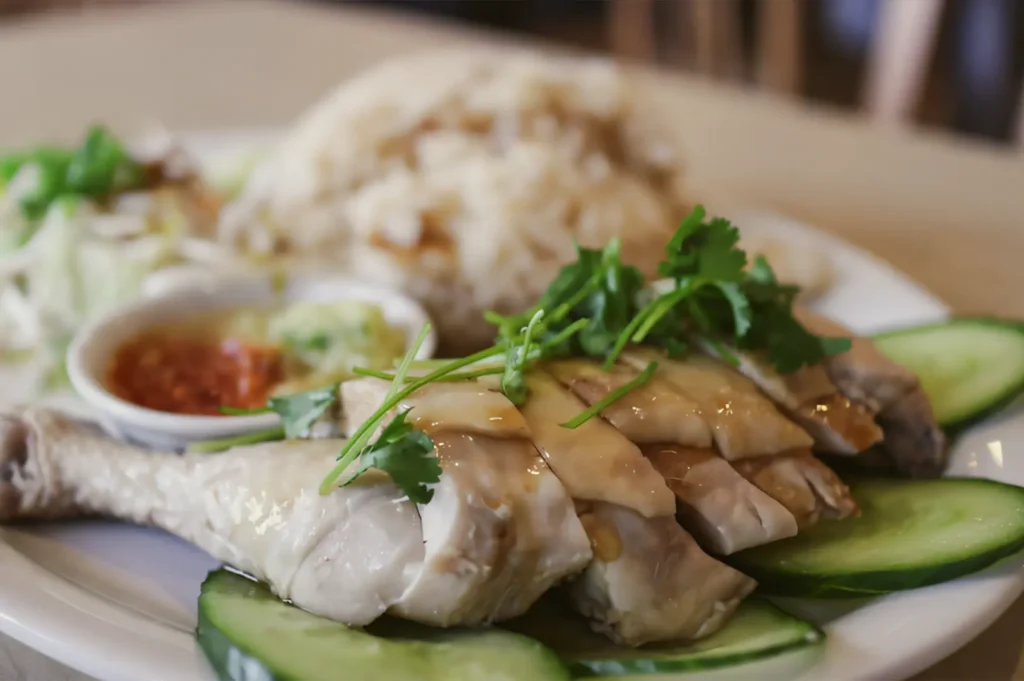
Over time, Hainanese chicken rice has moved beyond mere sustenance to become a powerful representation of Singaporean cuisine. It is featured in international tourism campaigns, served on the national carrier, and used as a shorthand for local identity on the global stage. Hainanese chicken rice is characterized by poached chicken and seasoned rice, often served with chili sauce and soy sauce, making it instantly recognizable and beloved.
This creates a fascinating tension. On one hand, it is hoisted up as a national symbol, romanticized as the pinnacle of our culinary heritage. Singaporeans and visitors alike are always on the hunt for the best Hainanese chicken rice, seeking out renowned stalls and authentic preparations that exemplify the dish’s status. On the other hand, for the people who actually live here, it is just Tuesday’s lunch. It is entirely unglamorous.
Yet, perhaps that is exactly why it represents Singapore so well. The dish perfectly mirrors the nation’s own trajectory. It is pragmatic, highly efficient, heavily hybridized, and born from migrant roots. It does not rely on complex, obscure ingredients; it relies on taking something simple and executing it with relentless, standardized precision.
Conclusion: Appreciating the Best Chicken Rice in Singapore
Hainanese chicken rice became a local staple through daily use and adaptation, evolving from a foreign dish into a familiar comfort. Iconic stalls like Tian Tian, Ah Tai, Katong Mei Wei, Wee Nam Kee, Boon Tong Kee, Liao Fan Hawker Chan, Tiong Bahru Hainanese Boneless Chicken Rice, Fook Seng Goldenhill, Hainanese Delicacy, Nanxiang, and Chin Chin Eating House have all contributed to its rich legacy.
The dish is often served with chicken soup, side dishes like fried chicken, deep-fried items, and char siew, accompanied by signature dark soy sauce and fragrant sesame oil. Regional variations like Thai khao man gai highlight its international influence.
Next time you order your usual chicken rice, take a moment to appreciate the fragrant rice coated in chicken fat, the sharp chilli sauce, cooling achar, and the comforting soup. This simple dish reflects Singapore’s history and culture, served daily on humble plates across the city.