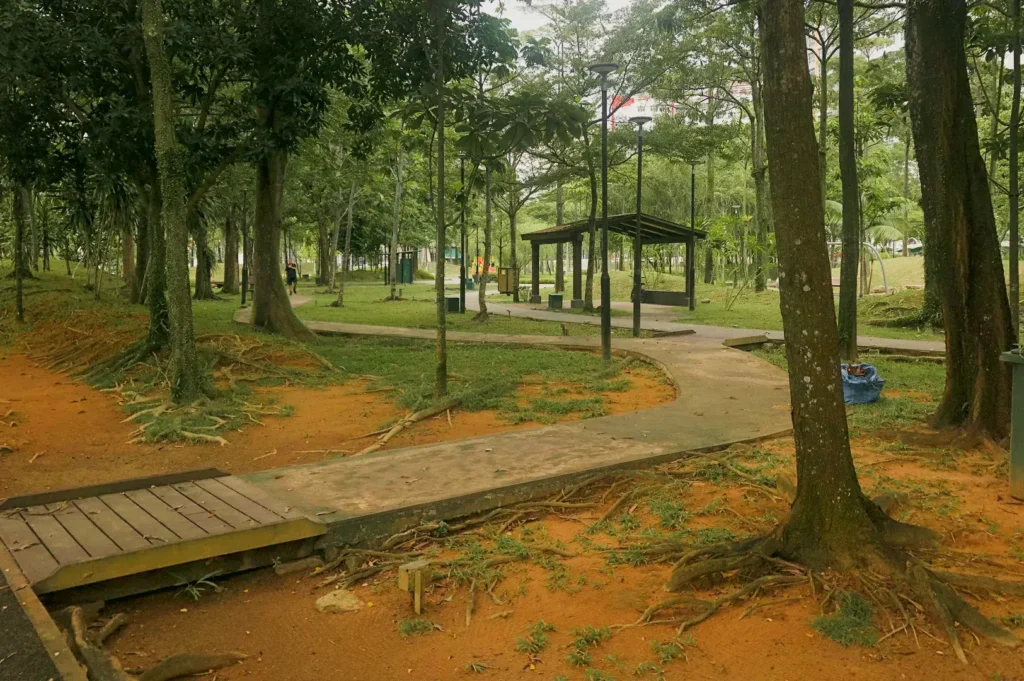
The morning air still carries a hint of dew as the estate begins to wake. Long before the first MRT train hums along its elevated tracks, a quiet rhythm takes over the spaces between the concrete blocks. Along a narrow, tree-lined path, early joggers set their pace to the gentle rustle of mahogany leaves. Nearby, an elderly resident kneels by a raised soil bed, carefully inspecting the vibrant green leaves of a sweet potato plant, while a group of kids gathers under the sprawling canopy of a decades-old rain tree, their laughter echoing through the humid air.
When we think of urban greenery in this city, our minds often jump to the spectacular. We picture the towering, illuminated Supertrees of Gardens by the Bay or the pristine, sprawling lawns of the Singapore Botanic Gardens. These iconic landmarks are undeniable sources of national pride. Yet, the true ecological heartbeat of the island beats much closer to home.
It exists in the modest, unassuming pockets of green woven directly into our residential estates. These hidden green spaces are located within residential estates, making them easily accessible to residents. These are the neighbourhood parks Singapore residents walk through every day, the shared plots of soil where neighbours swap chilli seeds, and the quiet corridors of shade that make high-density living not just bearable, but deeply humane. These hidden green spaces are where the real story of our relationship with nature unfolds.
The Quiet Pulse of Green Spaces in a Garden City
The presence of nature in our housing estates is no happy accident. It is the result of deliberate, meticulous urban planning that dates back to the very foundation of the nation’s housing policies. Decades ago, as towering concrete blocks rose to house a rapidly growing population, planners recognized a fundamental truth: a city of pure concrete would quickly stifle the human spirit.
Urban greenery Singapore style was never just about aesthetics. It was, and remains, a critical component of public health and social engineering. By weaving green spaces into the fabric of everyday life, planners ensured that nature was never a luxury reserved for those who could afford to travel to the city fringes. It was a right, accessible to everyone just a short lift ride away.
Today, this philosophy manifests in the seamless integration of foliage and infrastructure. Ferns cascade from the edges of multi-story car parks. Bougainvillea spills brightly over covered walkways. Small, manicured lawns sit quietly between blocks, offering visual relief from the hard lines of urban architecture. These spaces do not demand attention.
They simply exist, providing a soft, continuous background to the daily theater of neighbourhood life. They absorb the heat of the afternoon sun, muffle the noise of traffic, and remind us that we share this island with a complex, living ecosystem. Regular maintenance is essential to keep these green spaces clean, safe, and enjoyable for all residents.
The Interwoven Life of Community Gardens and Growing Together
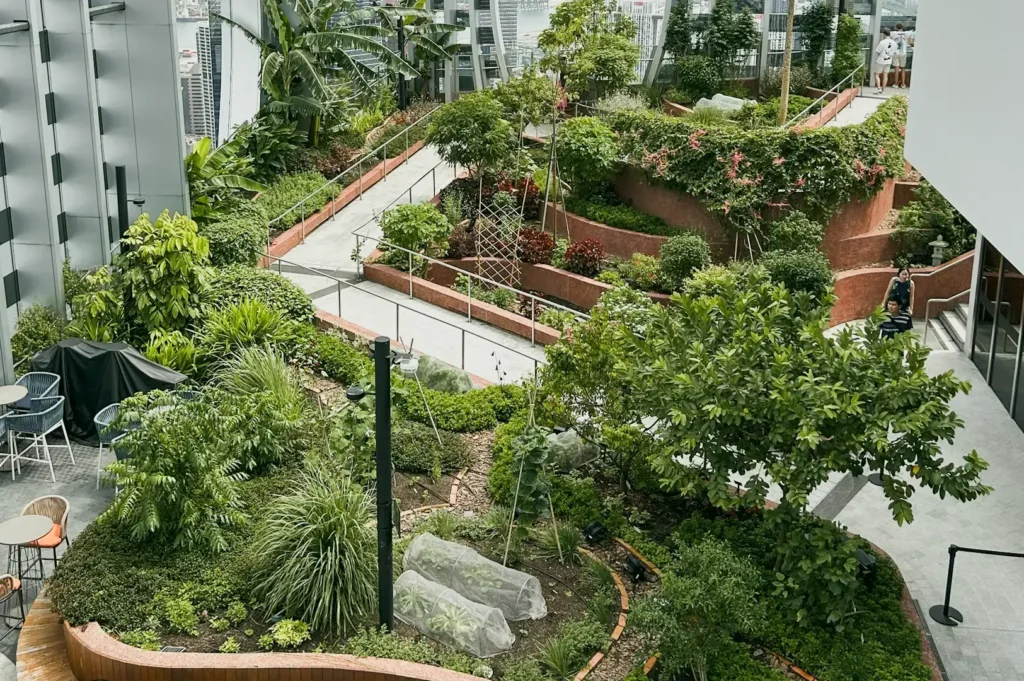
There is a quiet, almost sacred rhythm to the community garden. Beyond the ornamental, these spaces are places where life is cultivated in its most literal sense. Community gardens in Singapore are more than plots of soil: they are living expressions of connection, rooted in soil but blossoming through shared care and collective hope.
Managed by volunteers, these gardens form a vital thread in the social fabric. Here, residents from different walks of life come together, tending to flowering plants and edible greens alike. The act of growing plants becomes a shared language, a form of communion with the earth and with one another.
In these patches, the scent of pandan leaves mingles with the sharp tang of lemongrass. Butterfly pea flowers bloom in delicate shades of blue, while chilli plants stand proud with their fiery fruit. This cultivation is not only about food or beauty—it is a practice of stewardship, a quiet resistance to the alienation of urban life.
Green Corridors: The Park Connector Network as a Living Artery
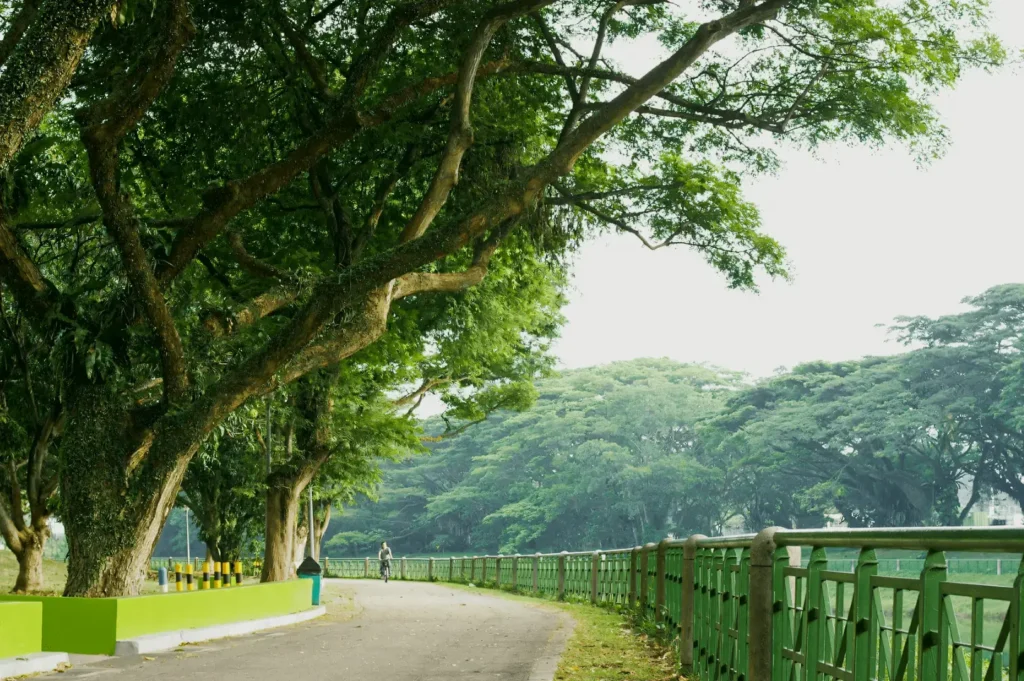
The magic of this island’s greenery lies not just in isolated pockets, but in how these spaces speak to one another. The park connector network is a masterstroke of urban design, a vast, island-wide web of green corridors that links residential estates to parks, coastal promenades like East Coast Park, and nature reserves.
These pathways, often tracing the edges of housing estates or following the gentle curves of drainage canals, form living arteries through the city. They carry not just cyclists and walkers, but the pulse of urban wildlife—birds, butterflies, and other fauna—moving safely through the concrete maze.
As daylight fades into night, these corridors take on a different life. The soft glow of streetlamps reveals families strolling, children riding scooters, and joggers finding their rhythm beneath the canopy of trees. The park connector network transforms the act of moving through the city into a chance to wander amidst nature, to admire scenic views, and to find moments of calm in the daily rush.
The Subtle Grandeur of Nature’s Presence: Forests, Trails, and Canopies
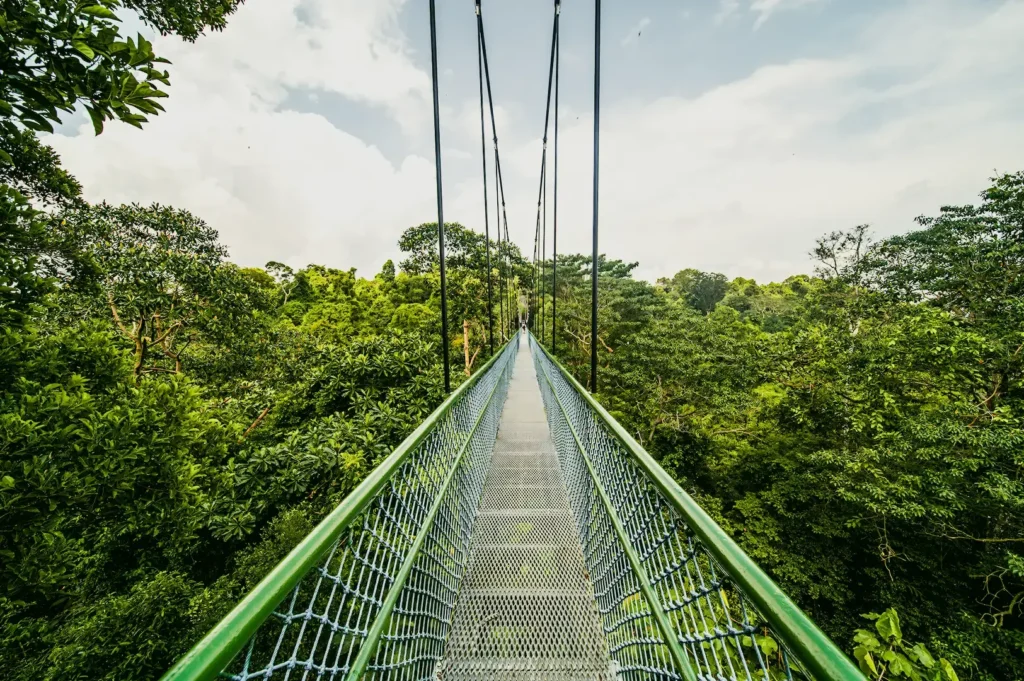
Singapore’s green spaces offer more than just respite—they are invitations to explore the layered complexity of nature within an urban island. The treetop walk at MacRitchie Reservoir, for example, lifts visitors into the forest canopy, offering a rare vantage point to observe the intricate dance of species below and beyond.
Nearby, Bedok Reservoir Park stretches wide, where water meets earth under the watchful presence of towering trees. Pasir Ris Park’s boardwalks meander through mangroves, a reminder of the island’s coastal heritage and the sea’s quiet influence on its green lungs.
Henderson Waves, the highest pedestrian bridge in Singapore, arcs gracefully above the southern forest, its undulating form blending artfully with the natural landscape. Here, the interplay of built and natural environments creates a space where one can sit, reflect, and admire the fusion of human creativity and ecological wonder.
The Quiet Guardianship of Green Spaces: Residents and Volunteers

The vitality of Singapore’s green spaces depends not only on design but on the ongoing care and stewardship by residents and volunteers. From the smallest garden plots to expansive parks, these individuals maintain the soil, tend the plants, and nurture the wildlife that calls these spaces home.
The community’s role in sustaining these gardens and parks is a form of living conservation. It is through their hands that flowering plants bloom, that trees grow tall, and that other wildlife find refuge amid the urban sprawl. Their efforts ensure that these spaces remain ideal places for nature lovers and residents alike to find connection, solace, and inspiration.
Reflections on the Meaning of Hidden Green Spaces
In a city defined by its dense population and relentless forward momentum, these hidden green spaces perform an essential, silent labor. Their value extends far beyond the aesthetic.
They are crucial for mental well-being, offering micro-doses of tranquility where one can sit beneath trees, listen to the rustle of leaves, and watch the subtle movements of wildlife. Environmentally, they mitigate urban heat, absorb rainwater, and sustain biodiversity.
But perhaps most importantly, these spaces humanize the city. They are where community is nurtured, where the seasons mark time through blooming orchids and flowering plants, and where the island’s natural heritage quietly persists.
The Essential Role of Hidden Green Spaces
Singapore’s hidden green spaces are not merely patches of nature amid concrete; they are living, breathing parts of the city’s soul. They remind us that even in the most urban settings, life finds a way to grow, to connect, and to endure.
For those who wander these spaces, whether along cycling paths, through community gardens, or beneath the canopy of the treetop walk, the experience is a gentle invitation to pause, to admire, and to be present. In these moments, the city’s green heart reveals itself, quietly sustaining the rhythm of life on this island.
Connecting with Nature and Community
For further connection or to learn more about these spaces, residents and visitors alike may contact NParks, the steward of Singapore’s green legacy, and explore the map of various parks and green spaces that form the intricate mosaic of this garden city.