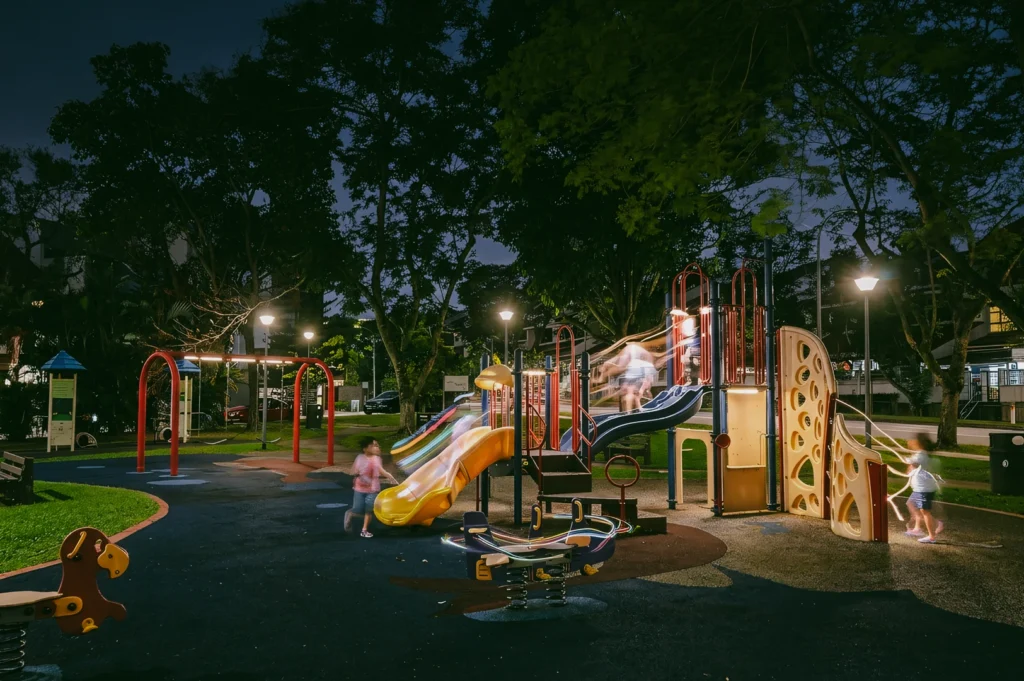
For the longest time, the playground under my block was just background noise.
I passed it almost every day on the way to somewhere else — the MRT, the coffee shop, the minimart downstairs when I forgot to buy eggs again. Most evenings, I’d cut through the same path with my earbuds in, moving fast enough that everything around me blurred into routine.
Then one evening, I forgot my phone at home.
I almost went back upstairs to get it, but I was only heading out for takeaway anyway, so I kept walking. Without music in my ears, the neighbourhood suddenly sounded different. The squeak of swings. Slippers dragging slowly across the pavement. A little boy laughing so hard he hiccuped between breaths.
And for the first time in years, I actually looked at the playground.
Not just at the equipment, but at the people around it.
Two elderly uncles sat nearby sharing a packet of sunflower seeds, commenting softly on the weather like they’d done it a hundred times before. A tired-looking dad loosened his office shirt collar while watching his daughter climb the slide again and again. One auntie walked slow laps around the playground while carrying a plastic bag full of vegetables, stopping every few minutes to wave at someone she knew.
Nobody seemed to be in a hurry except me.
That was the strange thing I noticed. The playground wasn’t only for children. It had quietly become one of those rare shared spaces where different lives overlapped naturally. Parents rested there after work. Elderly residents gathered there before dinner. Teenagers drifted in after sunset with basketballs tucked under their arms. Even people walking alone, like me, slowed down around it without realising.
I used to think community happened during big events — festivals, celebrations, neighbourhood gatherings with banners and folding chairs.
But maybe it also happens here.
In the small everyday moments we almost walk past.