
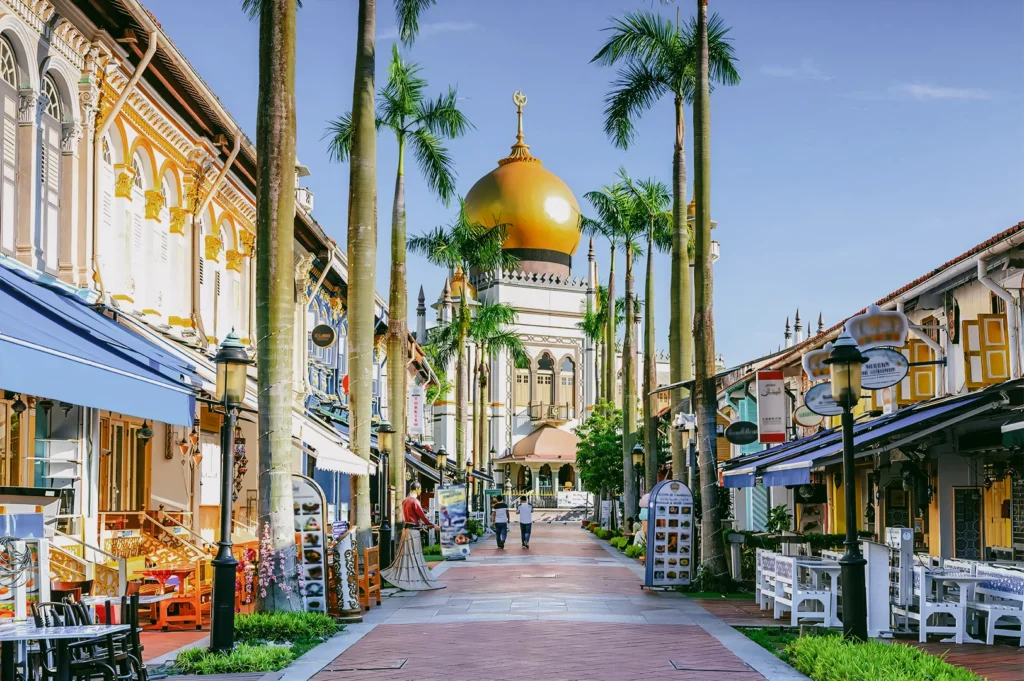
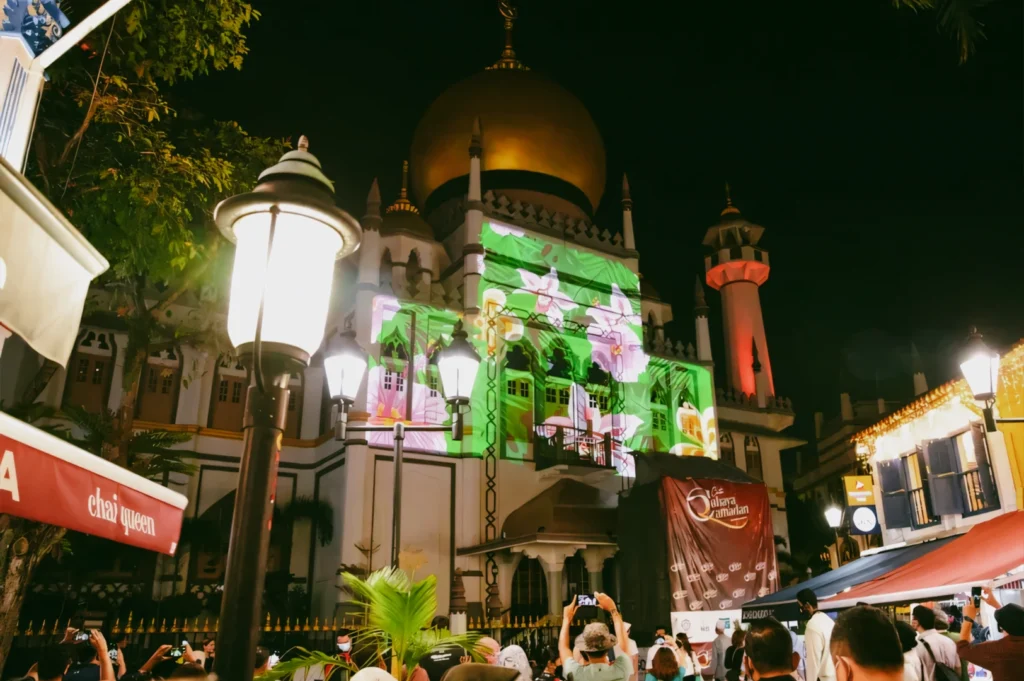
In the late afternoon, the golden dome of Sultan Mosque catches the sun before the surrounding streets begin to soften into evening. Along Arab Street, visitors move past rows of textile shops where bolts of fabric are stacked in rich blues, golds, and deep reds. A few doors away, the smell of cardamom coffee drifts from a café, while a mural turns the side of a shophouse into a bright splash of color.
On Haji Lane, young people pause for photographs outside independent boutiques, while older shopkeepers nearby continue the steady work of measuring cloth, arranging prayer mats, or greeting regular customers by name.
Old Streets, New Stories
This is the everyday contrast of Kampong Glam. It is one of Singapore’s most photographed neighbourhoods, but also one of its most layered. To see it only as a stylish dining and shopping area is to miss the deeper rhythm underneath.
Kampong Glam is a historical landmark, a centre of Malay heritage Singapore continues to hold close, and a living neighbourhood where religion, commerce, food, architecture, and creative life still meet in the same streets.
Its story is not simply one of old giving way to new. It is a story of adaptation and continuity, and shared memory. The district has changed many times, yet traces of its past remain visible in its buildings, street names, rituals, and daily routines.
A Royal Seat in Early Singapore
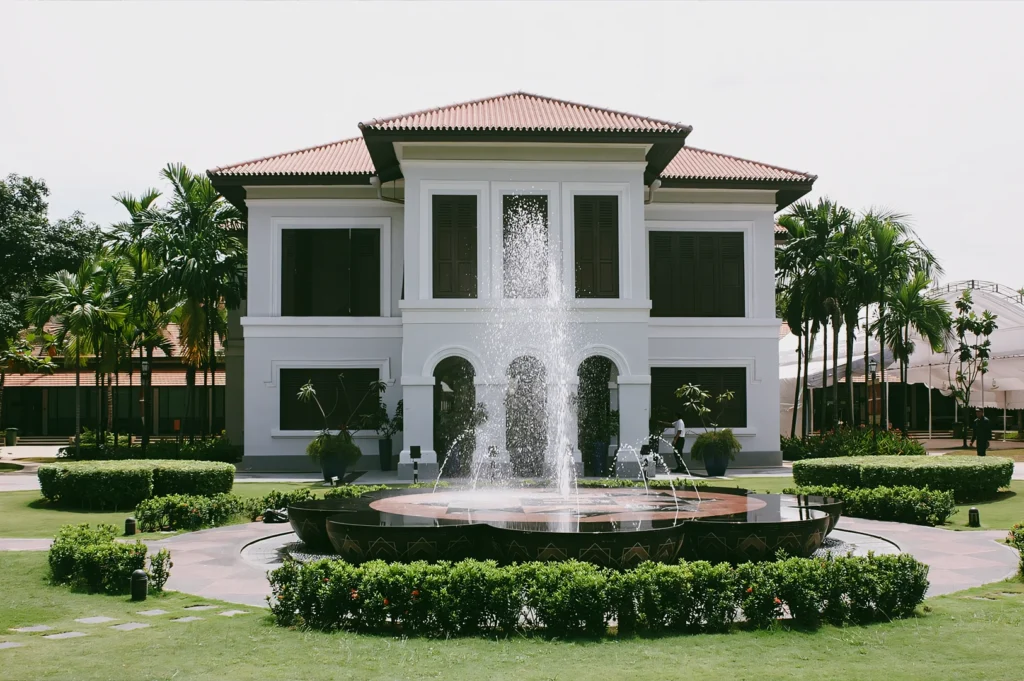
Kampong Glam’s position in Singapore’s history became more formal in the early 19th century, when Sultan Hussein Shah of Johor was recognised by the British as part of the political arrangements that shaped colonial Singapore. The area was designated as a Malay royal enclave, and this gave Kampong Glam a special role in the emerging town.
Istana Kampong Glam became the residence of the Malay royalty. More than a building, it represented authority, identity, and continuity at a time when Singapore was changing rapidly. Around it, the district developed as a centre for the Malay and Muslim communities, drawing people connected by faith, trade, kinship, and cultural ties.
A Royal Legacy
Today, the former palace grounds are part of the Malay Heritage Centre site, though its role continues to evolve with ongoing heritage interpretation and public memory. Even as the function of the istana has changed, its presence reminds us that Kampong Glam was once a seat of power. The area’s history is not only commercial or architectural; it is also political and cultural.
Royal influence helped shape the district’s identity. It attracted communities, supported institutions, and gave Kampong Glam a sense of importance beyond its size. Walking through the neighbourhood today, we can still sense that older structure in the way Sultan Mosque, the former istana, and surrounding streets form a cultural heart.
A Port Community Shaped by Trade
Kampong Glam grew not only through royalty but also through trade. As Singapore developed into a busy port, the district became home to merchants, craftsmen, religious teachers, money changers, food sellers, and travellers from across the region.
A Melting Pot of Cultures
Arab, Bugis, Javanese, Malay, Indian Muslim, and other communities contributed to the district’s character. Some arrived for business, some for religious learning, and others for work connected to the port. Their presence shaped what was sold, spoken, cooked, and practiced in the neighbourhood.
Arab merchants were associated with trade, religious networks, and philanthropy. Bugis traders brought maritime connections and commercial energy. Javanese and Malay communities added to the district’s social and cultural fabric. Indian Muslim businesses contributed to food, textiles, and daily commerce.
Over time, Kampong Glam became a meeting point for different Muslim communities across Southeast Asia and beyond.
This mix did not make the neighbourhood rootless. Instead, it gave Kampong Glam culture its distinctive depth. The district became both local and regional, grounded in Singapore while connected to wider movements of people, goods, and ideas.
The Streets Built by Commerce
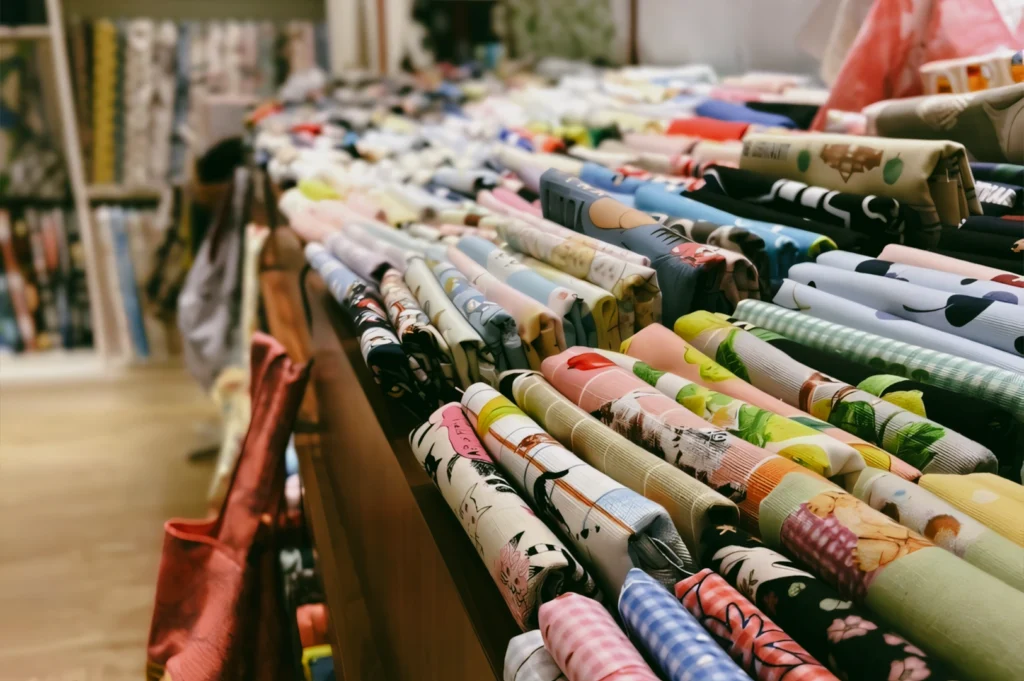
The street names around Kampong Glam still reveal this trading past. Arab Street remains strongly associated with textiles, carpets, prayer items, and traditional goods. Bussorah Street, Muscat Street, Kandahar Street, and Baghdad Street point to historical links with the broader Muslim world.
These names are not decorative labels. They are reminders of the district’s old commercial and cultural orientation.
A Layered Economy
For many years, customers came to Kampong Glam to buy fabric for weddings, festive clothing, religious occasions, and family ceremonies. Textile shops became part of the neighbourhood’s identity, with shopkeepers offering advice on material, colour, and suitability. Perfume stores, bookshops, food businesses, and provision shops added to the everyday economy.
Even now, among the newer cafés and lifestyle stores, older businesses continue to operate. A visitor may walk past a modern dessert shop and then enter a textile store where the pace is slower and the conversation more practical. This is where the district’s layered character becomes visible. Commerce has changed, but it has not disappeared. It has simply taken on new forms beside older ones.
Sultan Mosque and the Spiritual Heart of the District
A Visual and Spiritual Anchor
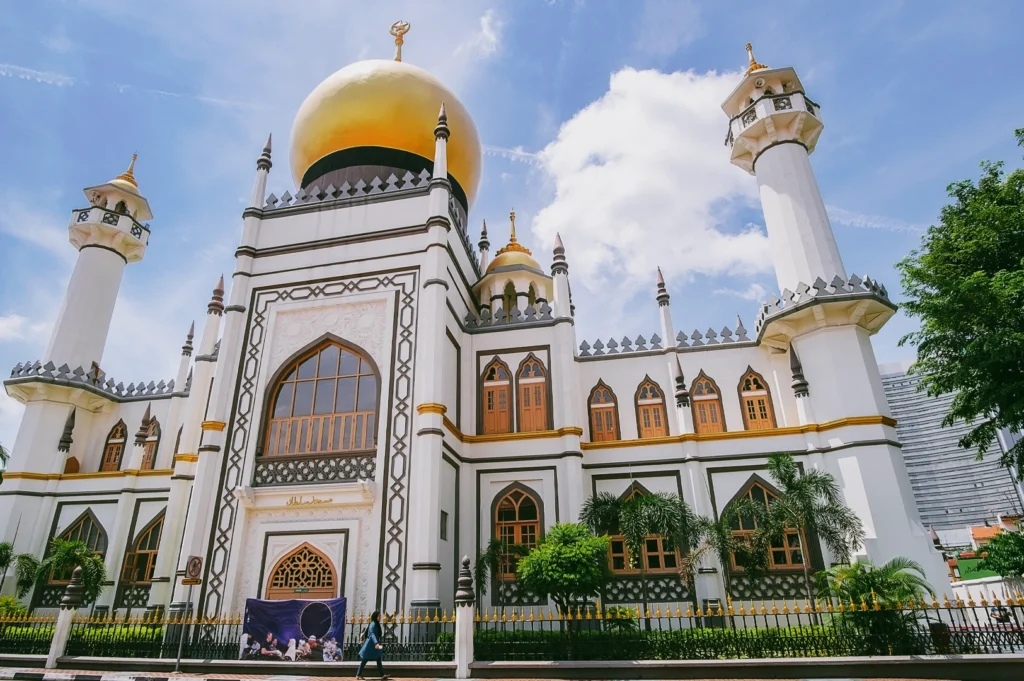
No landmark defines Kampong Glam more clearly than Sultan Mosque. With its golden dome, large prayer hall, and commanding presence along Muscat Street and North Bridge Road, it remains the spiritual and visual anchor of the district.
Historical Roots and Architectural Significance
The mosque’s history stretches back to the early years of colonial Singapore, when it was built for the Muslim community with support linked to Sultan Hussein Shah.
The current structure, completed in the 20th century, reflects a more formal architectural expression, but its role has always extended beyond design. Sultan Mosque is a place of worship, but also a social landmark, gathering point, and symbol of Muslim life in Singapore.
A Hub of Weekly and Annual Rhythms
On Fridays, the area around the mosque changes noticeably. Worshippers arrive from offices, shops, homes, and nearby streets. Some come in work clothes, some in traditional attire, some alone, others with family or friends. The surrounding businesses adjust to this rhythm. Food stalls become busier, conversations spill onto pavements, and the neighbourhood briefly gathers around a shared routine.
During Ramadan and Hari Raya periods, the mosque and surrounding streets take on even greater significance. The area becomes a place of prayer, food, charity, shopping, and reunion. These moments show how religion in Kampong Glam is not separate from neighbourhood life. It shapes movement, timing, commerce, and community connection.
The Cultural Identity of Kampong Glam
Kampong Glam’s cultural identity lives in the details. It can be seen in the prayer caps displayed in shopfronts, the scent of oud and attar from perfume stores, the stacks of batik and lace in textile shops, and the menus of restaurants serving nasi padang, biryani, murtabak, and Middle Eastern dishes.
A Living, Breathing Culture
This is not museum-style preservation. The culture here is active and practical. People still come to buy fabric for family events. Families still gather for meals after prayers. Shopkeepers still serve long-time customers who know exactly what they need. Food remains a strong part of the area’s identity because it connects daily appetite with memory, migration, and tradition.
Heritage in Daily Routines
Malay and Muslim heritage remain visible not only during major festivals but in ordinary routines. From preparing for Hari Raya and gathering with extended family to preserving traditional customs passed down through generations, many of these practices continue shaping everyday life in the district.
These enduring traditions remain an important part of Kampong Glam’s identity and reflect the broader story of Malay cultural traditions in Singapore.
This is why Kampong Glam remains one of the most important Singapore heritage neighbourhoods. Its value does not lie only in conserved shophouses or famous landmarks. It lies in the continued use of these spaces by communities who give them meaning.
From Heritage District to Creative Hub
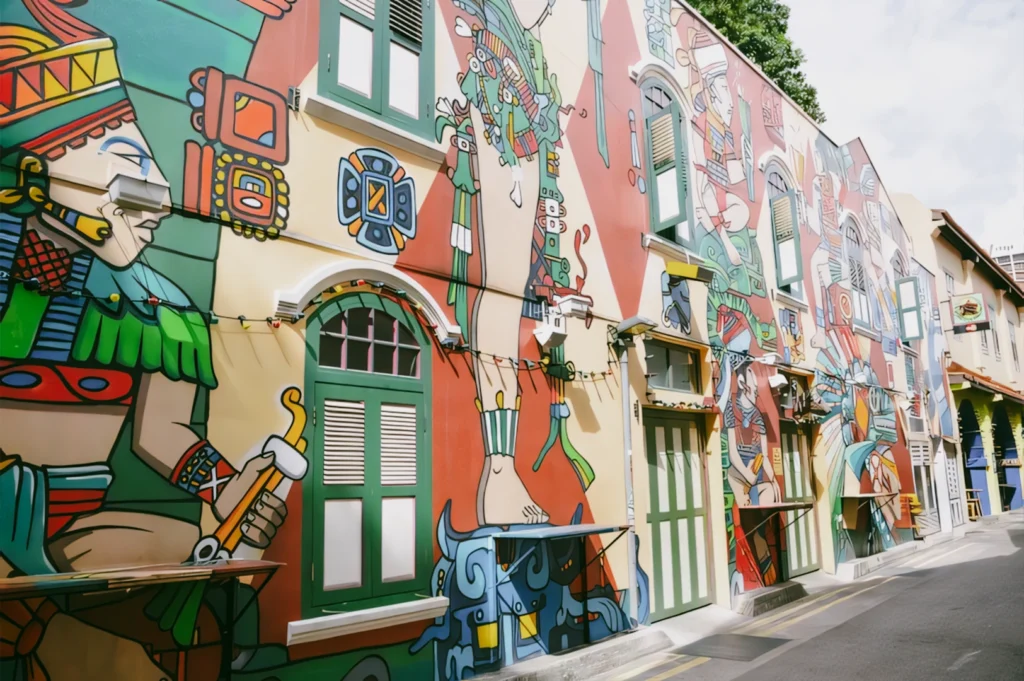
In recent decades, Kampong Glam has also become known as a creative precinct. Haji Lane, in particular, has drawn attention for its independent boutiques, murals, cafés, bars, and small design-led businesses. The narrow lane, once quieter and more modest, now carries a different energy, especially on weekends.
This change has brought new life to the district. Younger entrepreneurs have opened fashion shops, studios, coffee places, and creative businesses. Street art has added another layer to the visual landscape, turning blank walls into public canvases. Visitors who may first arrive for photographs often end up moving deeper into the neighbourhood.
Balancing Creativity with Community
At the same time, this transformation raises important questions. How does a heritage district welcome new creativity without losing its older communities? How can businesses serve contemporary tastes while respecting the cultural setting around them? What happens when a place becomes popular for its atmosphere, but its deeper history is overlooked?
These tensions are not unique to Kampong Glam. Many historic districts Singapore continues to conserve face similar pressures. Yet Kampong Glam shows that change does not always mean erasure. When handled with care, modern creativity can sit beside older traditions, adding to the neighbourhood rather than replacing it.
To walk through Kampong Glam today is to move through different layers of time. The architecture tells one story, the street names another.
Architectural and Street Stories
The two-storey shophouses, arched windows, five-foot ways, and decorative facades remind us of the district’s commercial past. The street names point to regional connections and older patterns of trade.
Sultan Mosque and Istana Kampong Glam reveal the district’s religious and royal significance. Arab Street speaks of commerce, textiles, and long-standing family businesses. Haji Lane reflects contemporary creativity and changing youth culture. Bussorah Street, with its view toward the mosque, brings together food, faith, and public life in one frame.
The Rhythm of Daily Life
Everyday routines add another layer. Delivery riders move through narrow lanes. Worshippers remove their shoes before entering the mosque. Café staff arrange outdoor tables. Tourists take photographs. Office workers pass through during lunch. Shopkeepers unlock shutters in the morning and sweep the pavement before customers arrive.
None of these details stands alone. Together, they show how history continues to shape the present. Kampong Glam is not a frozen heritage display. It is a neighbourhood where old and new uses overlap, sometimes comfortably, sometimes uneasily, but always visibly.
Why Kampong Glam Continues to Matter
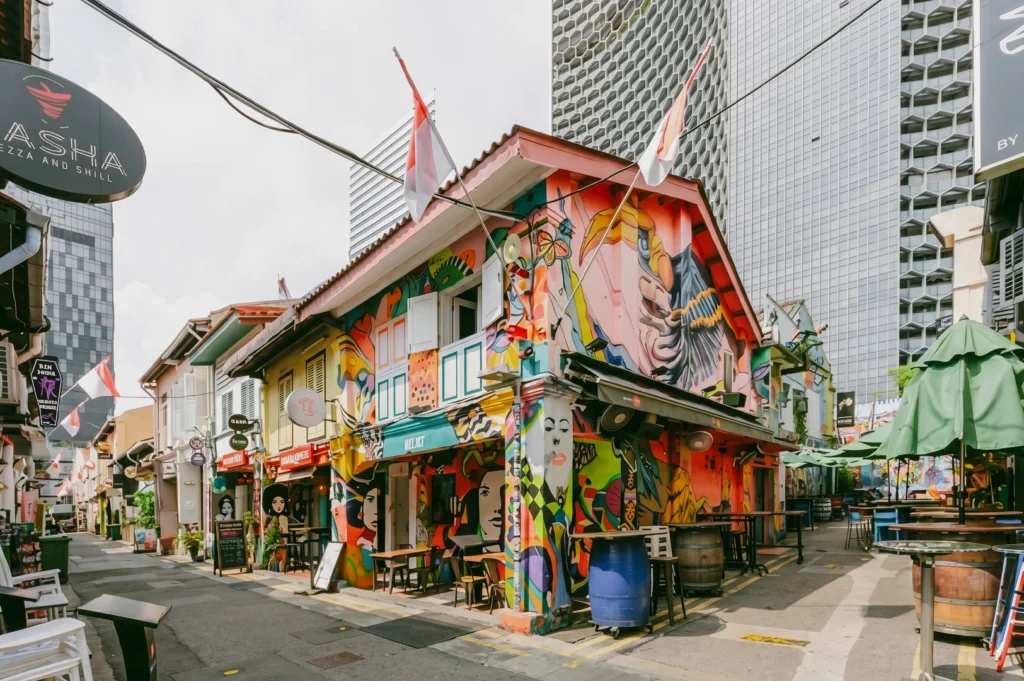
Kampong Glam continues to matter because it holds several meanings at once. It is a heritage district with deep historical roots. It is a cultural gathering space for the Malay community Singapore has grown alongside. It is a symbol of Singapore’s multicultural identity, shaped by Malay, Arab, Bugis, Javanese, Indian Muslim, and other influences. It is also a place where contemporary life continues to unfold through food, business, art, worship, and leisure.
Its importance lies in this coexistence. In Kampong Glam, history is not only found in plaques or restored buildings. It is present in the way people move through the area, the goods they buy, the prayers they attend, the meals they share, and the businesses they build.
The district reminds us that heritage is not passive. It needs communities, customers, caretakers, and new generations willing to understand what came before. It also needs space to evolve.
If Kampong Glam had remained only a royal enclave or only a textile district, it might not carry the same relevance today. Its strength comes from its ability to absorb change while retaining a clear sense of identity.
Conclusion
Kampong Glam’s story is still being written. From its origins as a settlement associated with the gelam tree, to its role as a royal seat, trading district, spiritual centre, and creative precinct, the neighbourhood has never stood still. Its streets have held merchants, worshippers, families, artists, shopkeepers, and visitors, each adding something to its character.
To understand Kampong Glam properly, we need to move through it slowly. The cafés and murals are part of its present, but they are not the whole story. Look also at the textile shops, the mosque courtyard, the old street names, the former palace grounds, the family restaurants, and the everyday rituals that continue with little fanfare.
When we pay attention to these layers, Kampong Glam becomes more than a cultural hotspot. It becomes a living record of Singapore’s history, shaped by memory, faith, trade, creativity, and community. Its value lies not only in what has been preserved, but in what continues to be practiced.