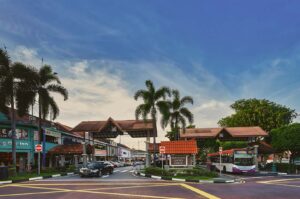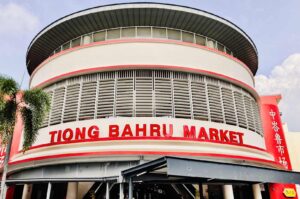
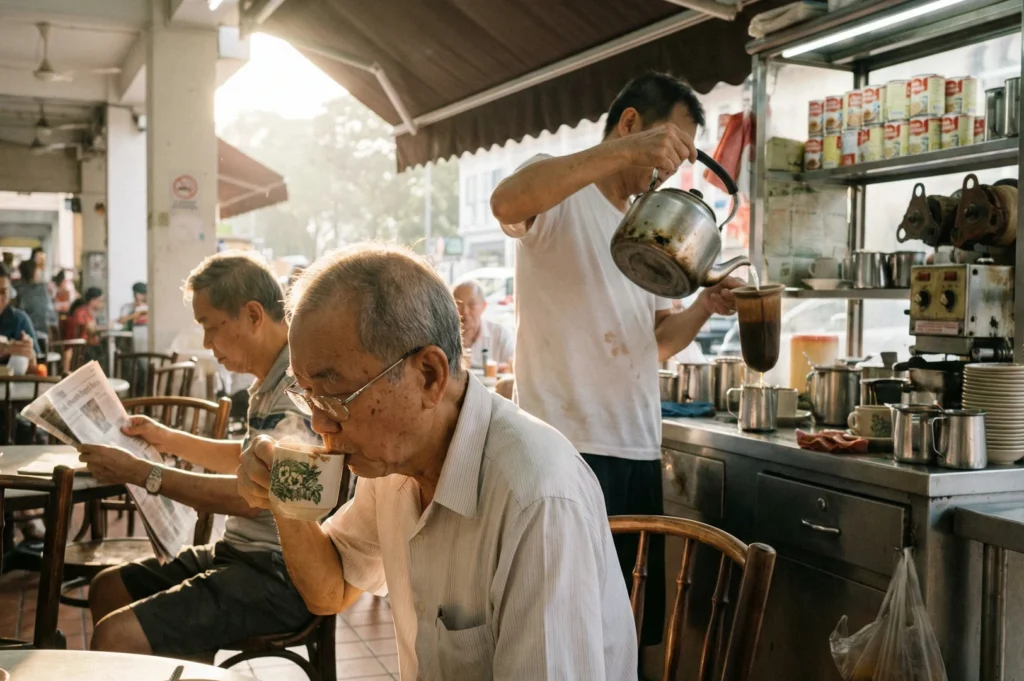
You do not actively choose where to sit when you walk into your regular kopitiam. Your legs simply carry you there through sheer muscle memory. For me, it is the corner table by the tiled pillar. It sits just far enough from the drink stall to avoid the morning human traffic, but close enough to catch the rhythmic clinking of metal spoons stirring thick condensed milk into porcelain mugs.
This table is completely unremarkable. It features the standard faux-marble top, a persistent wobble on its front left leg, and a faded red plastic chair that has seen better decades. A faint, permanent ring marks the spot where countless hot drinks have rested. Yet, in a city obsessed with tearing things down and building them taller, this little square of space feels like a rare, comforting constant.
When you sit here often enough, you stop being an active participant in the neighborhood rush. You become a quiet observer. From this vantage point, the daily routine of the estate unfolds in predictable, reassuring layers. At 7:00 AM, the elderly retirees claim the center tables. They spread out their broadsheets, arguing loudly over local politics and horse racing odds while sharing greasy plates of fried bee hoon.
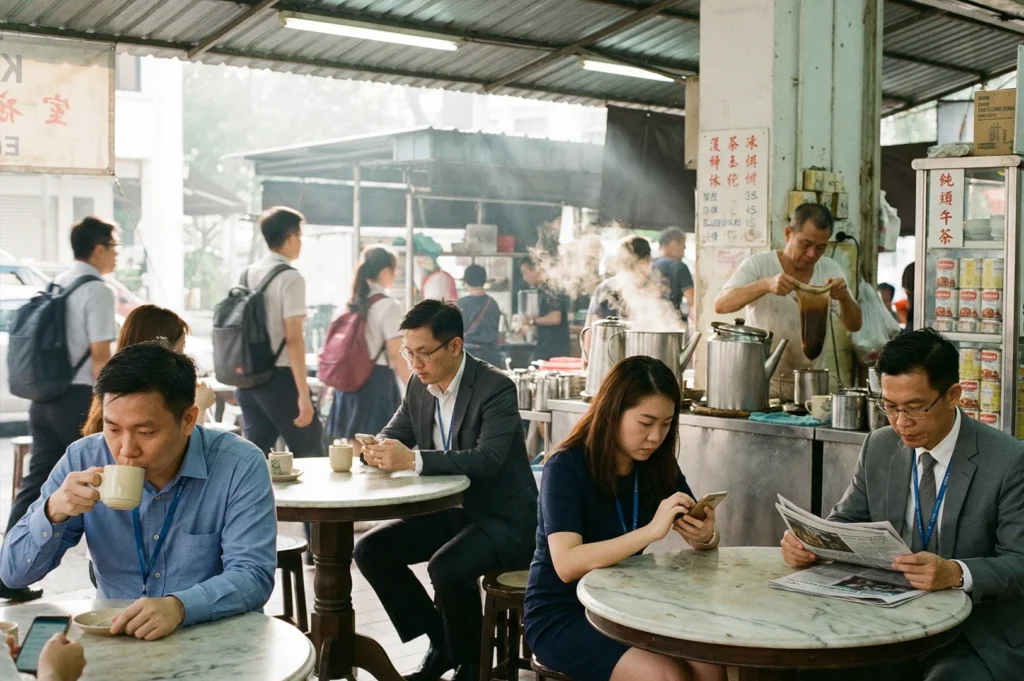
By 8:30 AM, the demographic shifts. Solitary office workers rush in, their eyes glued to glowing phone screens. They mechanically chew their kaya toast, calculating the exact minute they need to leave to catch the downtown train. Later in the heavy, humid afternoon, the space quiets down significantly. It becomes a temporary sanctuary for tired delivery riders waiting for their next order, leaning over the table to catch the faint breeze from the ceiling fan.
I always end up at this corner table because it requires absolutely nothing from me. We spend our entire days making endless, exhausting decisions. We optimize our work schedules, map out our commuting routes, and manage our personal lives. But at this specific table, the pressure evaporates. You sit down, offer a familiar nod to the drink stall operator, and wait for your kopi. The table acts as a physical boundary against the overwhelming pace of the outside world. It is a low-effort decision that yields a high emotional return.
We often tell ourselves we go to the kopitiam just to grab a quick meal and for a traditional kopi. But if we pay attention, we realize we actually go there to anchor ourselves. The city outside the open-air pavilion will keep shifting. Beloved neighborhood shops will close, neighbors will move away, and new buildings will block out the old views.
Through all of this, the corner table remains exactly where you left it. It sits there quietly under the fluorescent lights, holding your coffee, wiping clean with a damp rag, and bearing witness to another wonderfully ordinary day.