
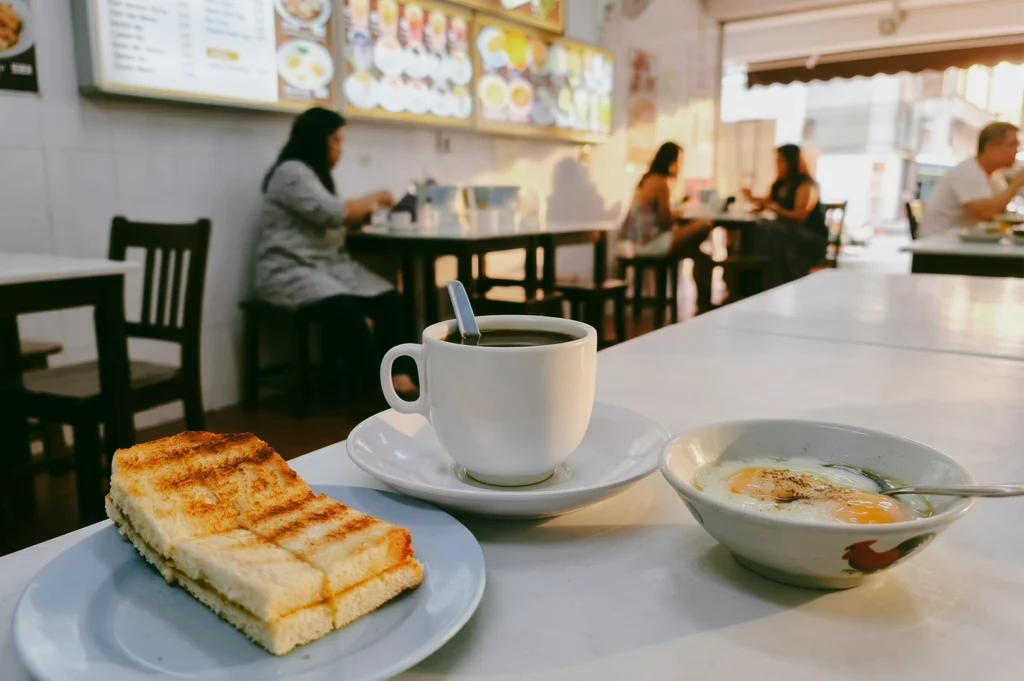
Across many neighbourhood kopitiams, a familiar pattern emerges.
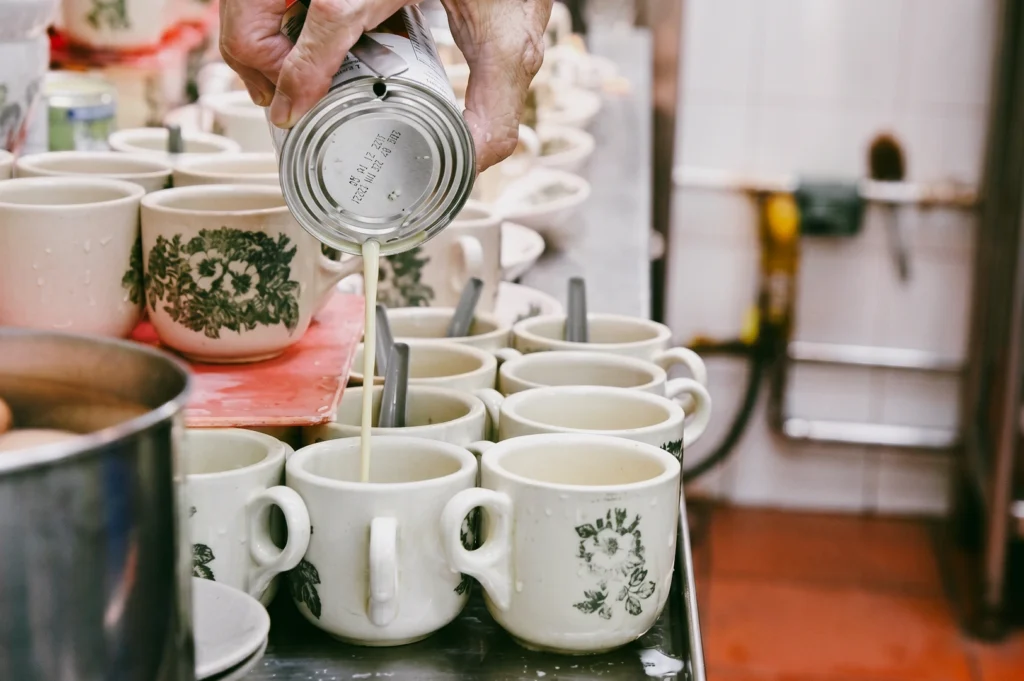
Regular customers find their orders anticipated, prepared without request. The relationship between stall owner and patron develops into an understanding that transcends verbal exchange — kopi-o, less sweet, served in thick ceramic cups that have witnessed countless morning rituals. This recognition, built through repeated encounters, forms the foundation of community connection within Singaporean coffee culture.
Morning routines unfold with predictable rhythm throughout these coffee shops. Ceramic cups clatter against saucers. The air carries the distinctive aroma and taste of coffee beans roasted with sugar, lard, and margarine or butter, creating a scent that balances bitter and sweet notes. Retirees engage in gentle debates over sports results, newspapers spread across marble-topped tables. Steam rises from soft-boiled eggs, awaiting the customary splash of dark soy and shake of white pepper.
These establishments draw coffee lovers initially for the coffee. The deeper draw lies in everything else they provide, as explored by Neighbourhood Life.
More Than a Place to Drink Coffee: The Art of Kopitiam and Condensed Milk
The kopitiam concept extends beyond its beverage offerings and reflects a rich coffee culture.
The term itself reflects Singapore’s multicultural heritage — “kopi” from Malay, “tiam” from Hokkien for shop. This linguistic blend illustrates the origins of these coffee shops, which emerged from early immigrant communities. Hainanese families often operated these establishments, having learned coffee brewing techniques while working for British and Peranakan households before establishing their own ventures.
By the mid-1900s, kopitiams had established themselves as neighbourhood focal points. They served as gathering places for labourers beginning early shifts, information hubs where news circulated faster than print media, and venues where business transactions and personal relationships developed over affordable cups of kopi, often sweetened with condensed milk or evaporated milk.
Examining these spaces today reveals how core elements have remained consistent. The marble tables, mismatched stools, and cloth sock filters used for brewing robusta beans represent functional traditions rather than nostalgic displays. These elements persist as working components of an enduring cultural practice within Singaporean coffee culture.
The Heartlands Still Wake Up Together: A Local Coffee Shop Experience
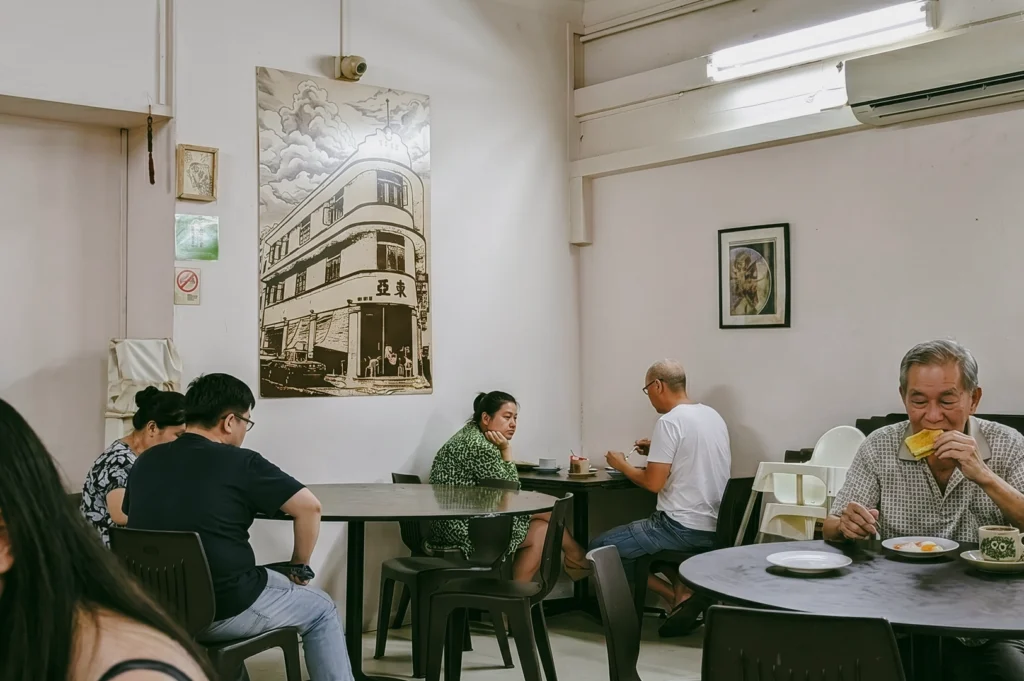
Morning scenes across HDB heartland kopitiams share common characteristics throughout the island.
The early clientele consists primarily of older residents. Regular patrons include uncles in singlets drinking strong black coffee, aunties collecting bee hoon for family meals, and shift workers obtaining breakfast before commuting. A comfortable familiarity characterises these interactions, built through consistent patterns over time.
Long-term observations reveal how specific customers maintain preferred seating arrangements. Certain individuals consistently choose tables near fans. Others bring newspapers and leave them for subsequent customers. Drink stall operators remember individual preferences regarding sugar content, milk choices like soy or almond, and dietary restrictions.
This represents the operational framework of community connection. When regular patrons absent themselves for several days, their absence registers among other customers and staff. In a rapidly moving urban environment, kopitiams function as spaces where individual presence maintains significance.
Chinatown's Slower Mornings: Preserving Singaporean Coffee Traditions
Chinatown kopitiams carry additional historical weight within their operations.
These coffee shops have sustained generations of trishaw riders, seamstresses, and shopkeepers. Some stalls have remained within the same families for fifty to sixty years. Traditional recipes persist unchanged. Kaya preparation continues through hand-stirring methods, following techniques passed through generations.
The breakfast experience in these locations connects current customers to historical continuity. Charcoal-grilled toast, prepared thin and crisp, represents the same meal consumed in identical locations decades earlier. This temporal connection provides cultural value worth preserving in Singapore’s coffee culture.
Tiong Bahru's Two Worlds: Where Kopitiam Meets Modern Cafe
Tiong Bahru demonstrates how traditional and contemporary coffee cultures coexist within single neighbourhoods.
The area has gained recognition for modern cafés serving espresso, flat whites, and sourdough. However, traditional kopitiams maintain their presence among the art deco buildings. Young professionals with laptops frequent establishments on one side of streets while elderly residents play checkers over traditional kopi on the other.
This coexistence suggests positive adaptation within Singapore’s evolving coffee culture. Rather than representing a static tradition, the kopitiam culture demonstrates flexibility and accommodation for diverse preferences.
The Rituals That Bind Us: Ordering Coffee and Social Connection
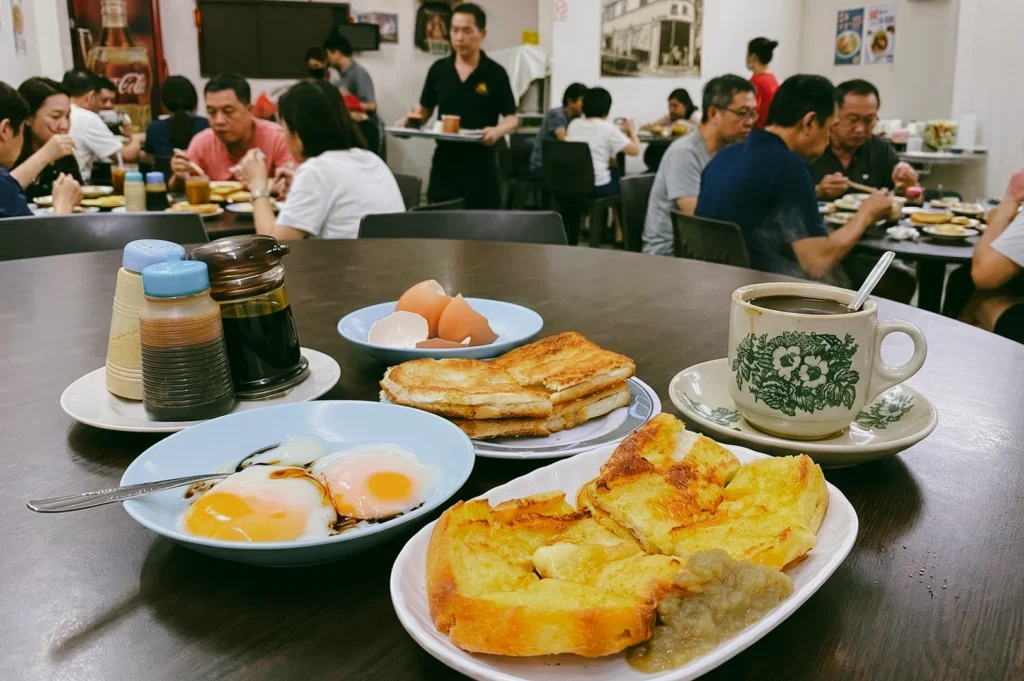
Community anchor status develops through consistent practices rather than physical structures.
Morning gatherings enable neighbours who typically lack interaction opportunities to engage in casual conversations about weather and current affairs. Evening periods bring families for shared dinners, with tables accommodating economy rice, fried hokkien mee, and fresh fruit courses like apple and coconut.
These communal meals serve important social functions. Multiple generations share tables, with grandparents ordering for groups and grandchildren developing familiarity with adult beverages through supervised exposure. The food service requires no performance of identity beyond basic social participation.
Several patterns characterise these interactions:
Recognition develops through beverage preferences. Individual orders become identifying characteristics, such as kopi with condensed milk, kopi-o black coffee with sugar, or kopi-c with evaporated milk. The local dialect even extends to tea, or “teh,” with similar ordering variations like teh-o kosong (hot black tea without sugar).
Table sharing occurs naturally. Strangers accommodate each other without formal arrangement.
Extended occupancy is accepted. Single beverages can hold table space for extended periods without pressure to leave.
These practices operate without written guidelines, representing understood social protocols in Singaporean coffee culture.
When the Old Meets the New: Kopitiam Innovation and Coffee Culture
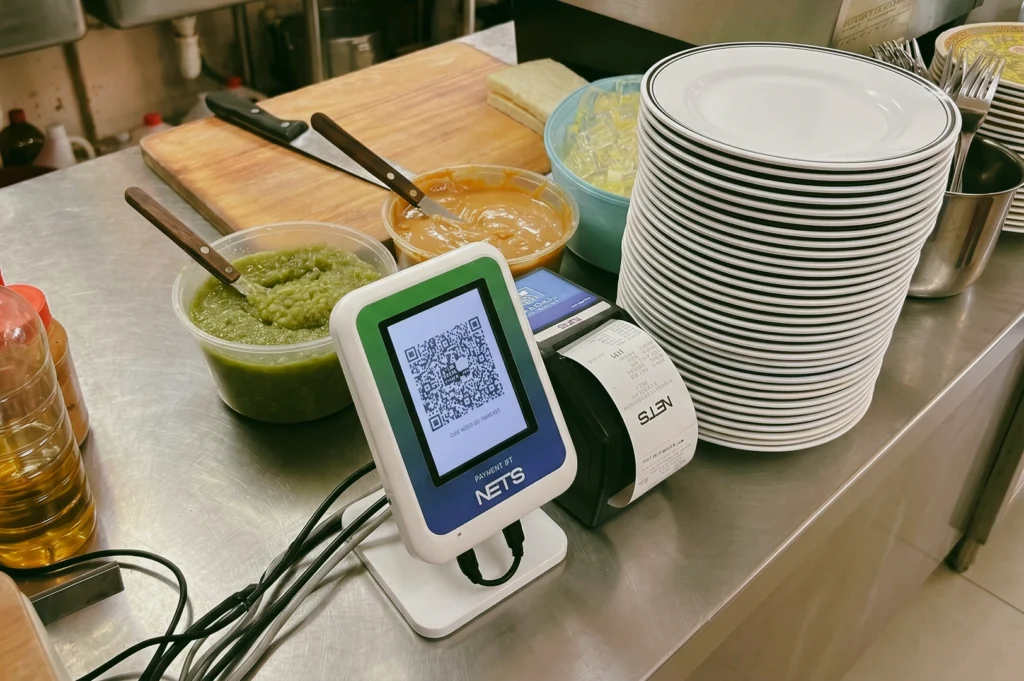
Kopitiam operations continue evolving rather than remaining static.
Contemporary outlets have opened with digital menu displays, QR code ordering systems, and cashless payment options at beverage stalls. While some long-term customers honestly express resistance, others adapt successfully. The fundamental beverage quality remains consistent regardless of technological integration.
Hybrid establishments have emerged, combining traditional kopitiam elements with modern café features. These venues serve both traditional kopi-o and contemporary options like oat milk lattes. Younger operators revive traditional recipes while adapting presentation for customers with different cultural backgrounds.
Not all changes integrate smoothly. Rising rental prices have displaced stalls that served neighbourhoods for decades. Some heritage coffee shops close quietly, replaced by more commercially oriented establishments such as Starbucks.
Surviving establishments typically understand their fundamental purpose extends beyond caffeine distribution. They function as community spaces that accommodate human connection and the rich history of Singaporean coffee.
What Communities Risk Through Reduced Patronage of Local Coffee Shops
The persistence of neighbourhood kopitiams cannot rely on historical significance alone.
These spaces survive through consistent customer engagement — regular orders, occupied tables, and chosen community interaction over isolated home consumption. The neighbourhood cafes and kopitiams that maintain greatest community significance often lack glamorous features. They operate without queues, social media presence, or viral recognition, sustained by steady patronage and reliable service.
The disappearance of these establishments would eliminate more than beverage access. Communities would lose daily confirmation of mutual belonging and social connection — a warm reminder of living together in a fast-paced city.
A Cultural Practice Worth Maintaining in Singaporean Coffee Culture
Neighbourhood kopitiams require minimal commitment from customers. The cost ranges from one to two dollars. The time investment involves a few morning minutes. In return, these spaces provide what urban environments often lack — opportunities to slow down, receive recognition, and experience belonging without performance pressure.
Embracing Seated Engagement and Community Support
Rather than accepting takeaway service exclusively, customers can choose seated engagement. Following staff recommendations for beverage preparation and allowing time for conversation with adjacent customers supports the community function these establishments provide.
Preserving Kopitiam Culture for Future Generations
Supporting long-established neighbourhood kopitiams, visiting heritage stalls in Chinatown before potential closure, and bringing friends and families to heartland coffee shops enable younger generations to learn the social rhythms of shared table culture.
Significant conversations rarely occur in elaborate settings. They develop in these accessible spaces, over beverages prepared by people who remember preferences before requests are made, in a culture called kopi that is uniquely Singaporean — a mix of tradition, taste, and community that means much more than just coffee.
Kopitiams as a Hub of Diverse Coffee Flavours
Singapore’s kopitiams have also become a head for those searching for an authentic taste of Asia’s diverse coffee and tea culture, with beans sourced from places like Colombia, Ethiopia, Vietnam, and beyond. This rich variety adds to the kopitiam’s unique character and enduring appeal.
Ultimately, the kopitiam is lucky to have maintained its place in Singaporean living, providing a warm house for neighbours to meet, talk, and share moments together — a cultural practice worth preserving for generations to come.