
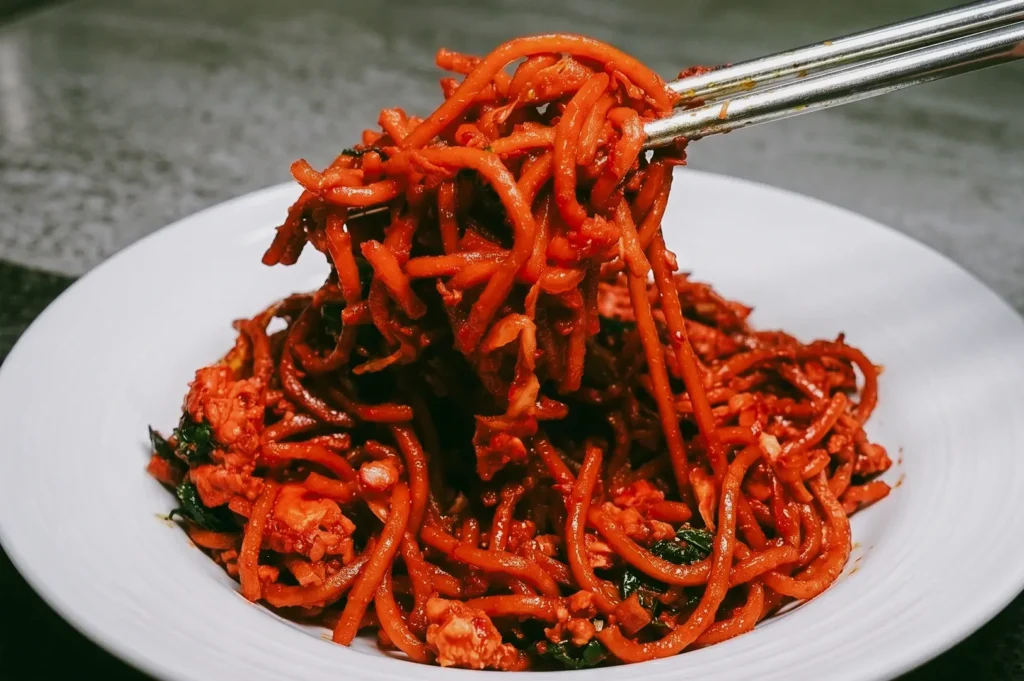
It was the smell that stopped me first.
Sweet, smoky, a little sharp from the chilli paste — that unmistakable fragrant cloud that rolls off a hot wok the moment the yellow noodles hit the sauce. I was walking past a stall in a heartland hawker centre, not even hungry, and I found myself slowing down anyway.
The uncle didn’t look up. He just kept tossing, the wok roaring, the metal ladle scraping in that steady rhythm you hear all over Singapore. A plate landed in front of someone beside me. Mee goreng Singapore — soft, slick, and glossy fried noodles, flecked with bean sprouts and sliced cucumbers, a wedge of lime perched on one side.
I ordered one too. I always do.
A Plate That Carries More Than It Looks: Mee Goreng and Fried Noodles
Mee goreng is one of those dishes that feels like it has always been here. You find it everywhere — coffee shops, food courts, late-night supper stalls — and yet most of us never stop to think about where it came from.
Fried noodles, on the face of it. Simple. But the story underneath is anything but.
What you’re eating is a small map of how people from different places in Southeast Asia ended up sharing the same streets, the same stalls, the same hunger. Mee goreng Singapore didn’t come from one kitchen. It came from many, layered over decades.
Origins of Mee Goreng and Its Cultural Roots in Southeast Asia
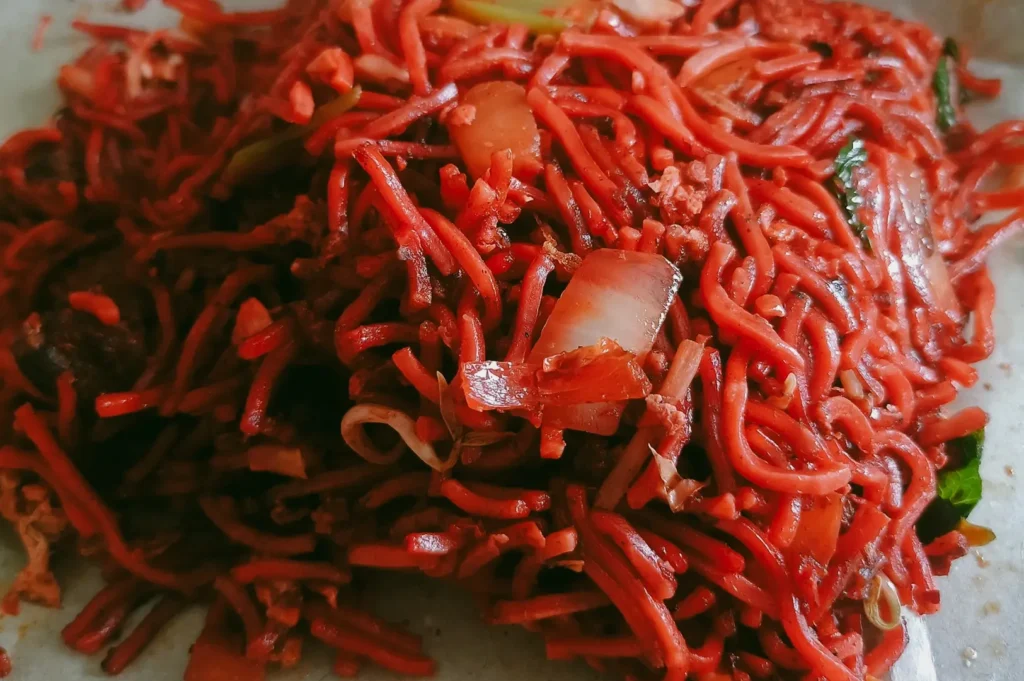
The name itself tells you something. “Mee” is the Hokkien word for noodles. “Goreng” is Malay for fried. Two languages, one plate. That’s not an accident. That’s the whole history in two words.
What you’re eating is a small map of how people from different places in Southeast Asia ended up sharing the same streets, the same stalls, the same hunger. Mee goreng Singapore didn’t come from one kitchen. It came from many, layered over decades. Find out more about how other iconic Singaporean hawker dishes, like Hainanese chicken rice, evolved alongside local flavors and cultural influences.
Indian Muslim Influences in Making Mee Goreng Mamak
The version most of us picture — that bright, tomato ketchup-tinged, slightly sweet and tangy plate — owes a lot to the Indian Muslim community.
Indian Muslim cooks took the Chinese wheat yellow noodles and made it their own. They brought in their own spices, a generous hand with tomato ketchup and chilli paste, sometimes a splash of dark sweet soy sauce. They cooked it for a crowd that crossed every community line.
That’s why so many of the older mee goreng stalls sit under the mamak banner. Mee goreng mamak became a kind of common ground, halal and hearty, welcome to anyone who pulled up a stool.
Chinese and Malay Adaptations in Mee Goreng Singapore
But the noodle itself is Chinese in root, those soft yellow noodles you see in countless hawker dishes.
And the Malay kitchen shaped it too — the sambal, the dark soy sauce, the instinct to balance heat with sweetness. Over time, different hands kept adjusting the same plate.
You can taste the negotiation in it. A little Chinese, a little Indian, a little Malay, none of it competing, all of it folded into one wok. That’s not fusion in the trendy sense. It’s just what happens when neighbours cook side by side for long enough.
Neighbourhood Variations Across Singapore in Mee Goreng and Other Recipes
What I love is that no two plates are quite the same. Travel across the island and the dish shifts, stall by stall, the way an accent changes from one neighbourhood to the next.
Classic Hawker-Style Mee Goreng Singapore
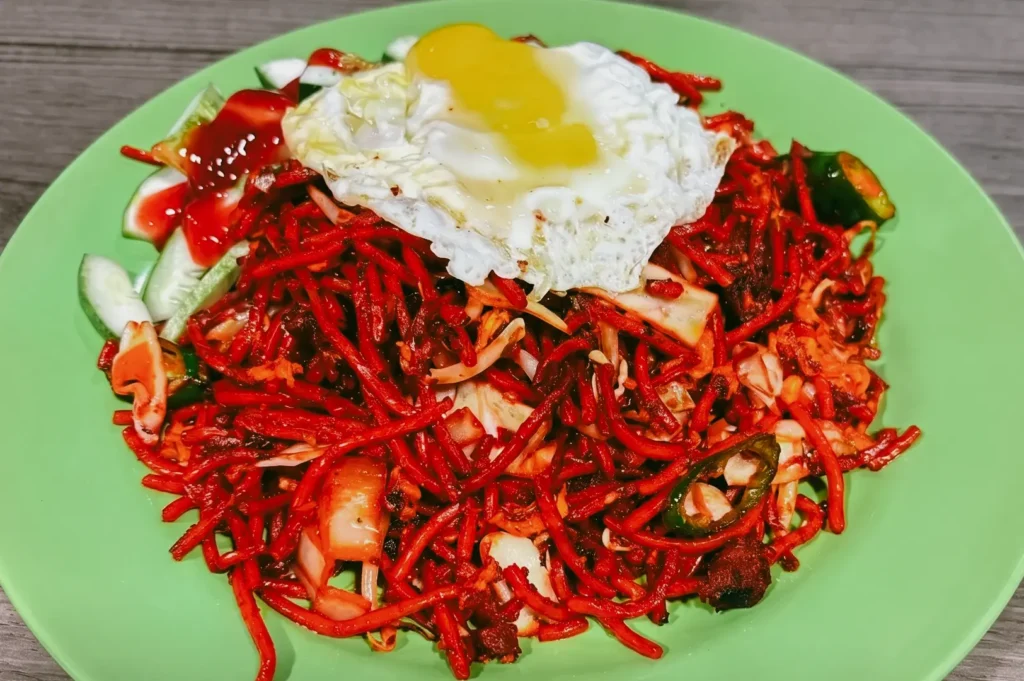
The version I grew up with leans sweet and tangy, stained red-orange from tomato ketchup and chilli paste.
Soft yellow noodles, a bit of fried tau kwa or tofu, a scattering of potatoes, maybe some fish cake or squid if you’re lucky. A fried egg on top, runny in the middle, the yolk breaking into the noodles when you cut it.
This is the hawker mee goreng most people remember. The plate that comes wrapped in nostalgia, eaten on a wobbly stool, the fan clacking somewhere overhead.
You squeeze the lime juice, you mix everything together, and the first mouthful is sweet, then sour, then a slow heat that builds. Comfort food, plain and true.
Modern Twists and Fusion Plates: Other Recipes Inspired by Mee Goreng
Then there are the newer takes, the ones you find in trendier spots and cafés.
Some swap in instant noodles or Singapore noodles. Some add cheese, or wagyu beef, or plate it with a tweezered kind of care. A few of them are genuinely delicious. A few feel like they’ve forgotten what made the original worth eating.
I don’t begrudge the experiments. A dish stays alive by changing. But I’ll admit I keep coming back to the old plates, the ones cooked fast and without ceremony, where the flavour does the talking.
Two languages, one plate. Two communities, one shared love for food. For more stories about Singapore’s living food heritage, check out neighbourhoodlife.com.sg.
Key Ingredients and Techniques in Making Mee Goreng Mamak
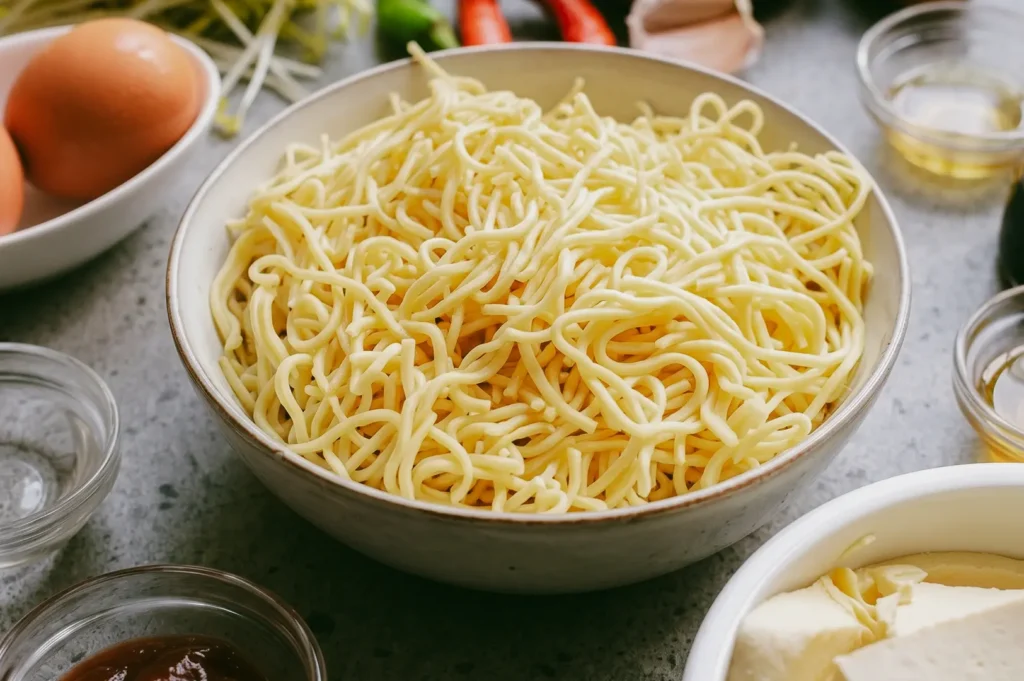
Spend enough time watching it cooked on medium heat, and you start to see the logic. Mee goreng isn’t complicated. It’s about heat, timing, and balance.
Here’s what usually goes into the wok:
Noodles — fresh yellow noodles, soft and springy, the backbone of the plate
Sauces — tomato ketchup, chilli paste, dark sweet soy sauce, dark soy sauce, a touch of salt and oil for depth
Proteins — chicken, beef, squid, tofu, fish cake, and almost always an egg
Vegetables — bean sprouts, cabbage, bok choy, potatoes, onions, shallots, sliced cucumbers for serving
Aromatics — garlic, chilli, the smoky lift of a properly fired wok
The magic word is wok hei — the breath of the wok. That faint char, that smokiness, comes only from a screaming-hot pan and a cook who keeps the noodles moving.
You can’t fake it. Too low a flame and the noodles stew instead of fry. Too slow a hand and they clump. The good stalls toss with a kind of muscle memory, the wok never still, the whole thing done in minutes.
It’s fast food in the truest sense. Not careless — just quick, and confident.
Iconic Stalls Like Hass Bawa and the Stories Behind the Recipes
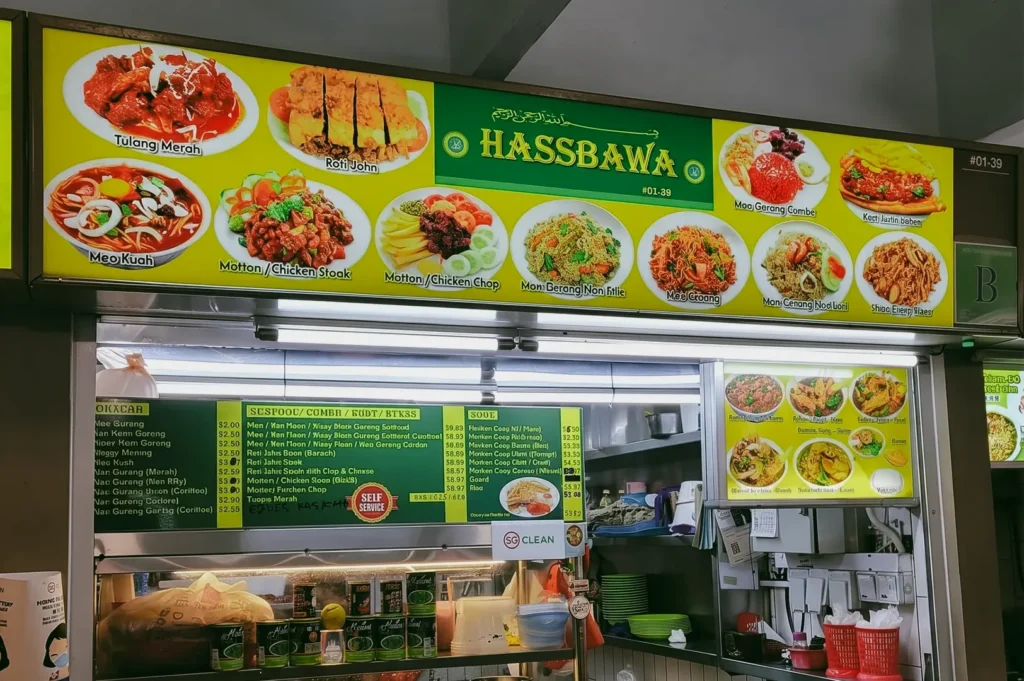
Every neighbourhood seems to have one. The stall people swear by, the one with the queue that never quite disappears.
I think of an old mamak stall I used to visit as a student. The uncle there had a way of flicking the egg onto the plate at the last second, never breaking the yolk. He’d been cooking the same plate for decades, and you could taste those decades in it.
He didn’t talk much. He didn’t need to. The recipe lived in his hands, passed down or worked out over years, the exact ratio of tomato ketchup to chilli paste to dark sweet soy sauce held somewhere no menu could capture.
These recipes rarely get written down. They get watched, repeated, absorbed. A son stands beside his father at the wok for years before he’s trusted with the flame. That’s how the best mee goreng survives — not in a cookbook, but in muscle and memory.
Some of these stalls have closed now. The uncle retired, the kids chose other lives, and a plate that fed a neighbourhood for thirty years simply vanished. It happens quietly. No announcement. You just turn up one day and the stall is someone else’s.
That’s the part that stays with me. Every plate is a small inheritance, and not all of them get passed on.
Why Mee Goreng Endures as a Hawker Favourite Meal in Singapore
So why has it lasted? Why does mee goreng still hold its place when so many trends have come and gone?
Part of it is simple. It’s cheap, it’s filling, and it’s everywhere. You can eat it after work, after a night out, on a slow Sunday with nowhere to be.
But I think it runs deeper than convenience.
Mee goreng is a plate that belongs to everyone and no one. It carries the fingerprints of three communities and asks none of them for credit. You eat it without thinking about its history, and yet that history is exactly why it tastes the way it does.
There’s comfort in that. In a city that moves fast and rebuilds itself constantly, a plate of fried noodles is a small thread back to something older. The same sweetness, the same smoky lift, the same lime squeezed over the top.
It reminds you that some things are worth keeping. Not because they’re fancy, but because they’re ours.
Go Find Your Plate of Mee Goreng Singapore
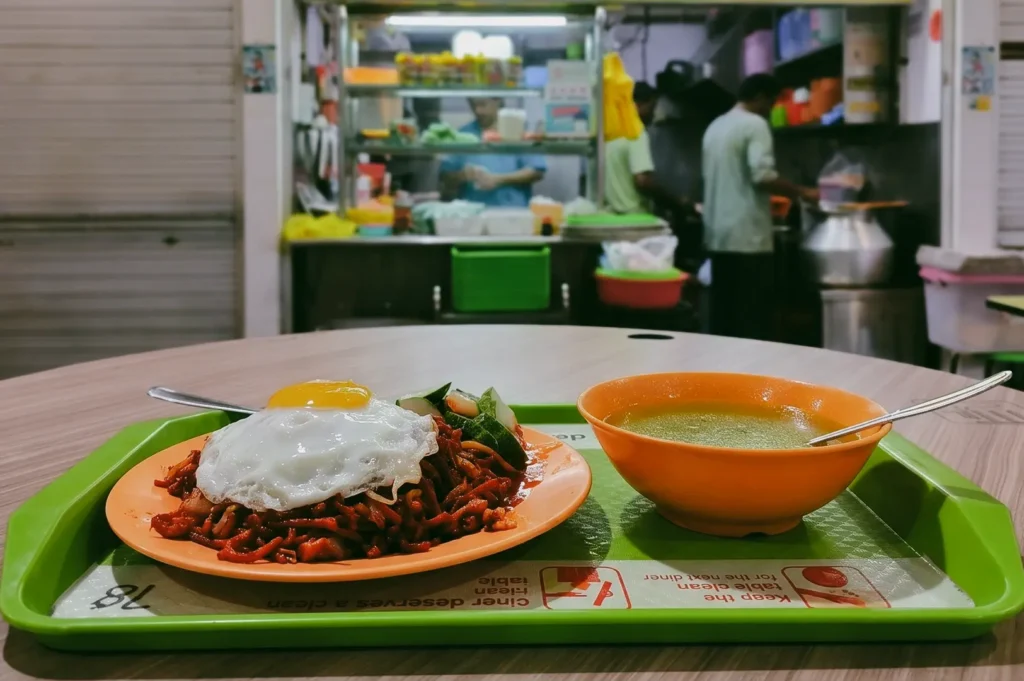
I finished my noodles that day standing up, the way I often do.
The uncle had moved on to the next order before I’d even taken my first bite, the wok already roaring again. I ate slowly. Sweet, then sour, then heat. Just like always.
If there’s one thing I’d ask of you, it’s this. The next time you pass a hawker centre and catch that smell — the smoky, sweet one that drifts off a hot wok — stop. Pull up a stool. Order a plate from the uncle or auntie who’s been doing it longer than you’ve been alive.
Try the stall near your block, then try the one across town. Notice how they differ. Ask, if they’ll tell you, how long they’ve been cooking it.
Because the best mee goreng isn’t waiting in a guidebook. It’s somewhere down a void deck, in a coffee shop you walk past every day, cooked by hands that learned it from someone who came before.
Go and find it. While it’s still there.