
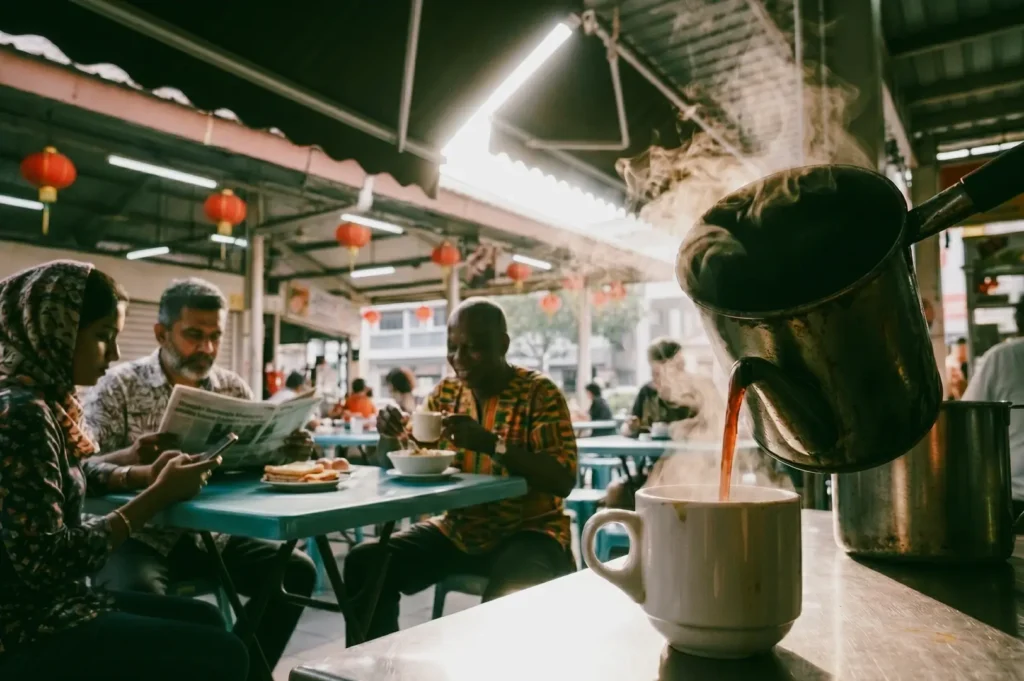
On a quiet weekday morning, before the lunch crowd arrives and before the heat settles properly into the concrete, a neighbourhood food centre has its own kind of music.
The kopi stall is already busy. You can smell the dark roast before you see the uncle pulling coffee through the metal pot, the steam rising in soft clouds above the counter. Somewhere nearby, garlic hits hot oil, sharp and fragrant, followed by the deeper smell of pork broth, fried shallots, and noodles being tossed in lard.
Trays clatter against plastic tables. Retirees sit with newspapers folded wide, reading slowly between sips of kopi. Office workers move quickly through the aisles, ordering bee hoon, kaya toast, or fishball noodles before disappearing toward the MRT.
The Charm of Neighbourhood Food Centres
I have always liked this hour best. Nobody is taking photos of the ceiling fans. Nobody is asking which stall is famous. The regulars know where to sit, which stall auntie closes early, and who makes the sambal a little sweeter than usual.
There is a feeling that the place belongs to the neighbourhood, not because anyone says so, but because everyone behaves as if it does.
Singapore is famous for its food, and rightly so. Visitors come with lists of Singapore hawker centres to try, often starting with names like Maxwell Food Centre, Lau Pa Sat, and Chinatown Complex. Many of these iconic Singapore hawker centres have helped define the country’s food identity, attracting both locals and visitors with generations of culinary heritage.
They happened in quieter neighbourhood food centres, the kind tourists rarely visit and locals return to without needing to explain why.
The Hawker Centres Most Visitors Never See: A Multicultural Urban Context
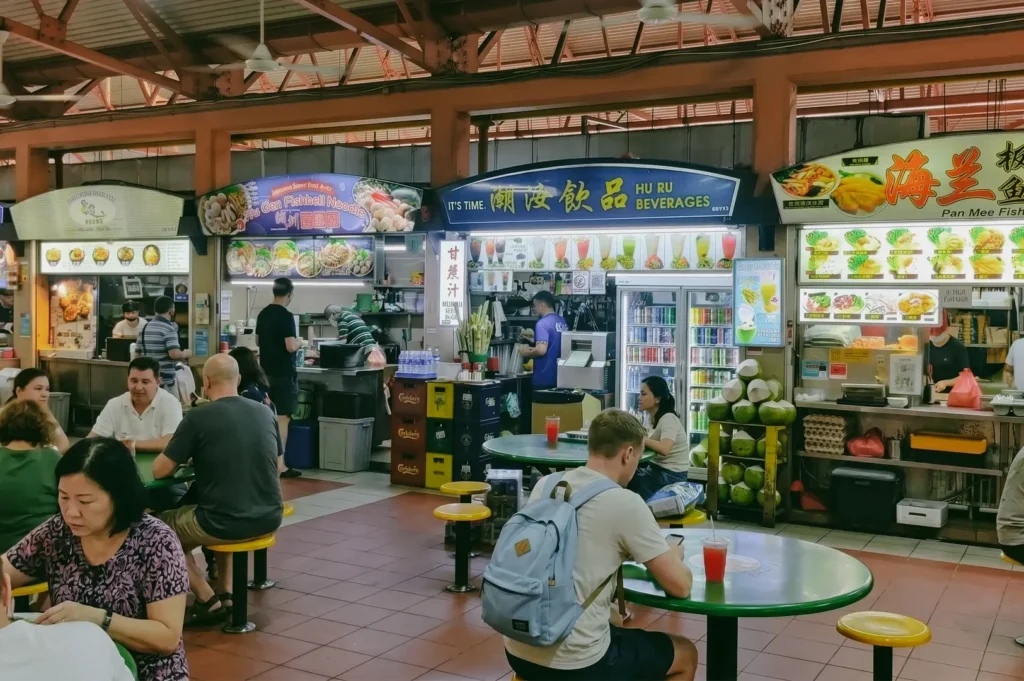
It is understandable that visitors gravitate toward the well-known centres. Maxwell Food Centre is easy to find, close to heritage streets, and home to stalls with reputations that travel far beyond Singapore. Lau Pa Sat has its grand iron structure and central business district energy, especially when satay smoke fills the evening air. Chinatown Complex is massive, layered, and historically important, with enough food choices to overwhelm even locals.
These are destination hawker centres and food courts. People travel to them with intention. They read about a dish, join a queue, tick it off a list, and move on to the next stop. There is nothing wrong with that. Food tourism has helped more people understand Singapore’s hawker culture and the skill behind our everyday meals.
More Than a Place to Eat: Community Dining Rooms and Culinary Practices
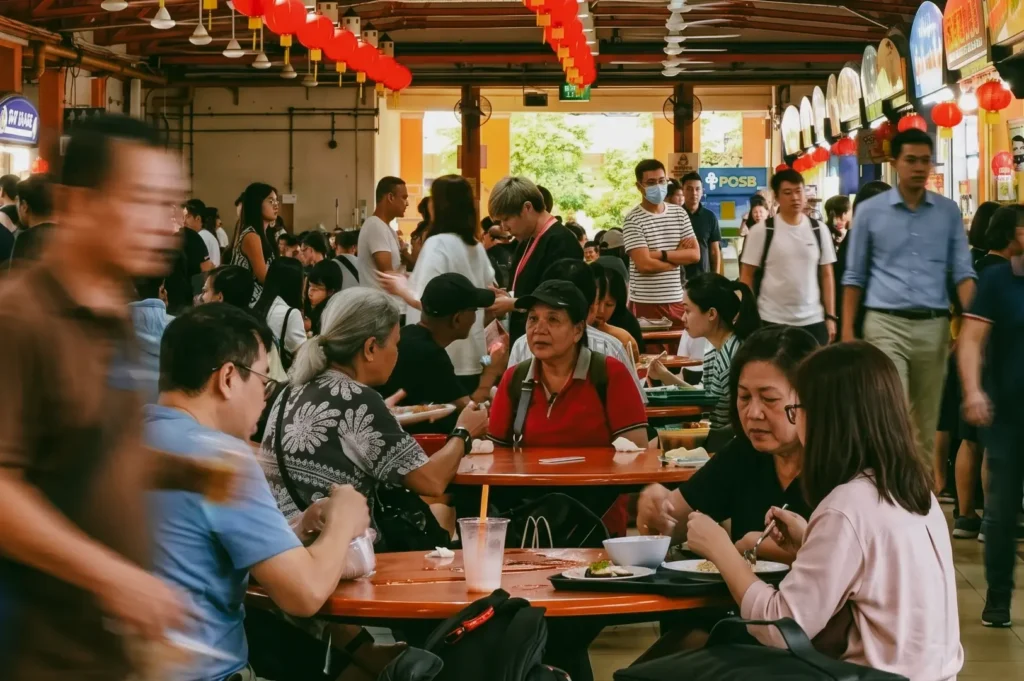
A neighbourhood food centre is never just a place to fill your stomach. At its best, it functions like community dining rooms, except with better soup and louder chairs.
You see this most clearly during off-peak hours. After breakfast, when the rush softens, the centre changes pace. Older residents linger with kopi. Stallholders lean against their counters and talk across the aisle. Someone buys an extra packet of noodles for a neighbour upstairs.
A cleaner stops to chat with a fish soup uncle before clearing tables. These interactions are small, but they happen every day.
A Personal Connection Beyond the Food
I once watched a hawker pause in the middle of preparing mee pok to ask an elderly customer whether his daughter had returned from overseas. The customer answered while counting coins into his palm. It lasted less than a minute, but it said everything about why these places feel different. The food was the reason they met. The relationship was the reason they kept returning.
This is where local food Singapore becomes more than a cuisine. It becomes routine. It becomes recognition. It becomes the quiet comfort of being known, even if only by your usual order.
In a city where so much changes quickly, these daily rituals help people feel anchored. A hawker centre gives the neighbourhood a shared rhythm: breakfast before work, kopi after market shopping, lunch with colleagues, dinner packets for the family, supper after tuition or shift work. People may not call it community, but that is what it becomes.
The Food Tells a Different Story: Intangible Cultural Heritage in Food Stalls
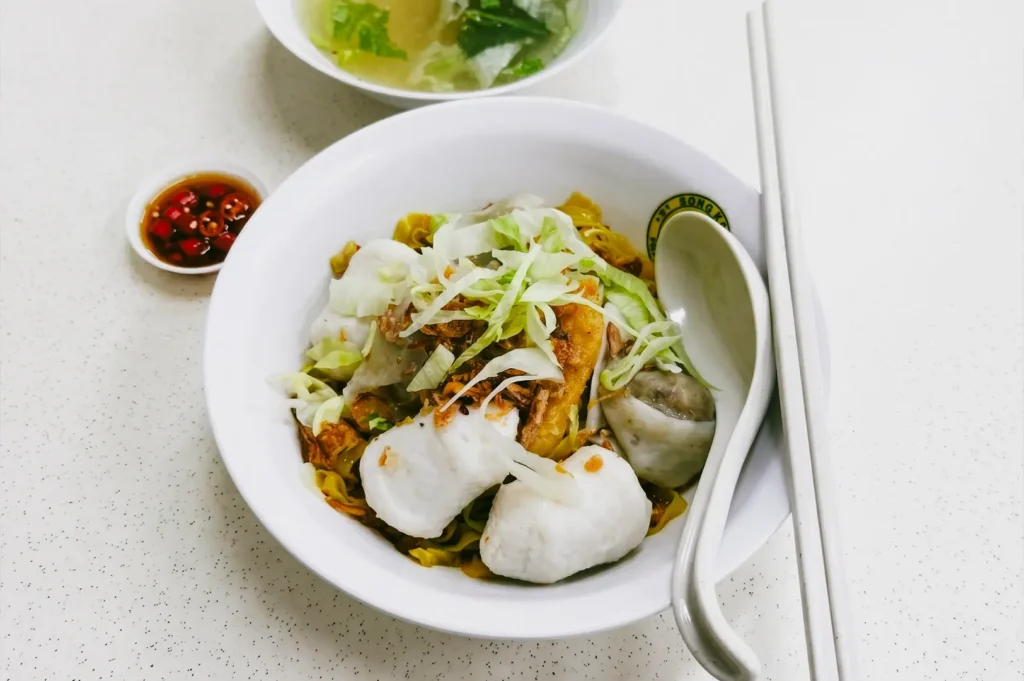
The dishes at lesser-known neighbourhood food centres often tell a different story from the ones built for crowds. They are not always prettier. They are not always the most photographed. But many of them carry family histories, regional traditions, and older cooking methods that survive because regular customers still care.
Think of handmade fishball noodles. The best versions are not just about bounce, though that matters. They carry the labour of scraping fish meat, seasoning it by feel, shaping it by hand, and cooking it quickly so the texture stays springy. A factory fishball can be fine, but a handmade one has irregular edges and a certain softness that tells you someone still bothers.
Traditional nasi lemak has the same quiet honesty. At some stalls, the rice is still steamed with coconut milk and pandan until the grains separate gently. The sambal is fried slowly, not just scooped from a tub. The ikan bilis stays crisp. The egg is simple. Nothing looks dramatic, but when it is done well, the whole plate smells like morning comfort.
Traditional Delicacies That Preserve Culinary Heritage
Then there is thunder tea rice, a dish that asks for patience from both cook and eater. The vegetables must be chopped, the peanuts toasted, and the tea paste ground with herbs until it becomes grassy, bitter, nutty, and alive. It is not the kind of dish that shouts for attention, but it preserves a very specific food memory.
Handmade kueh also belongs in this conversation. So many of us grew up eating ang ku kueh, soon kueh, ondeh ondeh, or kueh kosui without thinking too much about the hands behind them. But proper kueh is texture work. It depends on touch, timing, coconut freshness, and the kind of “agak agak” knowledge that cannot be fully captured in a recipe card.
These dishes remind us that Singapore’s hawker culture is not only about iconic names or the largest food centres like Chinatown Complex. It is also about repetition, patience, and inherited culinary practices kept alive in small food stalls with handwritten signs.
Why Locals Keep Returning: The Sense of Community in Neighbourhood Food Centres
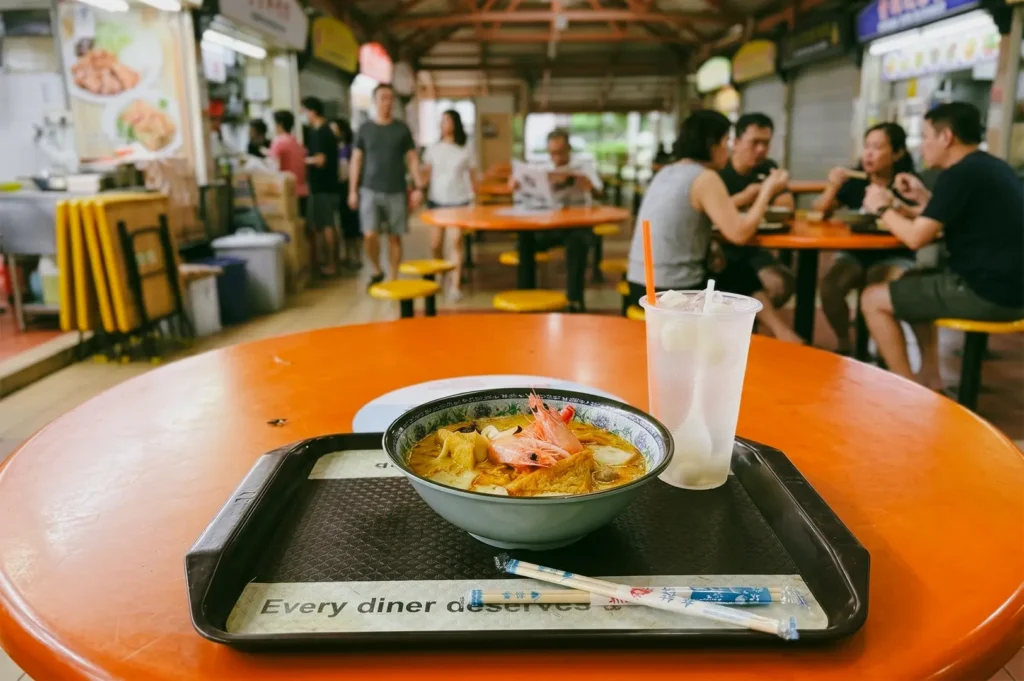
People like to say Singaporeans will travel anywhere for good foodPeople like to say Singaporeans will travel anywhere for good food.
That is true, to a point. We will cross the island for a famous bowl of laksa or queue under the sun for char kway teow if the craving is strong enough.
But most of the time, we return to the places that fit into our lives.
A neighbourhood hawker centre wins through familiarity. You know which stall opens early. You know where the breeze comes through. You know the tables near the drink stall are easier to get at 10:30am. You know which auntie will give extra chili if you ask nicely, and which uncle does not like people changing the order too much.
Consistency matters more than novelty. The same bowl of noodles, made the same way, on a tired Tuesday can feel more valuable than a famous meal eaten once. There is comfort in knowing what you are going to get.
Memory also plays a part. For many of us, hawker centres are tied to childhood routines: breakfast with grandparents, lunch after school, dinner packets brought home in plastic bags warm with steam. Even when we move away from an estate, the food memory stays. One spoonful of herbal soup or one bite of old-school curry puff can bring back a whole corridor, a whole market, a whole version of ourselves.
That is why locals keep returning. Not because every stall is the “best,” but because the place has become part of their personal map.
The Role of the National Environment Agency and Merchants Associations in Supporting Hawker Culture
Singapore’s National Environment Agency (NEA) plays a crucial role in maintaining the quality and hygiene standards of hawker centres across the city state. Through regular inspections and grading of food stalls, the NEA ensures food safety and cleanliness, supporting the sustainability of hawker culture.
Merchants associations also contribute by fostering community among hawkers, organizing events, and advocating for the interests of stall owners. Their efforts help preserve the culinary practices and intangible cultural heritage that make hawker centres the perfect place for Singaporeans and visitors alike to discover diverse dishes from Chinese, Indian, Malay, and other cultures of Southeast Asia.
Conclusion: A Living Intangible Cultural Heritage in the Heart of Asia
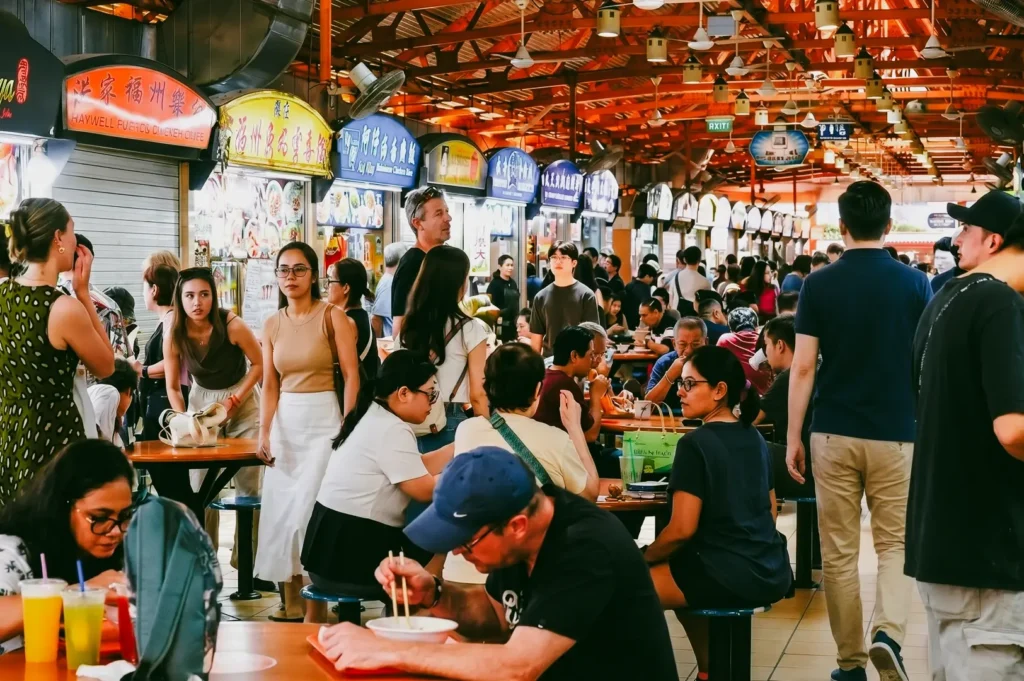
Singapore’s hawker centres, especially the neighbourhood food centres scattered across the island, represent more than just places to eat. They are living community dining rooms where diverse backgrounds gather to share meals, stories, and a sense of belonging. Recognized by UNESCO as intangible cultural heritage of humanity, Singapore’s hawker culture exemplifies a multicultural urban context where culinary practices are preserved and passed down through generations.
Whether located in the bustling Chinatown Complex or a quiet estate hawker centre, these food centres remain central to the city state’s identity and daily life. They are places where friends and families come together to enjoy affordable, high-quality meals featuring fresh vegetables, fruits, satay, chicken rice, and desserts. They are spaces that embody the idea of community and sustainability, making them a perfect place to visit on any trip to Singapore or Southeast Asia.
So next time you take a walk through the streets of Singapore, consider stopping by a hawker centre. Participate in the communal dining experience, support the hawkers who sell their dishes with pride, and discover the rich tapestry of cultures that make this city state a unique culinary destination in the world.