Meta Title: Neighbourhoods That Shaped Singapore Food
Meta Description: Explore how migration, history, and community roots shaped Singapore’s culinary landscape and famous food districts in this cultural feature.
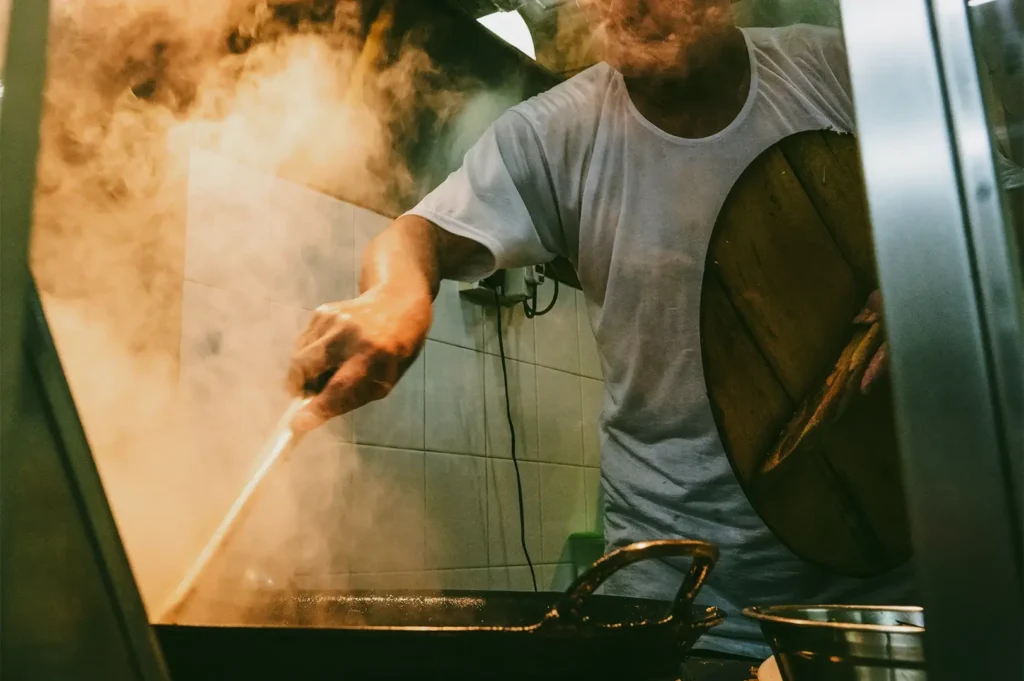
It begins before dawn. The rhythmic thud of a heavy cleaver against a wooden chopping block echoes through the damp, quiet streets. Slowly, the air grows thick with the sharp tang of bruised lemongrass, the deep, caramelised sweetness of dark soy sauce, and the earthy warmth of toasted cumin. By the time the morning sun crests the horizon, the local hawker centre is a theater of sound and scent.
Here, uncle and auntie exchange rapid-fire banter in a mix of Hokkien, Malay, and English, sliding steaming bowls of rice noodles, char kway teow, and cups of dark, robust coffee across the tables. Alongside hawker centres, the food court is another central place to experience Singapore’s diverse food scene, offering a wide variety of authentic local dishes under one roof.
This vibrant morning ritual plays out across the island every single day. Yet, if you pay close attention, the aromas and flavors shift dramatically depending on where you stand. The Singapore neighbourhood food scene is not a random assortment of hawker stalls scattered across the city.
It is a deeply mapped geography of migration, memory, and community. Singapore’s local food culture reflects its multicultural heritage, influenced by Chinese, Malay, Indian, and other ethnic communities, and is celebrated as an integral part of national identity. Every bowl of broth and every carefully folded dumpling carries the history of the streets it was born in, revealing how different enclaves shaped the very identity of the nation—showing how one meal in Singapore often becomes a communal experience where locals share meals and stories.
Hawker Centres and Food Centres: The Heartbeat of Hawker Culture
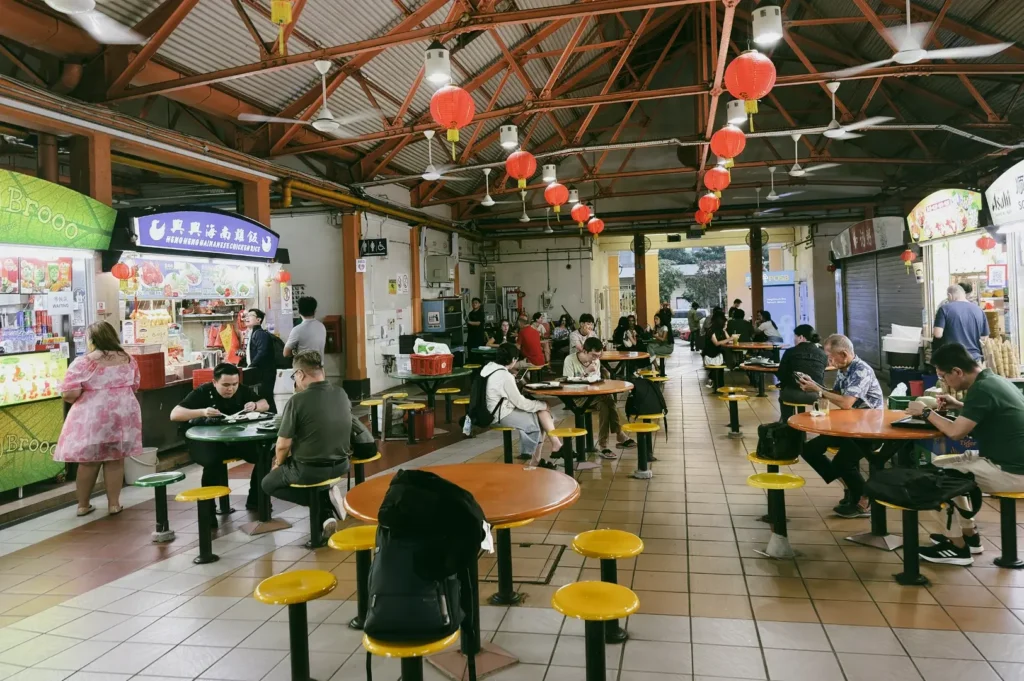
Hawker centres and food centres are more than just places to eat; they are living institutions where Singapore’s hawker culture thrives. These open-air or semi-covered spaces serve as communal dining rooms, where the clatter of woks and the chatter of patrons blend into a unique symphony.
The stalls within are often family-run, passed down through generations, each hawker preparing local favourites with meticulous care. The dishes served—be it the fragrant chicken rice accompanied by chilli sauce, the stir fried char kway teow with its smoky wok hei, or the crispy oyster omelette—are embodiments of tradition and innovation coexisting.
At hawker stalls, ingredients like minced pork, fish cake, and Chinese sausage mingle with fragrant rice and coconut milk to produce flavours that are both familiar and distinct. The long queues that form at places like Maxwell Food Centre speak not only to the deliciousness of the food but also to the deep social fabric woven through these shared culinary experiences. The presence of condensed milk in kaya toast or the sharpness of chilli sauce on a plate of roti prata reflects the subtle nuances that define traditional Singaporean breakfast and beyond.
The Social Fabric Woven Through Food
Food in Singapore is inseparable from its social fabric. It is at hawker centres and food courts that the city’s multicultural identity is most vividly expressed. The act of eating here is communal, a ritual where strangers often share tables and stories over plates of white pepper crab or fried chicken. This shared experience transcends mere sustenance; it is a form of connection, a way of preserving community ties in a rapidly modernizing urban landscape.
The aromas that rise from a steaming bowl of bak kut teh or the sweet-savoury blend of palm sugar in a local rojak salad evoke memories and emotions, anchoring individuals to their heritage. In neighborhoods like Joo Chiat and Kampong Glam, the food culture is inseparable from the history and traditions of the people who have lived there. The vibrant energy around the Sultan Mosque, with its open-air food stalls serving murtabak with different fillings and the fragrant spices of Peranakan food, exemplifies how food sustains identity and belonging.
Flavours as Markers of Memory and Identity
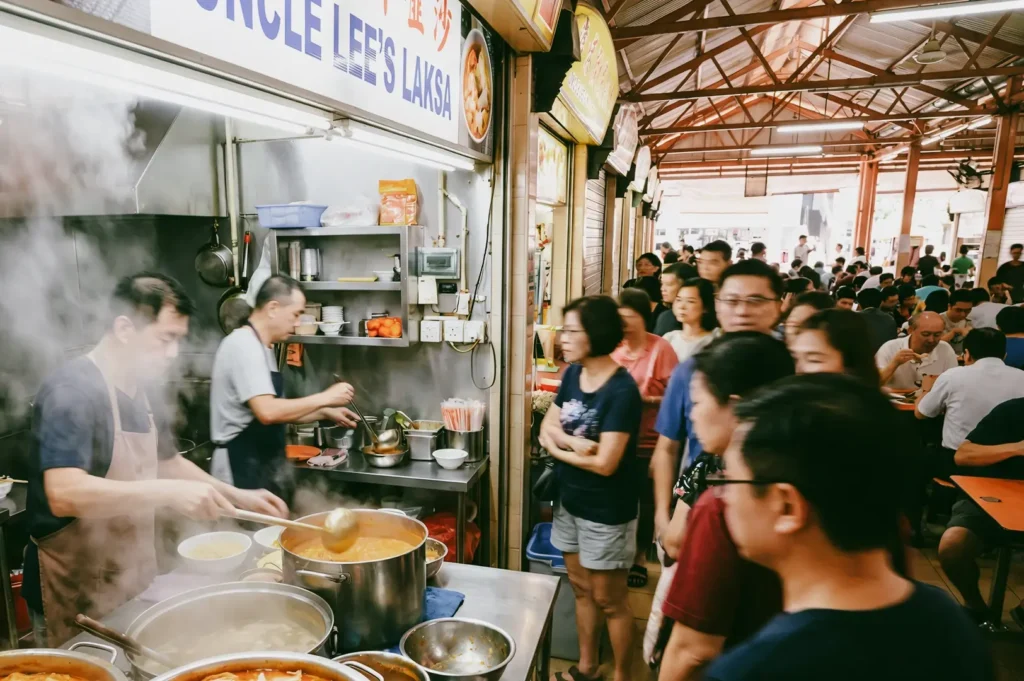
Singapore neighbourhood food is a map of migration and memory. The distinct tastes of dishes like laksa, with its rich coconut milk broth and rice noodles, or the caramelized char siu hanging in Chinatown’s hawker stalls, tell stories of the communities that shaped them. These flavours are not static; they evolve while holding onto the essence of their origins.
The presence of traditional ingredients—bean sprouts in a plate of char kway teow, the use of pandan leaves in desserts, or the balance of soy sauce and chilli sauce in chicken rice—reflects a culinary dialogue between past and present. Even the humble shaved ice dessert, refreshing and sweet, is a testament to the city’s ability to blend influences into something uniquely Singaporean.
The Dynamic Interplay of Tradition and Modernity
While hawker culture remains deeply rooted in tradition, Singapore’s food scene is continually evolving. The juxtaposition of century-old hawker stalls with contemporary restaurants and the presence of iconic establishments like the Raffles Hotel illustrate the city’s culinary spectrum. Dinner at a fine dining restaurant might feature reinterpretations of local dishes, while the food centre buzzes with the timeless preparation of hawker food.
This dynamic interplay signals a living food culture—one that honors its heritage while embracing new influences. The enduring popularity of dishes such as chilli crab and wanton mee alongside modern culinary experiments speaks to a society that values both preservation and innovation.
The River and the Road: Food as a Reflection of Place
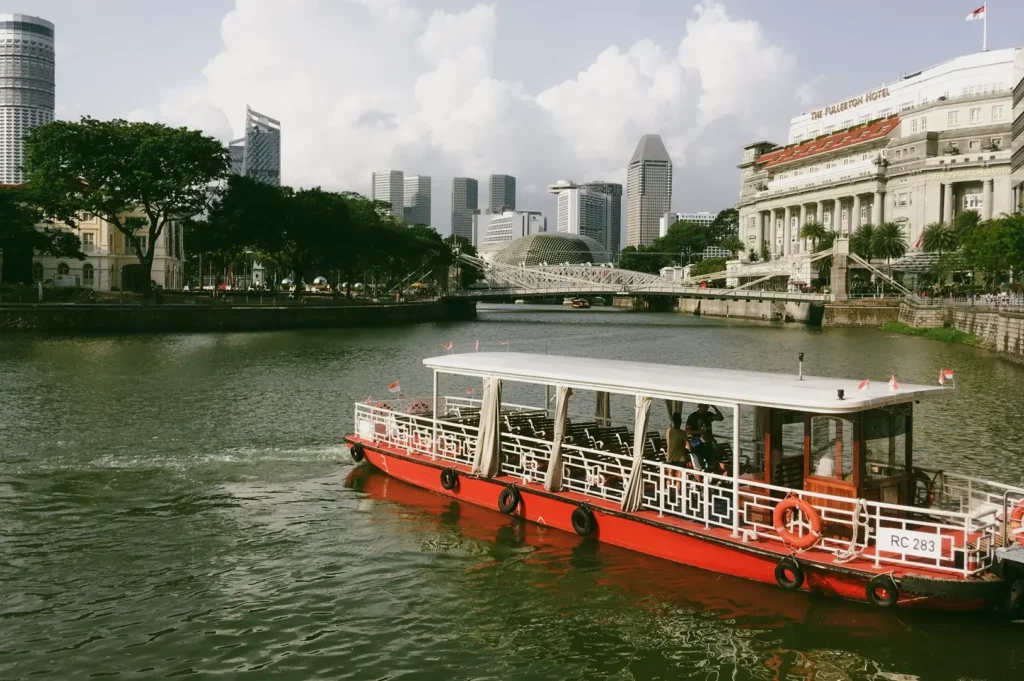
The Singapore River and East Coast Road are more than physical landmarks; they are arteries through which the city’s food culture flows. Along these stretches, seafood like white pepper crab and chilli crab are celebrated, their flavours infused with the maritime history of the city. The open-air dining experiences here, often accompanied by the vibrant atmosphere of hawker centres, encapsulate the spirit of Singapore’s love for food as a communal and sensory experience.
Similarly, the streets of Joo Chiat Road and Kampong Glam pulse with culinary heritage, where hawkers prepare traditional dishes that echo the cultural diversity of the city. The smells of roasting spices, the sight of sizzling woks, and the taste of fragrant rice dishes all contribute to a layered narrative of place and people.
Conclusion: Food as the Living Memory of Singapore
Singapore neighbourhood food is far more than a collection of dishes; it is a living archive of the city’s history, culture, and community. Each hawker stall, food centre, and open-air market holds stories of migration, adaptation, and resilience. The shared meals of chicken rice, char kway teow, and chilli crab are acts of remembrance and belonging that transcend generations.
In the quiet moments of dawn at a hawker centre or the bustling energy of dinner by the Singapore River, food becomes a language—a way to communicate identity, to connect with others, and to celebrate the rich mosaic that is Singapore. As the city continues to evolve, its food culture remains a steadfast thread linking past to present, inviting reflection on how something as simple as a meal can carry the weight of a nation’s soul.