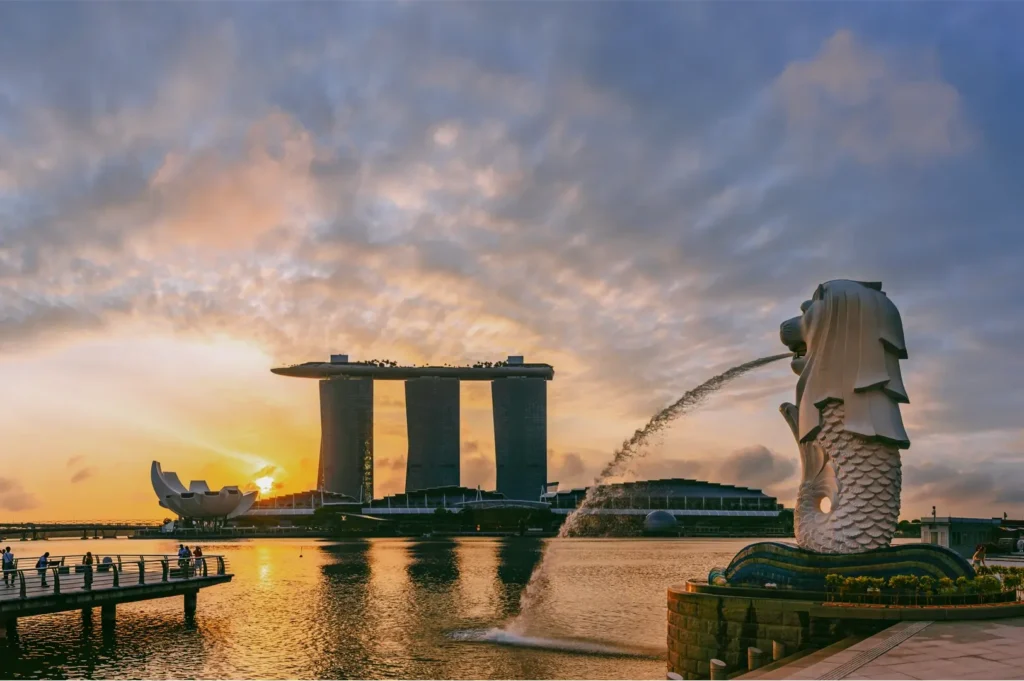
Before dawn, the Singapore River, also known as Sungai Singapura, lies still like dark glass. The early morning brings a rare calm along this historic waterway, with only the soft sounds of a jogger and the gentle tide near landmarks like Merlion Park. At this hour, the city feels intimate and deeply rooted in its enduring legacy.
Long before British colonization, the river mouth was home to the ancient fishing village of Kuala Temasek. Nestled near a small hill and jungle, it was here that Malay legend tells of Sang Nila Utama, also known as Sri Tri Buana or Nila Utama, who in 1299 spotted a strange beast with a red body, black head, and white breast. This sighting inspired him to rename the area Singapura, meaning ‘Lion City,’ marking the river’s historical significance as an early settlement and cultural landmark.
Often seen merely as a backdrop for evening entertainment or a route for Singapore River cruises, the river reveals a complex story when experienced throughout the day. It is a living entity that shifts from quiet sanctuary to bustling transit corridor and vibrant social hub. To grasp the Singapore River’s importance—the focal point of Singapore’s early settlement and modern development—one must journey through its changing moods and functions.
Early Settlement and History of the Lion City
The Singapore River’s significance predates British arrival. At its estuary, the Orang Laut, or sea people, inhabited the area, facilitating trade in marine products. The river provided fresh water and a sheltered harbour, making it ideal for settlement in what was then Temasek. Sang Nila Utama’s renaming of the area to Singapura in 1299, as recorded in the Malay Annals, anchors the river’s place in Singapore’s early days.
In 1819, Sir Stamford Raffles of the British East India Company recognized the river’s strategic location and established a trading post at its banks, catalyzing Singapore’s transformation into a global trading hub. The riverbanks quickly developed, with river merchants, street hawkers, and the indigenous Orang Laut adapting to expanding commerce.
Infrastructure such as Kim Seng Bridge and Alexandra Canal emerged, connecting parts of the growing settlement. The river’s role as a connector persisted through layers of development—from ancient fishing village to colonial trading post to modern city—shaping Singapore’s cultural and commercial landscape.
Morning Along the Singapore River: Stillness Before the City Wakes
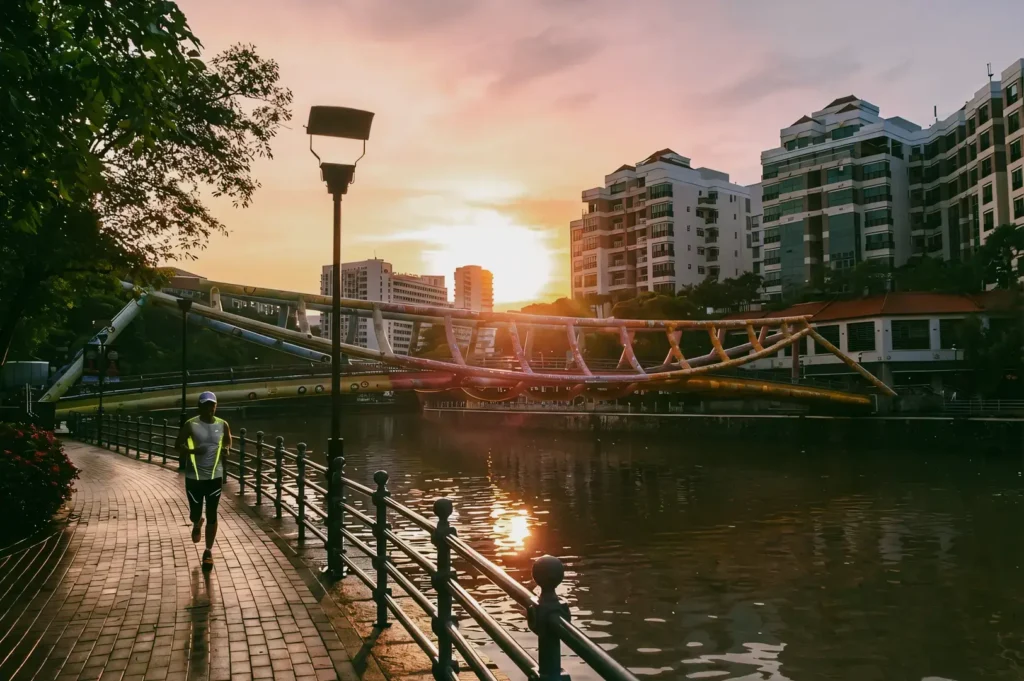
As dawn brightens, the upper reaches near Robertson Quay stir with quiet activity. This area feels like a peaceful neighborhood rather than a tourist hotspot. Dog walkers and early café patrons move quietly along promenades shaped by the Urban Redevelopment Authority’s planning.
Cyclists commute along scenic riverside paths toward Singapore’s Central Business District. Delivery trucks restock venues at Clarke Quay and Boat Quay, preparing for the day’s crowds. At Boat Quay, restored shophouses that once housed river merchants and offices sit quietly beneath towering skyscrapers. Boat Quay was the first section developed for commerce in 1823, laying the foundation for Singapore’s central business district.
The morning light reveals details of historic bridges like the current Elgin Bridge and the first bridge built near the river mouth, offering a rare moment of solitude before the city fully awakens.
Clarke Quay and Boat Quay: The River’s Commercial Heart
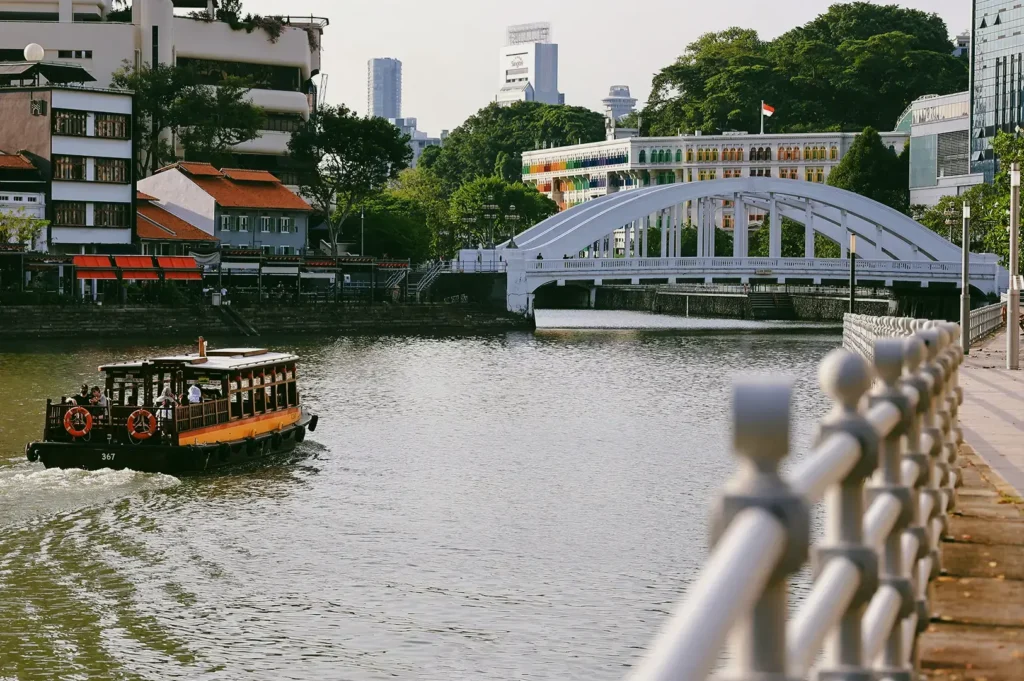
By midday, the river transforms into a vital artery. Office workers flood the promenades, crossing bridges such as Kim Seng Bridge and Elgin Bridge en route to meetings. The river connects dense commercial zones with spaces for respite.
Boat Quay, once known as the “Wall Street” of 19th-century Singapore, bustles with activity. Its restored shophouses now house dining and entertainment venues but recall their origins as offices and warehouses for river merchants. Clarke Quay, named after Governor Sir Andrew Clarke, developed as a warehousing hub with larger godowns storing bulk goods like pepper and rubber. Today, Clarke Quay is a lively entertainment district with restaurants and nightclubs preserving its historic architecture.
The Asian Civilisations Museum near the river celebrates the city’s rich heritage, offering a cultural pause amidst the commercial rush.
Midday Flow and the Role of the River
The Singapore River, stretching 3.2 km from Kim Seng Road downstream to the sea, empties into Marina Bay. To its east lies the Kallang Basin, part of Singapore’s extensive river system and drainage catchment. The river’s southern part has been central to trade, land reclamation, and urban development.
At midday, the river supports multiple rhythms: informal walking meetings at Boat Quay, solo workers near the Asian Civilisations Museum, tourists embarking on Singapore River cruises, and couples dining leisurely at Robertson Quay. The river serves as both a connector and a place of pause in the city’s daily flow.
Afternoon Lull and Environmental Challenges
As the tropical sun peaks, heat and humidity slow the pace. Movement along the riverbanks quiets. The bumboats continue their steady loops, engines humming softly. The water reflects the greenery and historic facades, while the air carries the scents of the city.
Historically, the river suffered severe water pollution from street hawkers, pig farms, and unsewered premises, especially by the mid-20th century. Industrial waste and sewage turned the river into an open sewer. The Public Utilities Board later led extensive cleanup efforts, relocating thousands of squatters and businesses, dredging the river, and installing modern sanitation systems.
Today, the river flows fresh and clean, a transformation made possible by damming its estuary to create the Marina Barrage, converting the southern part into a freshwater reservoir.
Evening Revival: Social Life Along the River
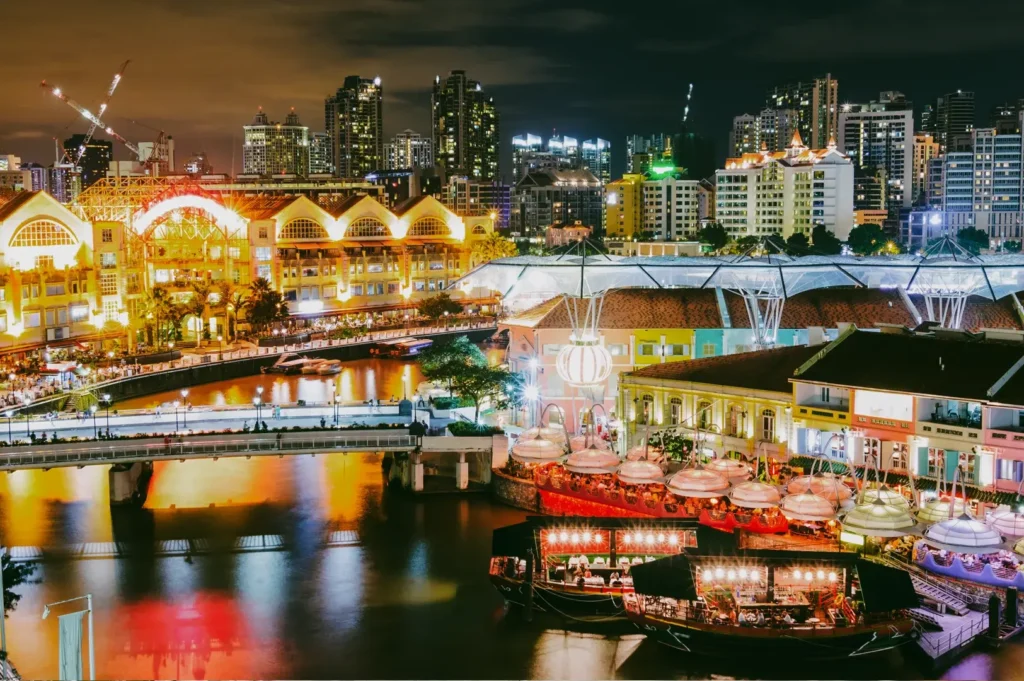
As the sun sets, the Singapore River’s atmosphere softens into golden hues. The after-work crowd arrives, filling promenades with relaxed energy. Restaurants and bars at Boat Quay and Clarke Quay extend seating to the water’s edge, filling the air with aromas of grilled seafood and spices.
Boat Quay’s narrow paths buzz with diners and hosts, while Clarke Quay’s umbrella-like canopies glow with neon lights, creating a vibrant nightlife scene. The river becomes a stage for social gatherings, blending historical charm with modern vibrancy.
Nightfall and the River’s Nocturnal Transformation
By night, the river is a pulsating artery of light and sound. The Central Business District’s skyscrapers reflect in the dark water. Clarke Quay’s clubs and pubs spill music into the streets, attracting locals and tourists alike.
Bumboats, now adorned with lanterns, glide like fireflies, offering Singapore River cruises that showcase the city’s illuminated skyline. The river’s nocturnal energy contrasts sharply with its morning stillness, embodying the city’s dynamic character.
Bridges and Urban Redevelopment
Since the first bridge was built in 1822 near the river mouth, numerous bridges have spanned the Singapore River, including the iconic Elgin Bridge and Kim Seng Bridge. These structures symbolize the river’s role in connecting the city’s east and west banks.
The Urban Redevelopment Authority has played a key role in preserving historic shophouses along Clarke Quay, Boat Quay, and Robertson Quay, facilitating adaptive reuse that balances heritage with modern use. The Singapore River Festival, held annually, celebrates the river’s history and community through cultural performances and events.
The Enduring Legacy of the Singapore River
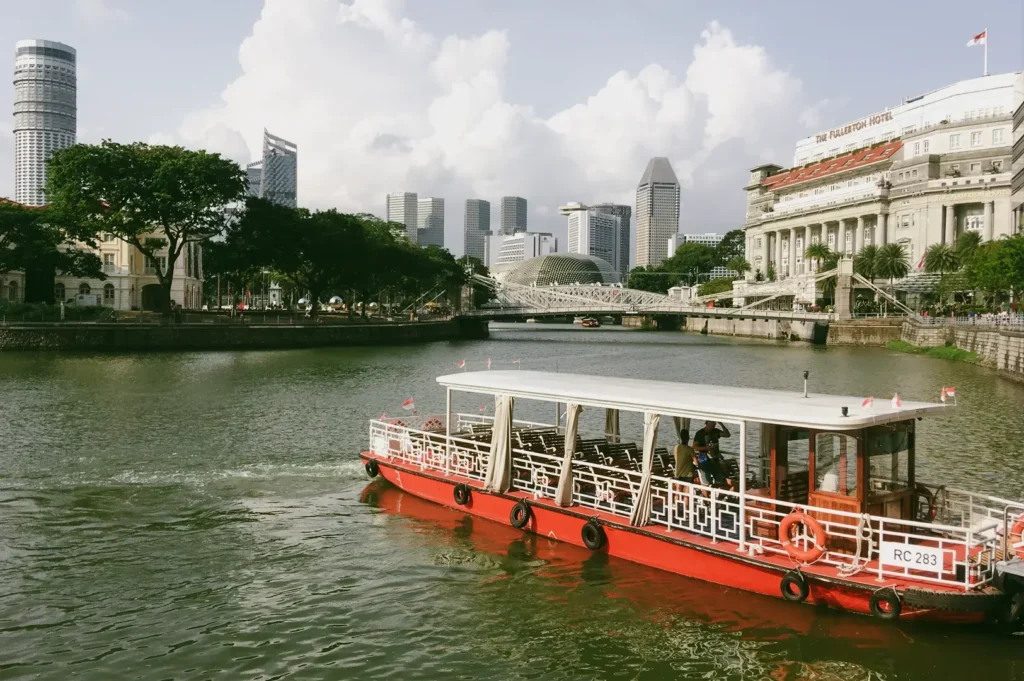
The Singapore River is more than a waterway; it is the heart of Singapore’s story. For more than a century, it was the lifeblood of trade, bustling with wooden lighters ferrying goods to and from Keppel Harbour. The river witnessed the island’s transformation from an ancient settlement at Bukit Larangan (now Fort Canning Hill) to a colonial trading post and finally to modern Singapore’s central business district.
Today, the river connects diverse neighborhoods and people, from early morning joggers to late-night revelers. It embodies Singapore’s balance of history and progress, nature and urbanity, tradition and innovation.
Experiencing the Singapore River at different times reveals its multifaceted character and enduring legacy. It remains a living symbol of the Lion City’s journey—a place where past and present flow together like the river itself.