Beyond the gleaming skyline and bustling hawker centers, Singapore holds a wealth of stories etched into its very streets. This island nation, a crossroads of cultures and four official languages, has a rich history of literary arts that is often hidden in plain sight, waiting to be discovered by book lovers and the curious wanderer. From grand colonial-era hotels that hosted international writers such as Somerset Maugham to humble HDB estates featured in Singaporean literature, a bookish tour Singapore is an invitation to explore the city’s soul through the written word.
This guide to Singapore literary landmarks promises a deep dive into important literary locations Singapore offers, plus hidden treasures where Singapore’s literature continues to flourish. You’ll discover stories connecting official languages, genre-spanning fiction and non fiction, and the vibrant communities that have shaped Singaporean literature. Join us as we explore Singapore’s neighbourhoods—each with its own stories, authors, and literary inspirations.
Walking through Singapore’s streets, the city’s literary heartbeat can be felt in local bookstores, community libraries, and quiet corners where writers gather. Neighbourhood Life captures these moments, showing how everyday spaces—from HDB estates to café nooks—carry stories, host readings, and keep Singapore’s literary culture alive within its neighbourhoods.
Singapore Literary Landmarks: The Colonial District’s Literary Heritage
The Civic District’s rich history and iconic architecture have made it an essential part of Singapore literary landmarks—an area where the nation’s most celebrated literature, historic authors, and book recommendations intersect.
National Library Building: A Pillar of Literary Arts
The modern National Library Building on Victoria Street is not just an architectural icon but a central hub for Singapore’s literary arts. Overseen by the National Library Board, its mission to nurture local literature and connect readers with Singapore’s four official languages is celebrated through its extensive collection. Drawing from its predecessor on Stamford Road, this location lives on in the pages of Singaporean literature, featuring in short stories, novels, and memoirs. The Lee Kong Chian Reference Library, housed here, offers a treasure trove of Singapore literature, non fiction books, poetry, and children’s literature. Don’t forget to check out the book vending machine—a quirky innovation that brings stories to book lovers on the go.
Raffles Hotel: A Timeless Singapore Literary Landmark
Few places can rival the Singapore literary landmarks status of the legendary Raffles Hotel. This historic icon has played host to generations of writers and inspired works across genres. Somerset Maugham penned stories beneath its frangipani trees, while famed visitors like Rudyard Kipling and Joseph Conrad wove it into their fiction. Today, the Raffles’ gardens and halls invite visitors to reflect on the settings of world literature and the evolving landscape of local stories—making it an unmissable site for anyone interested in Singapore’s literary heritage.
The Arts House: Home of Literary Arts and the Singapore Writers Festival
Formerly Singapore’s first Parliament House, The Arts House stands at the heart of the Civic District as a dynamic center for literary arts. It is famously home to the Singapore Writers Festival, one of Asia’s top literary events organized by the National Arts Council. This space buzzes with creativity year-round, hosting book launches, poetry readings, and multilingual literary events that showcase the diversity of Singaporean literature. Editors, writers, and book lovers come together here to discover new stories, meet authors and illustrators, and celebrate Singapore’s literary achievements—making The Arts House a must-visit among Singapore literary landmarks.
Singapore Literature in Chinatown: Heart of Singaporean Literature
Chinatown is a treasure trove of Singapore literary landmarks and multicultural stories, firmly rooted in the landscape of Singapore literature and Singaporean literature. These labyrinthine streets have inspired generations of writers and provided a vivid backdrop to novels, short stories, and poetry in Chinese and Singapore’s other official languages.
The area’s storied shophouses and bustling markets have been featured in works that capture daily life across eras, documenting the evolution of Singapore’s urban culture and identity. Authors like Goh Poh Seng and other local voices have drawn from real-world sounds, architecture, and the vibrant mix of people and languages found here. Pagoda Street and Telok Ayer Street, for example, appear in fiction, memoirs, and poems focusing on the immigrant experience, changing family traditions, and the tension between history and modernity.
Today, Chinatown continues its reputation as a hub for Singaporean literature. Here you’ll find independent bookshops, including those near Bras Basah Complex, offering everything from translated classics to contemporary fiction—and even a book vending machine for book lovers in search of serendipitous reads. Meetups, literary events, and exhibitions celebrate local authors, editors, and illustrators, making Chinatown a living literary hub for everyone in search of Singapore’s stories.
Book Vending Machine & Little India’s Influence on Singapore Literature
No tour of Singapore literary landmarks would be complete without a stop in Little India—renowned for colourful culture, festivals, and contributions to Singaporean literature in Tamil and English. This neighbourhood is essential for anyone interested in Indian writing, cultural events, and local literature.
Sites such as Serangoon Road and Campbell Lane influence short stories, non fiction, and contemporary fiction. From vibrant street life and family businesses to the traditions of Tamil Nadu and beyond, Little India continues to inspire local authors and readers. Storytelling thrives in cultural centers and temples, which frequently host book launches, live music, and children’s literature events. Many such stories celebrate the resilience and imagination of Singapore’s multicultural community.
Kampong Glam’s Literary Legacy
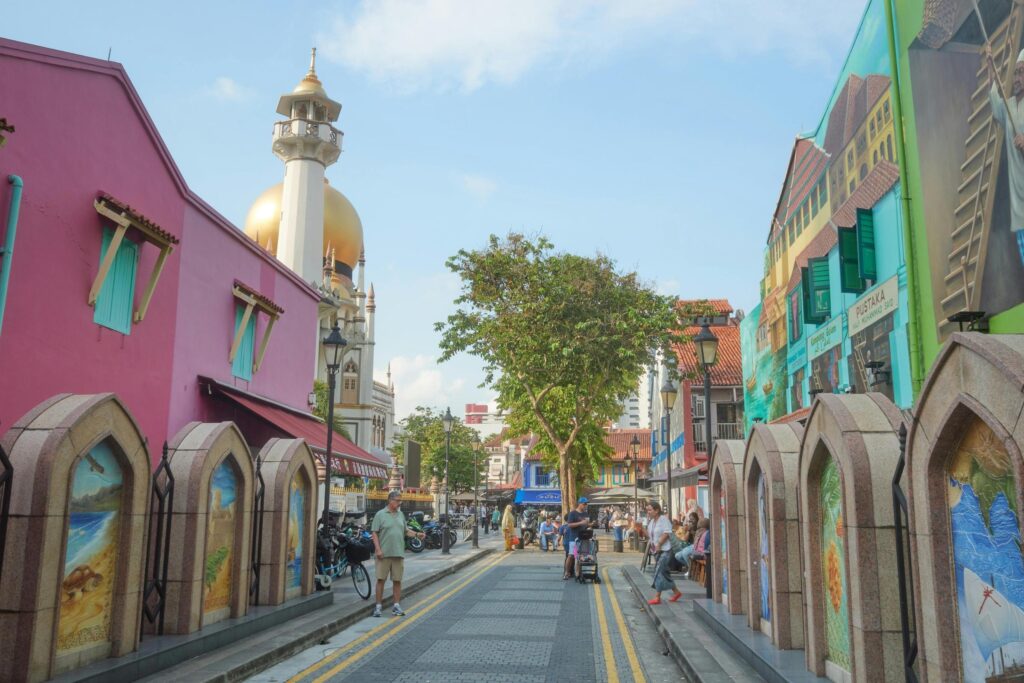
Kampong Glam, anchored by the majestic Sultan Mosque and its golden dome, is a centre of Malay literary heritage and modern Singapore literature. Historical sites and nearby art spaces showcase a blend of folklore, modern poetry, and fiction in Malay and English, affirming Kampong Glam’s role in Singapore’s multicultural literary landscape.
Explore literary references in the stories of merchants and royal histories, brought to life in genres ranging from historical fiction to personal essays. Visit independent bookstores or attend book clubs and poetry readings. Art exhibitions here often blur the boundaries between literature and visual arts. For anyone keen to explore Singapore beyond the obvious, Kampong Glam is full of atmosphere, history, and inspiration for readers and would-be writers.
Heartland Stories: HDB Estates in Literature
Heartland HDB estates are at the heart of modern Singaporean literature. These public housing neighbourhoods, home to most Singaporeans, appear in novels, memoirs, and poetry expressing real life in the Lion City.
Books like Balli Kaur Jaswal’s Erotic Stories for Punjabi Widows and other works tackle identity, relationships, and the realities of daily life in Singapore’s HDB towers. Poets and short story writers use void decks, hawker centers, and playgrounds to develop authentic characters and stories. These settings provide a stage for explorations of community, belonging, and multicultural understanding.
Heartland libraries—run by the National Library Board—double as literary hubs, hosting writing workshops, book clubs, and children’s reading events. Their extensive collections encourage everyone to read, discover, and share both fiction and non fiction written by local authors and poets.
Nature-Inspired Literary Sites
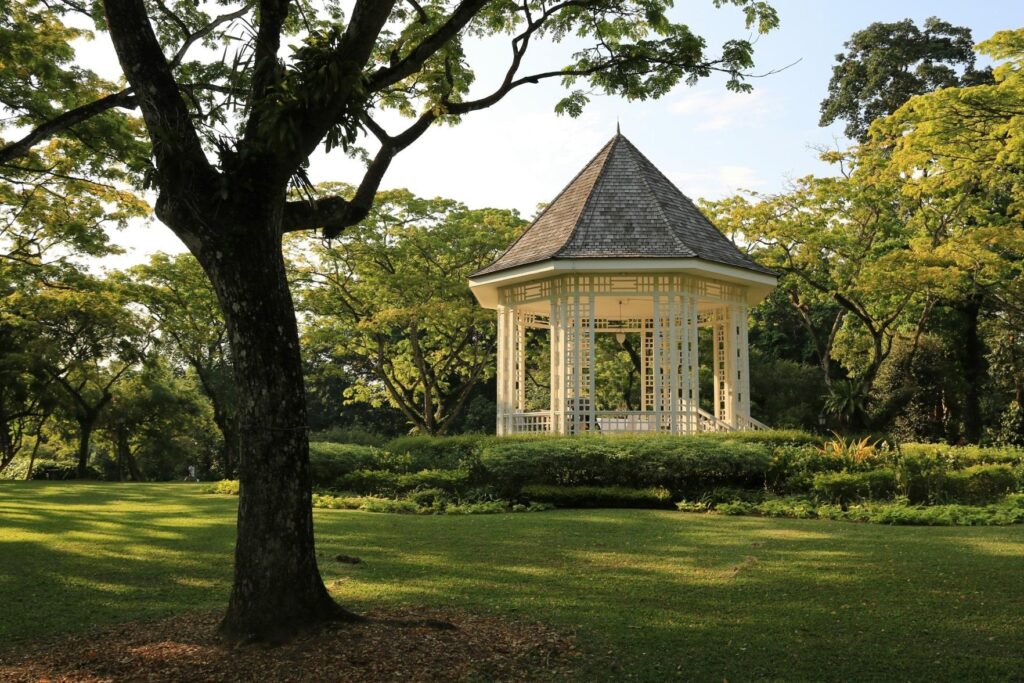
Singapore’s reputation as a “City in a Garden” is vividly present in its literary arts. The natural beauty of the island’s green spaces and waterfronts has long inspired local literature in all genres.
The Singapore Botanic Gardens—a UNESCO World Heritage Site—features in poems, family sagas, and novels, often associated with moments of reflection or romance. Many poets, including Edwin Thumboo, have used these gardens as the setting or inspiration for their work, tying together Singapore’s urban ambition with its connection to nature.
Other sites, like MacRitchie Reservoir or East Coast Park, offer scenes of family life, friendship, and discovery that are central to children’s literature and contemporary fiction. For readers looking to grab a book and let their imagination wander, these literary locations are perfect.
Independent Bookstores & Literary Cafés
Singapore’s independent bookstores and literary cafés are must-sees for every book lover Singapore and visitor. Spots such as Woods in the Books and the famed BooksActually (now operating online) are beloved for their curated selections of Singapore literature, children’s literature, and non fiction. Bras Basah Complex remains a go-to for affordable local literature, study guides, and non fiction books.
Literary cafés and bookshops double as community meetups for book clubs, hosting readings, and inviting local authors for discussion. Expect to discover lesser-known works, get thoughtful book recommendations, and engage with fellow readers enjoying coffee and conversation. Recent years have seen a flourishing of these creative spaces—ideal for solo explorers or family days out.
Creating Your Own Literary Tour
Ready to explore Singapore’s most fascinating literary locations? Here’s how to design a rewarding, bookish adventure:
- Choose Your Neighbourhood: Focus on a district, such as the Colonial District or Little India, or combine nearby areas for a deeper understanding of Singapore’s history and literary arts.
- Check Institution Events: Many places host the Singapore Writers Festival, poetry slams, or themed book fairs curated by the National Arts Council. Plan ahead for special events, meet-the-author sessions, or literary workshops.
- Walk and Observe: Wander at your own pace. Architecture, murals, and local stories are everywhere—soak up details and let the city’s novels, non fiction, and history unfold before you.
- Refuel and Reflect: Pair your literary tour with a visit to a charming bookstore café or nearby hawker center. It’s an essential part of the local literature experience.
Conclusion

Singapore literary landmarks capture the city’s diversity, creativity, and multicultural legacy in every story, poem, and novel. Exploring these sites—and the communities and cultures that bring them to life—builds a deeper understanding of Singapore’s literary history and ongoing creative energy.
Don’t miss the chance to discover and meet authors, poets, and editors shaping Singapore’s literature—past and present. Subscribe to our newsletter for more insights, book recommendations, and guides to unique neighbourhoods and their stories across Singapore.
Explore how creativity transforms everyday streets in Singapore Public Art: The Role in Shaping Community Identity Through Creative Expression in Neighbourhoods. From vibrant murals to thought-provoking sculptures, public art gives each neighbourhood its own personality, bringing communities together and turning ordinary spaces into dynamic, living galleries.