In the landscape of Singapore’s food and beverage scene, success is almost always measured by expansion. The trajectory is familiar: a chef makes a name for themselves, the reservation waitlist grows to three months, and soon after, a second outlet opens. Then comes the casual bistro concept, the partnership with a hotel group, and perhaps a line of bottled sauces. Growth, in this city, is the default definition of ambition.
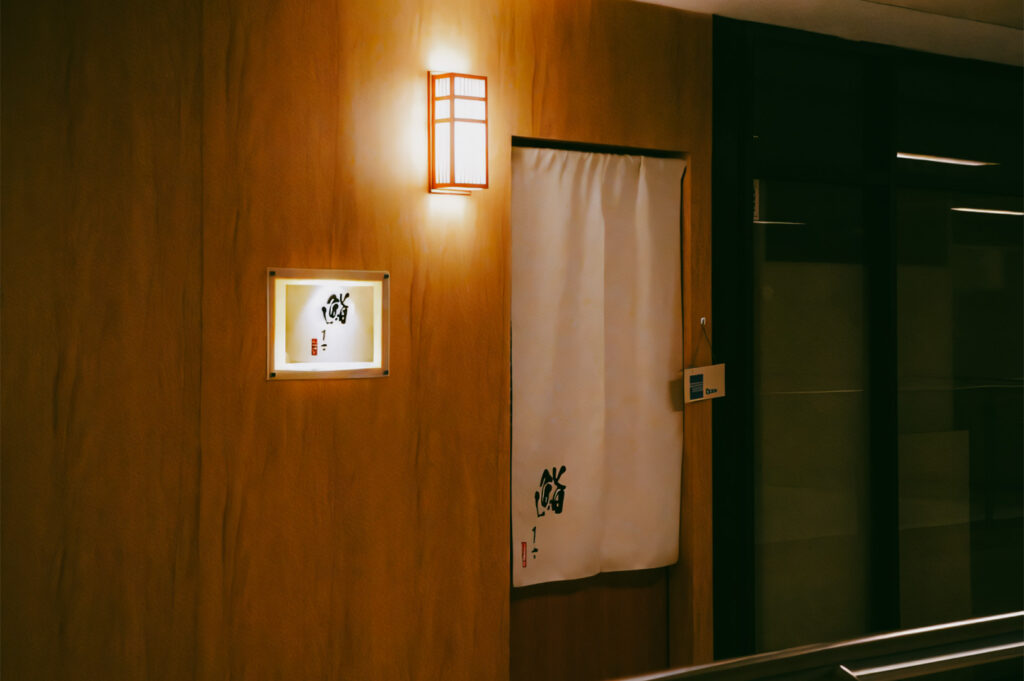
But tucked away in a quiet corner of the island at Level 6 Cuppage Plaza, Sushi Masa by Ki-setsu, offers a Singapore Omakase counter-narrative. It is a space that challenges our obsession with scale. Despite high demand and a reputation that could easily support a larger dining room or a second location, the restaurant remains stubbornly, intentionally small. This is not a story about exclusivity for exclusivity’s sake. It is a study in discipline and respect for tradition. It is about an eight-seat sushi counter where the philosophy of “enough” is practiced daily, offering a quiet reminder that in culinary craftsmanship and umami-rich dishes, bigger is rarely better.A Quiet Rebellion Against Scale
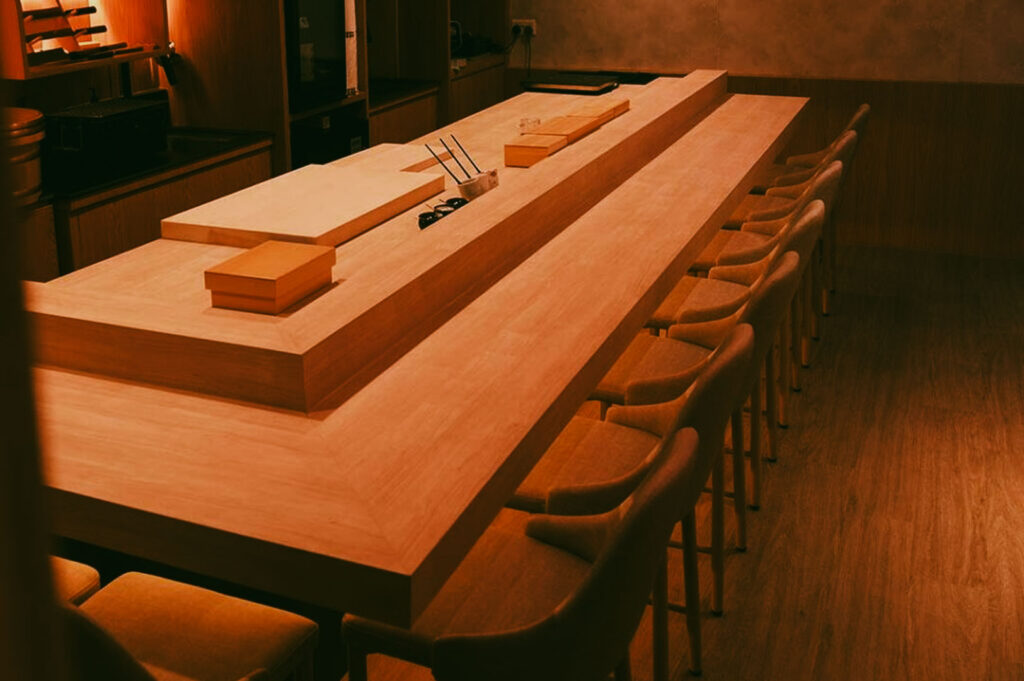
To enter Sushi Masa by Ki-setsu is to step out of the frantic rhythm of urban Singapore and into a space governed by a different set of rules. The room is intimate, stripping away the theatrical distractions often found in modern luxury dining. There are no Instagram walls, no loud playlists, and crucially, no more than eight seats.
In an industry where high rental costs usually drive maximizing covers, maintaining such a low capacity feels like a rebellion. The economics of an eight-seater are unforgiving. Yet, for Chef Masa, this limitation is the very foundation of his craft. To expand would be to dilute the product, not because the ingredients would change, but because his presence would. The decision to remain small is a rejection of the franchise model. It suggests that omakase—literally “I leave it up to you” cannot be scaled because trust cannot be automated. Trust requires a person standing in front of you, and there is only one Chef Masa.Understanding Sushi Masa by Ki-setsu
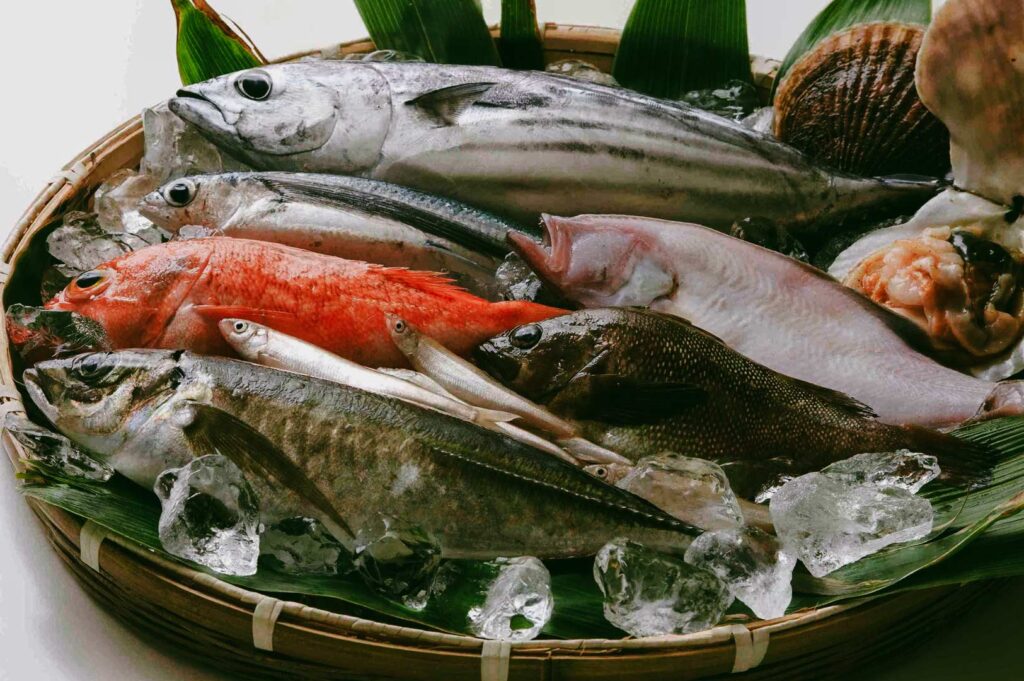
The restaurant’s name itself serves as the operating manual. “Ki-setsu” translates to “season” or “time of year,” but in the context of this kitchen, it implies something more granular than just spring, summer, autumn, and winter.
In the Japanese culinary calendar, seasons are divided into micro-seasons, changing every few weeks or even days. This philosophy dictates the structure of the meal. At Sushi Masa by Ki-setsu, the menu is not a static document but a fluid response to what nature has provided that morning, with ingredients flown daily from Japan’s Toyosu Market.
This adherence to Ki-setsu means that consistency, the golden rule of most restaurants, takes on a different meaning here. Consistency doesn’t mean the tuna tastes exactly the same as it did in March; it means the tuna is exactly as good as it can possibly be today. This requires a surrender of control from the diner, but it demands absolute vigilance from the chef.
The Philosophy of "Ki-setsu" (Seasonality)
For the Neighbourhood Life team observing the dining trends in Singapore, the commitment to true seasonality is often claimed but rarely fully practiced due to logistical challenges. Here, however, it is the law. If a specific shellfish or matsutake mushroom is not at its peak, it does not appear, regardless of whether a regular guest asks for it. The structure of the restaurant is built entirely around the ingredients, rather than the ingredients being forced to fit a pre-determined menu.
Chef Masa and the Art of Saying No
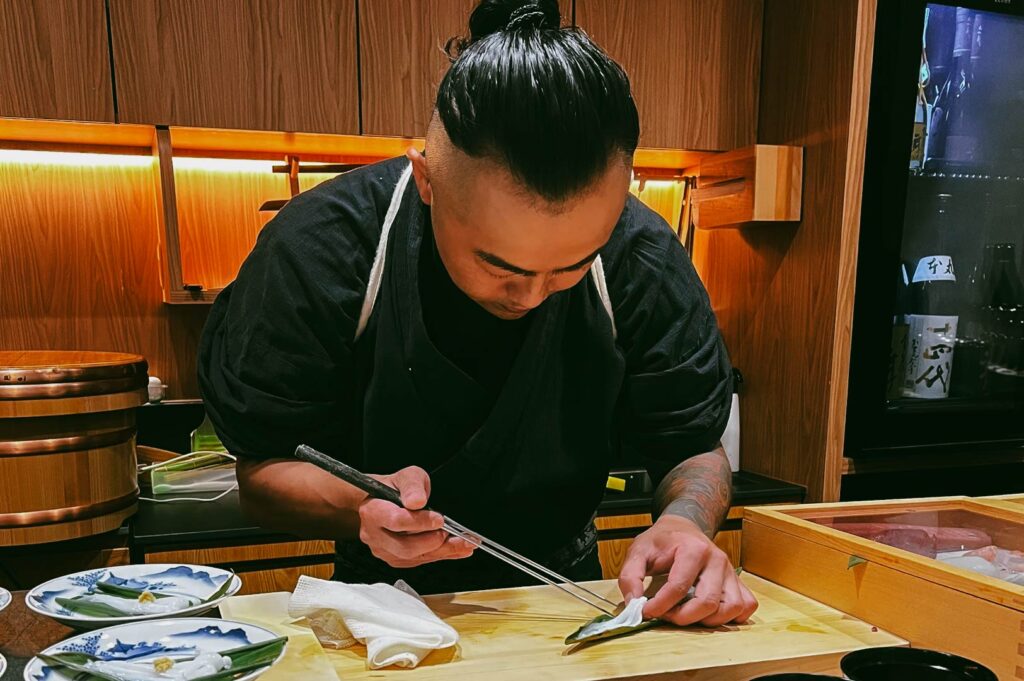
Perhaps the most striking aspect of Chef Masa’s personal values is his willingness to say no. In a service culture that often prioritizes “the customer is always right,” Sushi Masa draws a firm line where hospitality meets integrity.
Special requests are common in Singapore’s dining scene. Requests for extra sauce, for certain ingredients to be seared rather than raw, or for specific favorites to be included regardless of the season. Chef Masa’s refusal to accommodate requests that compromise the balance of the dish is not born of arrogance. It is a form of protection. He protects the integrity of the ingredient and the experience for the guest, even if the guest doesn’t realize it in the moment. This discipline, the ability to disappoint a request to satisfy a standard is rare. It prioritizes the long-term trust in his craft over the short-term satisfaction of a whim.Why Eight Seats is the Magic Number
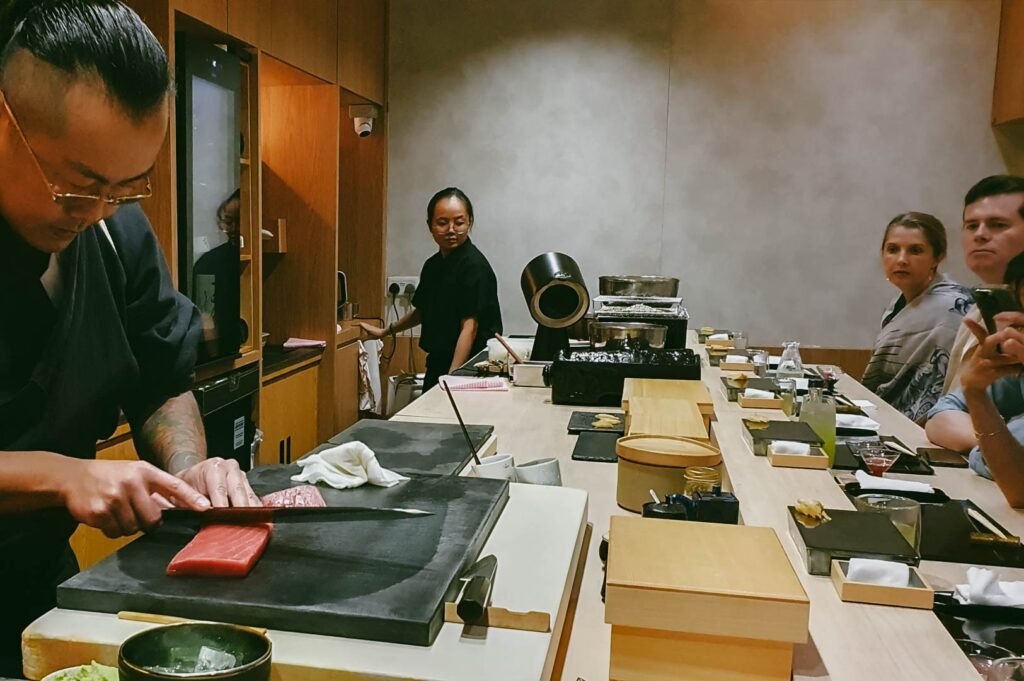
The physical constraint of eight seats is not a bug; it is a feature. Omakase is often described as a performance, but at Sushi Masa by Ki-setsu, it is more akin to a conversation.
With only eight guests, the chef can maintain a 360-degree awareness of the sushi counter. He is not just making sushi or nigiri sushi; he is reading the room. He notices if a guest is left-handed and adjusts the angle of the sushi placement accordingly. He observes the pace at which a guest eats, slowing down or speeding up the service so that the rice is at the perfect temperature the moment it enters the mouth.Seeing the Guest, Not Just the Order
When a restaurant scales up to 20 or 30 seats, this granularity is lost. The chef becomes a manager, expediting orders rather than crafting bites. At eight seats, Chef Masa can fully “see” each guest. This creates a human connection that is the hallmark of true neighbourhood hospitality; the feeling that you are being cooked for by a person, not a kitchen brigade.
The Daily Ritual of Menu Creation
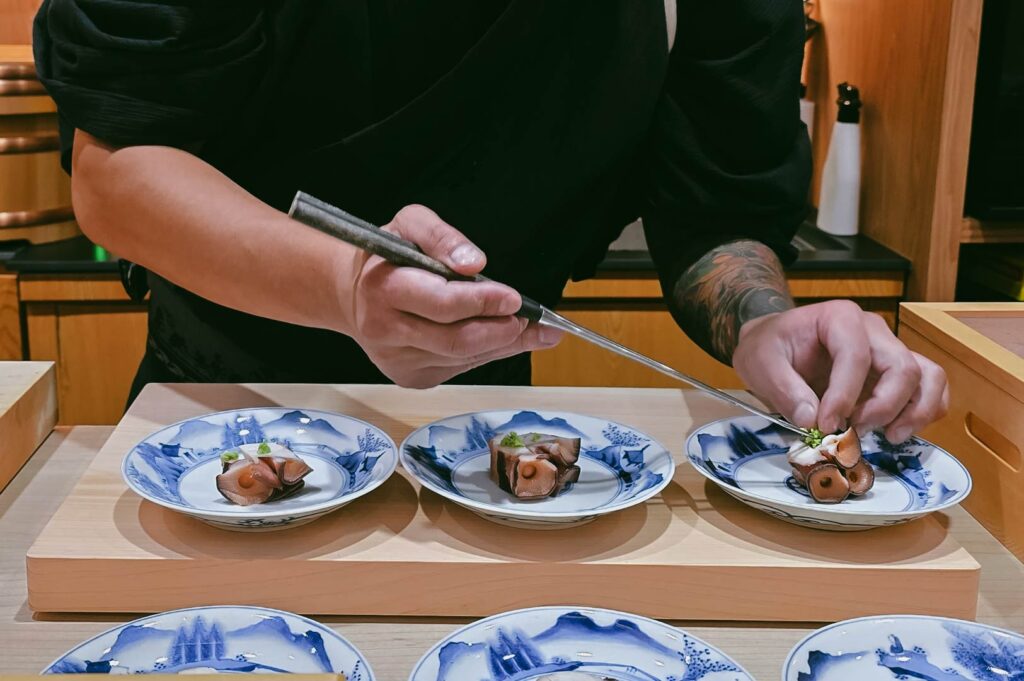
Replication is the enemy of artistry, and the small scale of Sushi Masa prevents the menu from becoming a factory line. Because the volume of ingredients required is small, Chef Masa can source niche, limited-quantity seafood that larger restaurants simply cannot buy because they can’t get enough of it to serve 100 people.
This allows for a daily reinvention of the menu, featuring premium sashimi, cooked dishes, nigiri, uni, soup, and dessert. It keeps the kitchen sharp and the experience alive. For the regular diner, this means that no two visits are identical. The discipline of starting from scratch each day prevents the team from falling into a comfortable, robotic rhythm. It keeps the “Ki-setsu” spirit honest.Purchasing at Toyosu Market daily
Each day begins long before service, with selections influenced by what is available at Toyosu Market, where seasonality dictates supply. Chef Masa does not purchase by volume, but by instinct — choosing what is at its quiet peak rather than what is abundant. The small scale of Sushi Masa by Ki-setsu allows him to secure limited catches that larger establishments would overlook. In this way, procurement is not logistical — it is philosophical.
The Magic at Cuppage Plaza every afternoon
The moment the ingredients arrive, the kitchen shifts into focus. Every cut, cure, and seasoning is decided in real time, guided by the condition of the fish itself. There is no pre-written script — only responsiveness. By nightfall, the day’s arrivals are no longer ingredients, but a progression.
This deliberate rhythm is also why there is no lunch service. The hours between arrival and dinner are not idle; they are essential. Preparation cannot be rushed, and transformation cannot be compressed. The magic lies in that disciplined passage of time.Why Restraint Resonates in Singapore
Singapore is a city that moves at breakneck speed. Our skylines change overnight; our trends cycle through in weeks. In such a fast-paced environment, places like Sushi Masa by Ki-setsu offer a necessary counterweight.
There is a growing hunger in our neighbourhoods not just for food, but for authenticity and presence. We are beginning to value the places that refuse to change for the sake of market share. We are realizing that the best experiences are often the ones that cannot be franchised. The discipline of this eight-seat counter resonates because it feels personal. In a world of mass production, eating something made by a specific set of hands, for you, at this specific moment in the season, is the ultimate luxury.Conclusion: The Luxury of Enough
As we seek out dining experiences that add value to our lives, Sushi Masa by Ki-setsu stands as a testament to the power of knowing one’s limits. By choosing discipline over growth, Chef Masa has preserved the soul of the omakase experience.
He reminds us that sometimes, the most ambitious thing you can do is stay small, stay focused, and ensure that every single plate that leaves your hands is exactly as it should be. It is a philosophy of “enough”—and in modern Singapore, that is a philosophy worth celebrating. Reservations are recommended and private bookings are available on Sundays, with the restaurant closed on Mondays and open for dinner hours Tuesday to Saturday. For an exclusive and intimate sushi masa experience with privacy and concierge-level service, booking ahead is essential. Chef Masa, based in Singapore with decades of experience, welcomes diners who appreciate the tradition and umami of Japan’s finest seasonal seafood flown daily from Toyosu Market.