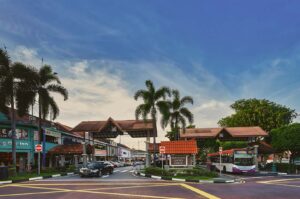
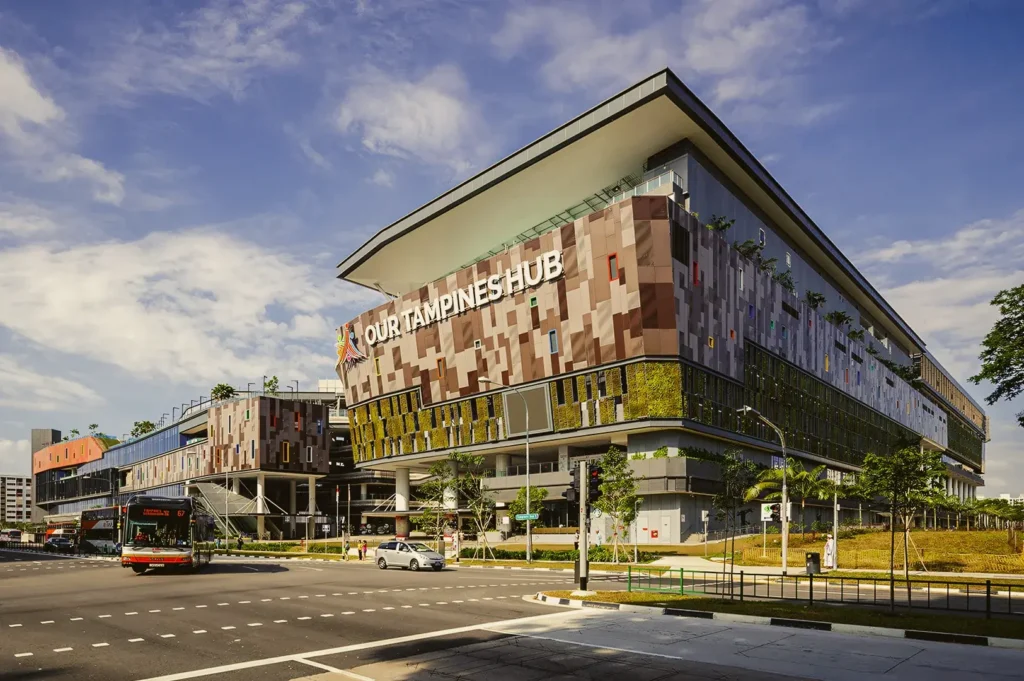
Step out of the fare gates at Tampines MRT station on any weekend, and you are immersed in the vibrant life of Tampines Regional Centre. To your left, crowds move between the gleaming Tampines Mall, Century Square, and Tampines 1. To your right, the iconic Tampines Hub—the largest integrated community and lifestyle hub in Singapore—welcomes office workers and families alike. The wide, tree-lined pedestrian walkways pulse with energy rivaling the city centre. This area is home to four main shopping malls: Tampines Mall, Century Square, Tampines 1, and Our Tampines Hub.
It’s hard to imagine that this bustling regional centre was once rural Tampines—a patchwork of sand quarries, rubber and fruit plantations, and quiet kampongs such as Kampong Tampines, Kampong Teban, Teck Hock Village, and Hun Yeang Village. Tampines Street, including key roads like Tampines Road and Street 21, connected these early settlements and evolved alongside the area’s rich heritage.
The story of Tampines Town is more than just buildings; it is a masterclass in urban design led by the Housing and Development Board and the Urban Redevelopment Authority. The name ‘Tampines‘ traces back to the Franklin and Jackson map of 1828, named after the tempinis trees growing by Sungei Tampines, a river vital to early settlers. From a rustic outpost, Tampines became one of the most developed regional centres in Singapore, fundamentally shaping the eastern part of Singapore’s neighbourhoods. Designated a regional centre in the early 1990s, Tampines Town Centre anchors residential, commercial, and transport infrastructure, driving ongoing development.
Tampines Town: From Rural Origins to Regional Centre
Before urbanisation, Tampines was a landscape of rural industry and agriculture. The name derives from the tempinis (ironwood) trees along Sungei Tampines, prized for durable timber. The land was divided into rubber and fruit plantations, including coconut and pineapple, with kampongs like Kampong Tampines, Kampong Teban, Teck Hock Village, and Hun Yeang Village scattered among them. Residents lived in attap-roofed wooden houses, relying on dirt tracks and well water. Tampines Road, once a bridle path and later a cart track in 1864, connected these villages to Serangoon Road and Changi Road.
Sand washing and quarrying were major industries, leaving deep pits that later became reservoirs like Bedok Reservoir. Life was difficult but community bonds were strong among farmers, quarry workers, and plantation laborers on the outskirts of the city.
Tampines New Town and the Precinct Planning Conceptan
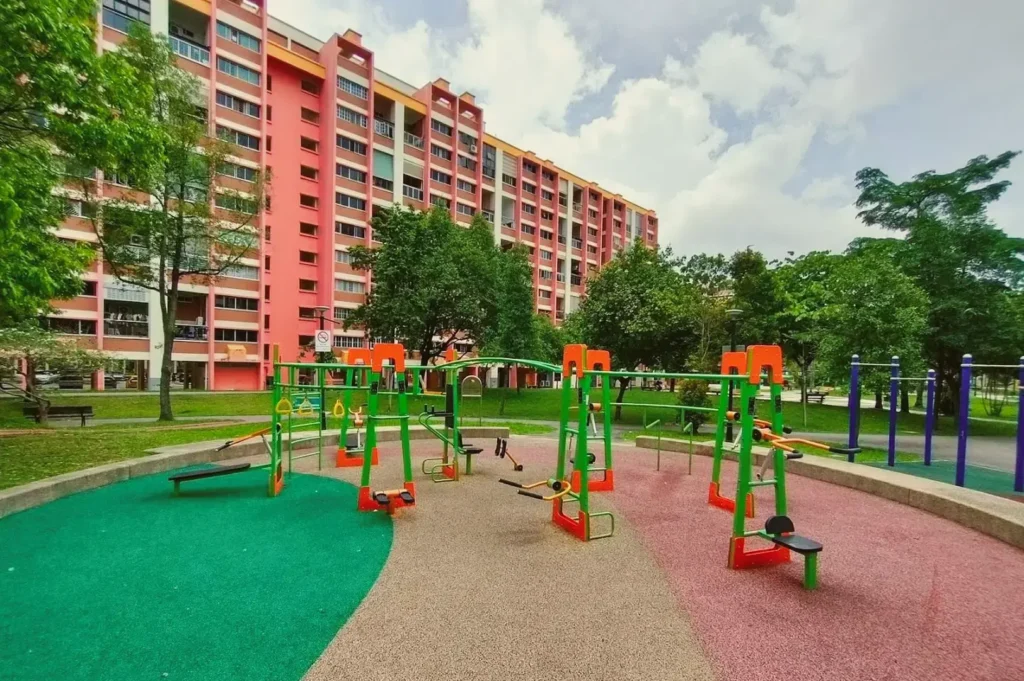
By the late 1970s, Singapore’s city centre was congested, and older estates were overcrowded. The Housing and Development Board launched Tampines New Town, adopting the precinct planning concept, which clustered amenities and social spaces within precincts to foster community bonding and integrated urban design. Construction began in 1979, transforming rural Tampines into a modern satellite town.
Tampines was designed as a vibrant regional centre serving the eastern part of Singapore. The vision was a self-sustaining environment where Tampines residents could live, work, learn, and play without commuting to the city centre daily. This aligned with the Urban Redevelopment Authority’s decentralisation strategy to distribute commercial activity and ease downtown strain.
Key elements included:
Housing precincts: The first housing precinct was at Tampines Neighbourhood 2, offering a diverse range of public housing and private homes to meet housing demand.
Neighbourhood centres: Strategically located centres provided amenities like shops, hawker centres, clinics, and community spaces.
Schools and community facilities: Educational and civic spaces supported families and neighbourly interaction.
Transport networks: Wide arterial roads such as Tampines Avenue and an extensive bus interchange system, including the Tampines Bus Interchange, ensured connectivity.
Green spaces: Neighbourhood parks like Sun Plaza Park and Tampines Central Park, park connectors, cycling paths, and ecological areas such as Tampines Eco Green enhanced liveability.
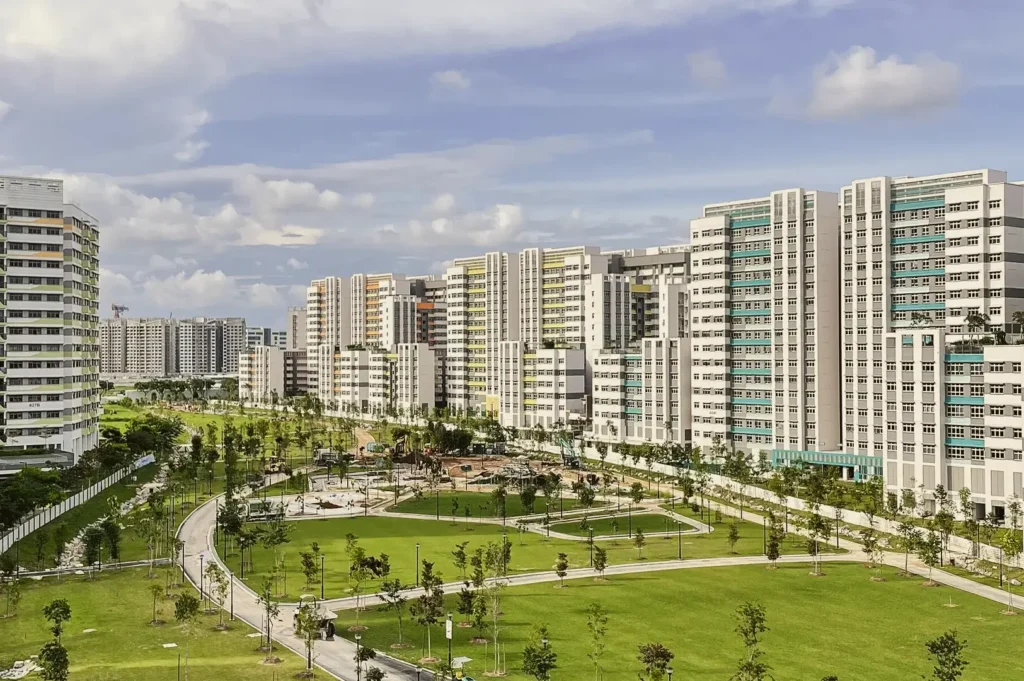
The first public housing parcel in Tampines North, Tampines GreenRidges, launched in 2014 with 1,900 flats. This urban planning excellence earned Tampines Town the World Habitat Award in 1992 from the Social Housing Foundation, recognising its innovative and successful human settlements.
Tampines continues to grow rapidly, with a projected 110,000 dwelling units amid ongoing development in Tampines North and Tampines West.
Building Tampines Regional Centre: The Heart of the East
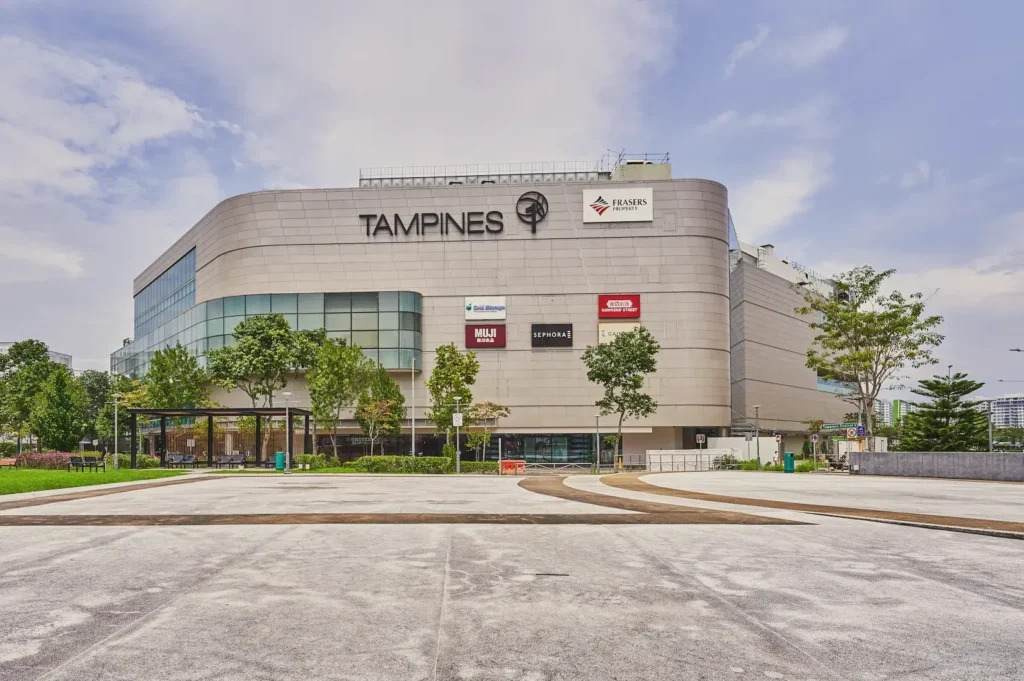
Established in 1992, Tampines Regional Centre spans 37.5 hectares and transformed the town from a residential estate to a bustling commercial hub. As Singapore’s first regional centre, Tampines was designed as a commercial node outside the Central Business District (CBD), hosting major corporations, financial institutions, and retail operations. It is often called the ‘CBD of the East‘ due to its concentration of financial offices.
The completion of Tampines MRT station in 1989 and the Tampines Bus Interchange connected the eastern region to the island, enhancing accessibility.
Retail thrived with Tampines Mall, Century Square, and Tampines 1 forming a shopping trifecta attracting residents and visitors from Pasir Ris and Bedok.
Beyond retail, Tampines Regional Centre hosts offices and business parks. Major banks and multinational companies occupy buildings like the CPF Tampines Building and NTUC Income Tampines Point. The Urban Redevelopment Authority continues to guide future developments, including proposed mixed-use developments integrating residential, commercial, and public spaces. At least two residential and four commercial plots are planned.
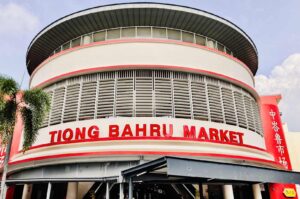
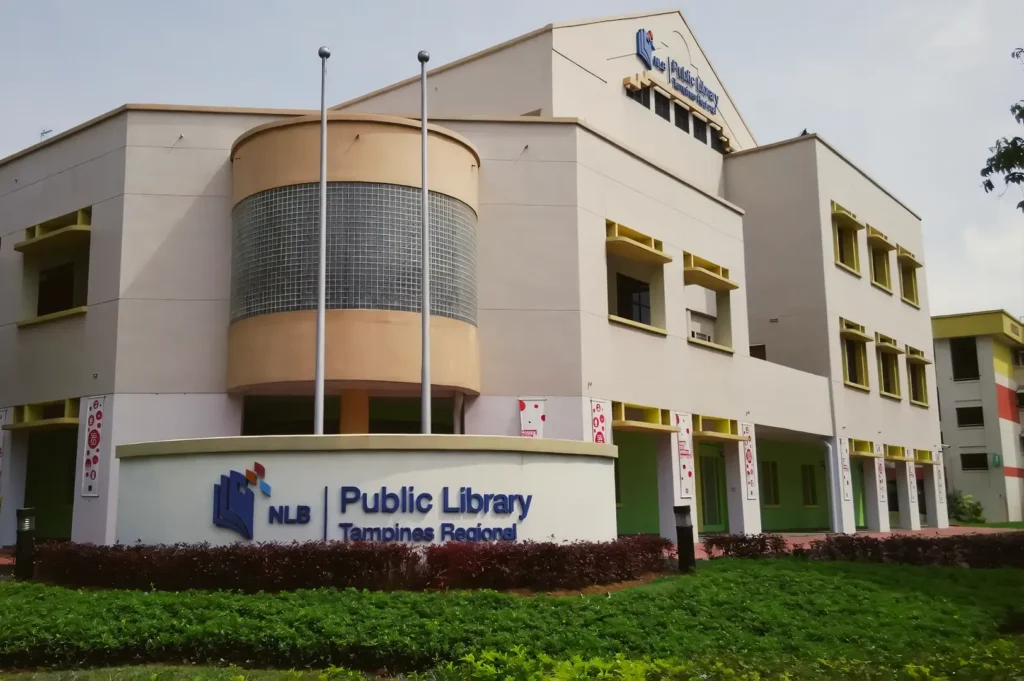
Cultural infrastructure includes the five-storey Tampines Regional Library and a Public Service Centre co-locating 12 government agencies. The library, Singapore’s first regional public library, relocated to Tampines Hub in 2017, offering expanded facilities and community programs. Tampines Hub itself exemplifies the integrated community and lifestyle hub concept, housing a hawker centre, sports facilities, public service centre, and extensive community spaces.
Tampines has six community clubs managed by the People’s Association, offering diverse services and spaces for residents. Changi General Hospital, with 1,000 beds and specialist centres, serves the region’s healthcare needs.
Governance and Leadership: Steering Tampines’ Transformation
Tampines’ transformation reflects the Urban Redevelopment Authority’s strategic place-making, where Master Plan 2025 emphasizes public spaces, mixed-use environments, and vibrant town centres. Housing and Development Board’s precinct planning balances community gathering and privacy, creating spaces that foster connection and retreat.
Transport networks, guided by the Land Transport Authority, weave through the town, with MRT lines and bus interchanges enabling Tampines residents to engage fully with Singapore while maintaining a distinct eastern identity.
Community engagement through consultations ensures growth responds to residents’ needs, making Tampines a neighbourhood where planning and lived experience align.
Life in Tampines Central and Beyond: A Community and Lifestyle Hub
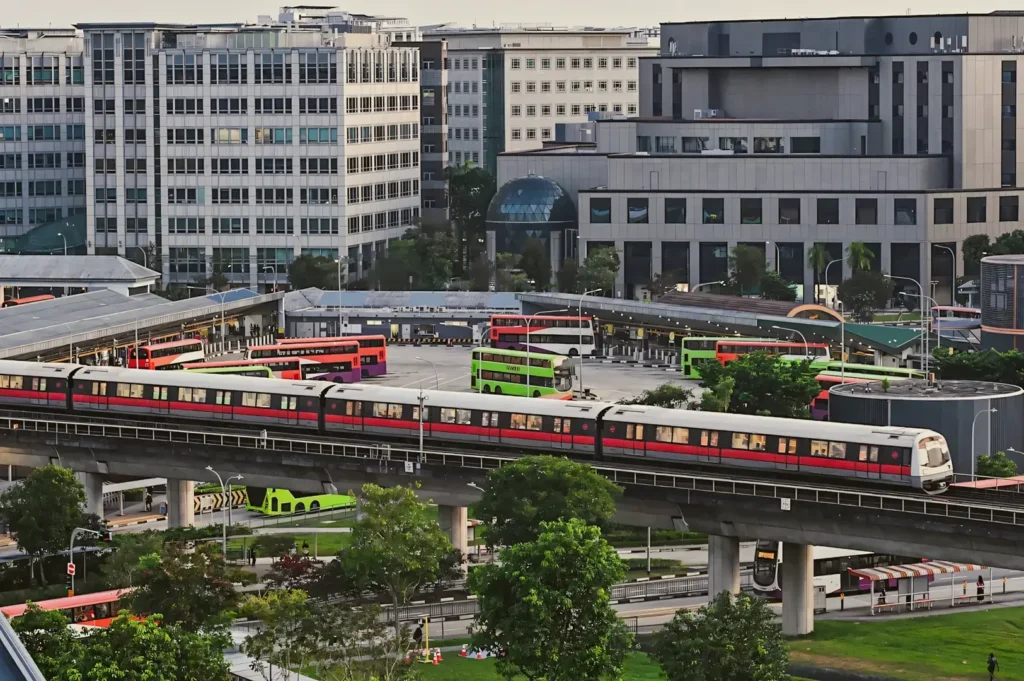
Tampines Central, the vibrant heart of the regional centre, blends public service, recreation, and commerce seamlessly. Our Tampines Hub exemplifies the integrated lifestyle hub, bringing diverse amenities under one roof for Tampines residents.
Key features include:
Transport connectivity: Served by East-West and Downtown Line MRT stations, alongside Tampines Bus Interchange and Tampines North Bus Interchange.
Green spaces: Tampines Eco Green offers secondary rainforest and wetlands; neighbourhood parks and park connectors provide recreational options.
Community and sports facilities: World-class sports facilities, community clubs, and public spaces support active lifestyles and social cohesion.
Family-friendly planning: Cycling paths, wide footpaths, and playgrounds create safe, attractive living environments.
New Build-To-Order projects like Tampines GreenRidges and private homes complement early HDB flats, reflecting diverse housing options.
Education and Institutions: Nurturing Minds in Tampines
Tampines hosts a comprehensive educational ecosystem from early childhood to tertiary institutions, fostering community identity through interconnected learning pathways.
International schools like United World College of South East Asia contribute to cross-cultural dialogue, while Singapore University of Technology and Design anchors innovation.
The Tampines Regional Library at Our Tampines Hub serves as a multifunctional community space, supporting exam-focused students, lifelong learners, and families.
Awards and Recognition: Celebrating Tampines’ Achievements
Tampines Town’s evolution from rural settlement to integrated regional centre has earned international recognition. The 1992 World Habitat Award highlighted its innovative public housing approach, blending residential integration with community vibrancy.
Environmental stewardship is embodied in Tampines Eco Green’s 36.5 hectares of preserved natural space, connecting residents with nature within an urban setting.
National accolades, including the Ministry of National Development’s “Most Liveable Town” award, and community initiatives like the Tampines Community Arts and Culture Scheme, underscore Tampines’ cultural vitality.
Future Developments and Continuing Evolution
The Urban Redevelopment Authority’s Draft Master Plan 2025 outlines ambitious plans for Tampines Regional Centre, including new residential and commercial plots. Artist’s impressions show mixed-use developments, pedestrian-friendly streets, and expanded green public spaces to enhance vibrancy.
Tampines North grows as a new extension, leveraging proximity to the regional centre and greenery. The Housing and Development Board’s public housing projects support the projected 110,000 dwelling units.
Strategic location, comprehensive bus services, and Land Transport Authority enhancements maintain Tampines as a key transport node, balancing connectivity with quality of life.
Conclusion: Tampines Regional Centre as a Model for Sustainable Urban Living
From kampong Tampines and rural plantations to a bustling regional centre, Tampines exemplifies successful human settlements shaped by visionary planning.
Today, Tampines offers the economic opportunities and retail conveniences of a city centre within a suburban neighbourhood. The kampong spirit lives on in shared spaces, neighbourhood centres, hawker centres, and lifestyle hubs. These planning philosophies help explain what makes Singapore neighbourhoods unique? where thoughtful design encourages community life, accessibility, and a balance between green space and urban convenience.
Next time you stroll between malls or through Sun Plaza Park or Tampines Central Park, remember you are walking through one of the world’s most successful urban planning experiments and most developed regional centres.