
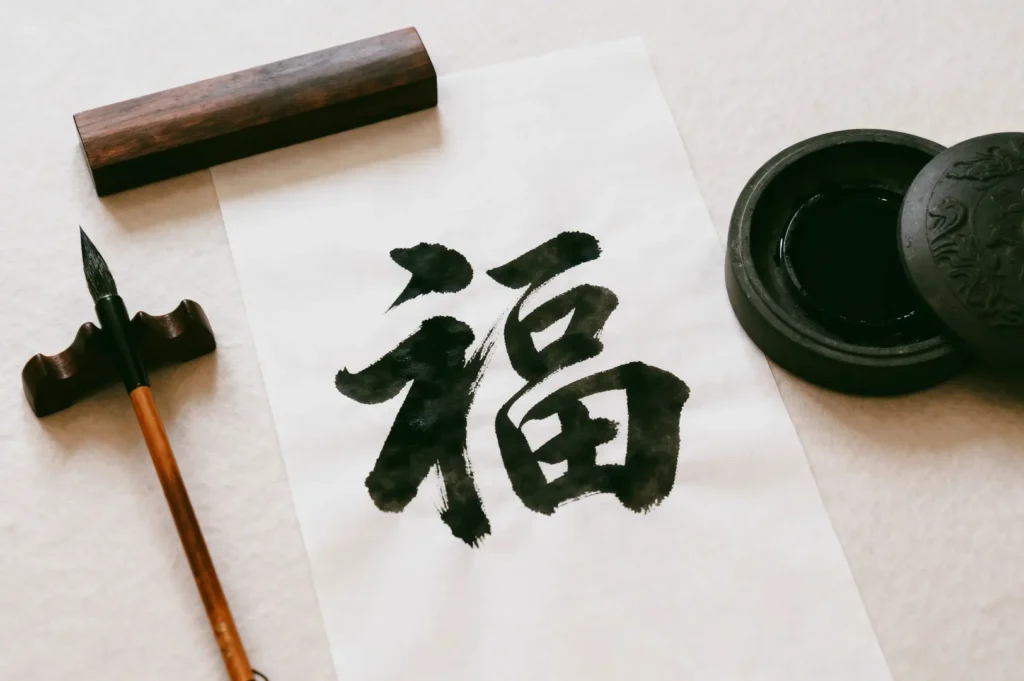
On a Saturday morning, in a quiet room above a community club, the loudest sound is the soft scratch of brush against paper. A dozen people sit around a long shared table, sleeves pushed up, heads slightly bowed. One by one, they dip their brushes into small dishes of black ink, tap off the excess, and lay it down on rice paper held flat with a smooth paperweight. An older instructor, a master calligrapher, moves slowly between them.
She pauses behind a young woman, gently lifts her wrist, and adjusts the angle without saying much. The woman tries again. The same character, over and over, until the strokes begin to settle.
There is something deeply calming about watching this. Nobody is rushing. Nobody is checking their phone. People simply write, erase the memory of the last attempt, and write again. And in that quiet repetition, I started to understand something. Calligraphy is not only about beautiful handwriting. It is about patience, cultural memory, and the slow, steady work of learning alongside other people. It is about the quiet communities that form around a shared table.
More Than Beautiful Writing: The Integral Role of Chinese Calligraphy and Traditional Writing Art
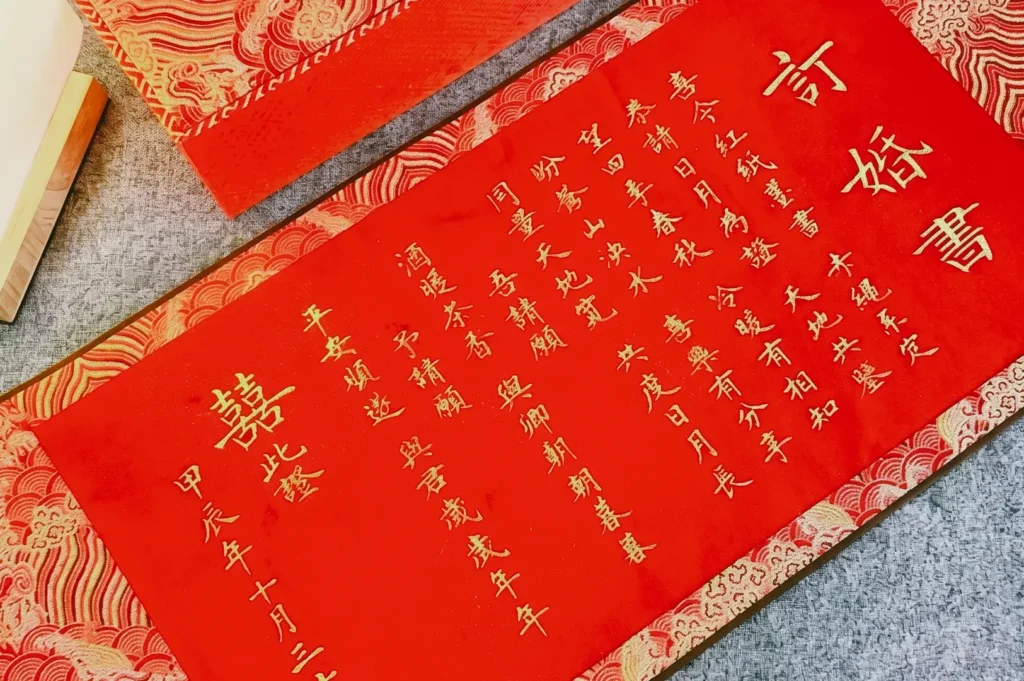
We often think of calligraphy as decoration. A scroll on a wall during Chinese New Year. A wedding invitation written in elegant ink. But traditional writing art carries far more than visual beauty. It holds history, language, and the careful hand movements passed down across generations. Calligraphic works in Chinese culture are an integral part of its literature and art heritage.
Chinese calligraphy in Singapore takes many forms because our city is home to so many cultures. Chinese calligraphy carries centuries of meaning in each brushstroke, where the order and weight of every line matters. It includes styles such as the clerical script developed during the Han dynasty and the regular script perfected in later periods.
Japanese calligraphy, or shodo, treats writing as a form of moving meditation. Arabic calligraphy turns sacred text into flowing, rhythmic art. Each tradition has its own tools, rules, and spirit, yet they share a quiet truth: writing by hand can be an act of devotion, focus, and care.
When you sit down to practise, you are not just copying shapes. You are entering a long line of calligraphers and scholars who held the brush before you. That is what makes these traditional arts Singapore communities preserve so meaningful. They are living practices, not museum pieces.
Traditional Writing Art and Chinese Calligraphy in Chinese Schools and Nanyang Technological University
Most of our words today are typed, swiped, or dictated. We fire off messages in seconds and rarely think about the shape of a single letter. There is nothing wrong with that. But somewhere in all that speed, we have lost the feeling of making a mark slowly and deliberately.
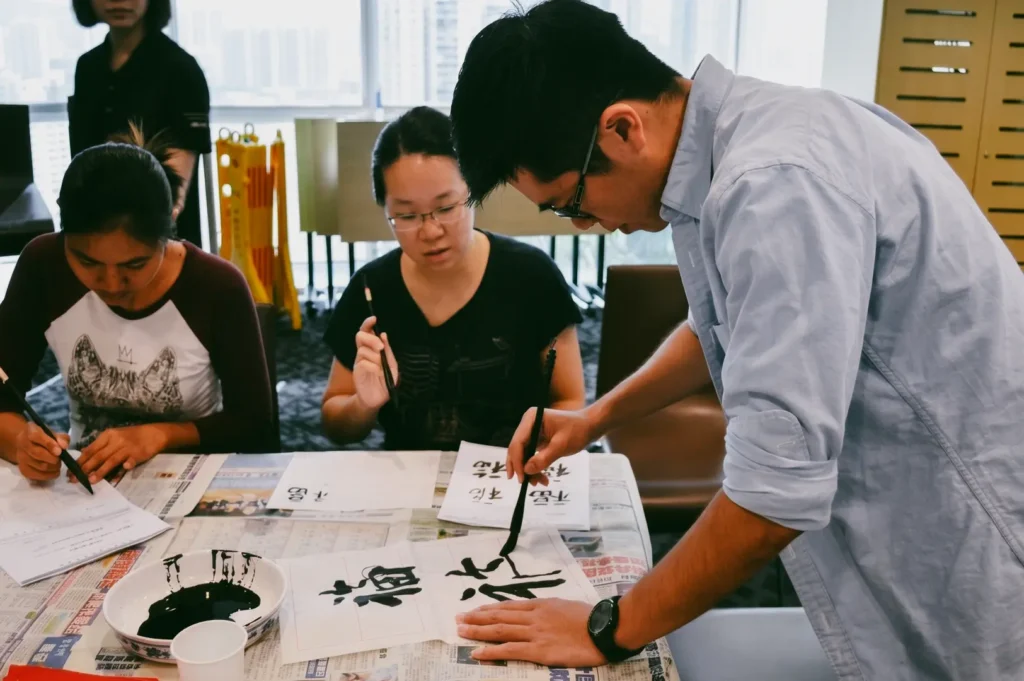
Calligraphy asks you to slow down. You cannot rush a brushstroke. If you hurry, the ink bleeds, the line wobbles, and the character loses its balance. The practice forces your hand, your breath, and your attention to move at the same gentle pace. This is why so many people describe it as a mindful art practice. It pulls you out of the noise and into the present moment.
There is also the tactile pleasure of it all. The weight of the brush or pen. The grind of an inkstone. The texture of paper beneath your palm. These small physical sensations ground you in a way a screen never can. In a fast-moving city, this kind of slowness feels almost radical. And that is precisely why it matters.
Traditional Writing Art in Education: Schools and Universities
Institutions like Nanyang Technological University have contributed to the development of calligraphy courses and research, helping to bring traditional writing art into modern education. Meanwhile, many Chinese schools continue to teach calligraphy as an integral part of their curriculum, preserving the skills and cultural heritage of writing in Chinese characters.
These schools focus on teaching various categories and styles, including clerical script and regular script, ensuring students learn the correct techniques and develop their skills under experienced teachers.
The Community Around the Table: Calligraphy Groups, Society, and Teaching Circles
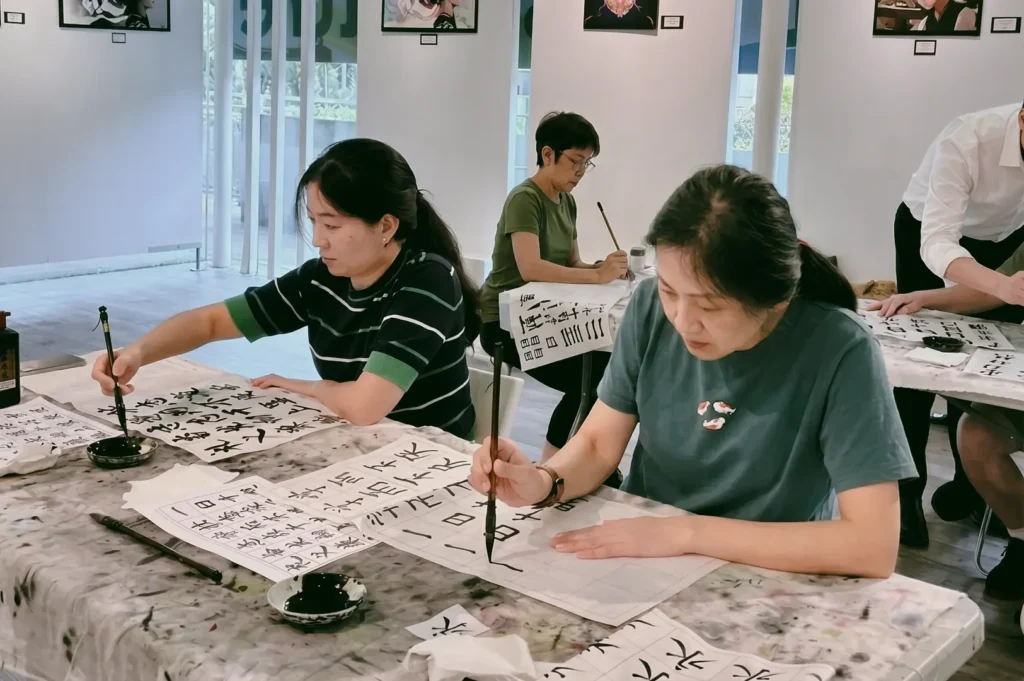
Here is what surprised me most. I expected calligraphy to be a solitary pursuit, a quiet hobby done alone at a desk. Instead, I found that some of its richest moments happen in groups.
Calligraphy communities Singapore residents have built tend to gather in shared spaces. You find them in community clubs and cultural associations, in arts centres and quiet library corners.
Many of these creative spaces exist within a broader ecosystem of community art Singapore initiatives, where residents gather not only to learn artistic skills but also to participate in shared cultural experiences that strengthen neighbourhood connections.
Some meet at weekend workshops. Others form through school enrichment programmes, festival demonstrations, or informal neighbourhood classes that started with a few friends and a shared love of ink and brush.
The Power of Shared Learning in Traditional Writing Art
What ties these spaces together is the table itself. People sit side by side, working on the same characters, watching one another’s progress. Someone struggles with a difficult stroke, and a neighbour leans over to show how they managed it.
A beginner makes a mistake, and instead of embarrassment, there is a shared laugh and a fresh sheet of paper. This is the difference between a transactional lesson and a real community. You are not just buying a skill. You are slowing down together, making mistakes together, and learning through repetition in good company.
I noticed, too, that much of the learning happens through watching. You absorb the rhythm of someone else’s wrist. You see how an experienced hand pauses before a tricky line. Before you ever master the technique yourself, you learn by observing those around you.
Learning From Teachers, Elders, and Fellow Beginners: The Role of Calligraphy Masters and Studios
The heart of any calligraphy group is its mix of generations. In one session, you might find a retired teacher who has practised for fifty years sitting beside a teenager holding a brush for the first time. This intergenerational rhythm is rare and precious.
Elders carry the technique in their hands. They correct a posture, demonstrate a stroke, and share small stories about how they first learned. The younger ones bring fresh energy and questions that keep the tradition alive and curious. Even fellow beginners teach each other, comparing notes and cheering small victories.
These community arts Singapore spaces become places where age does not divide people. A character on paper becomes a shared language across generations. The teacher learns patience anew. The student learns humility. And everyone learns that mastery is not a race but a long, shared walk.
Traditional Writing Art and Chinese Calligraphy Exhibitions, Courses, and Cultural Exchange
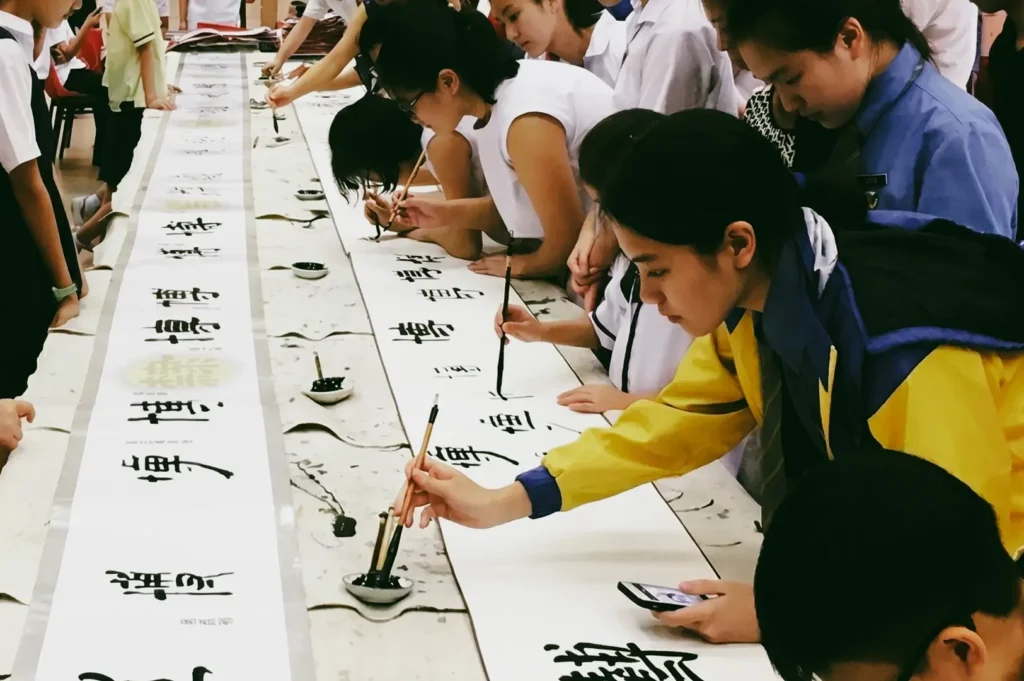
It would be easy to assume these practices belong only to the past. But in our multicultural neighbourhoods, they feel newly relevant. Chinese calligraphy Singapore enthusiasts gather for spring couplet sessions before the new year. Japanese calligraphy circles meet to practise shodo as a form of meditation. Arabic calligraphy workshops draw people curious about its flowing geometry and sacred roots.
Cultural workshops Singapore organisers run often bring these traditions into the same building, sometimes on the same weekend. A museum might host a calligraphy exhibition or a hall might showcase calligraphic works. A library might offer a beginner’s afternoon. A community centre might run a term-long class led by a local master. These heritage arts Singapore programmes help different communities see one another’s traditions up close.
There is real beauty in that exchange. Someone who grew up writing Chinese characters might try Arabic script for the first time and discover a completely new relationship with line and balance. A newcomer to Japanese shodo might find unexpected calm in its disciplined simplicity. In a city as layered as ours, these shared experiences quietly build understanding.
What Traditional Writing Art and Calligraphy Teaches Beyond the Page: Skills, Culture, and Community
The longer I watched these sessions, the more I realised the writing was almost beside the point. The real lessons happen quietly, in the spaces between strokes.
Calligraphy teaches patience, because you cannot force a good line. It teaches focus, because a wandering mind shows up immediately in shaky ink. It teaches discipline, because progress comes only through repetition. And it teaches humility, because even masters keep practising the same basic strokes for decades.
There is also cultural memory in every character. When you learn to write a word the traditional way, you carry forward something your ancestors knew. You keep a thread of heritage unbroken. And perhaps most importantly, you find belonging. You become part of a small community that meets, practises, and grows together, one sheet of paper at a time.
A Quiet Invitation to Explore Traditional Writing Art
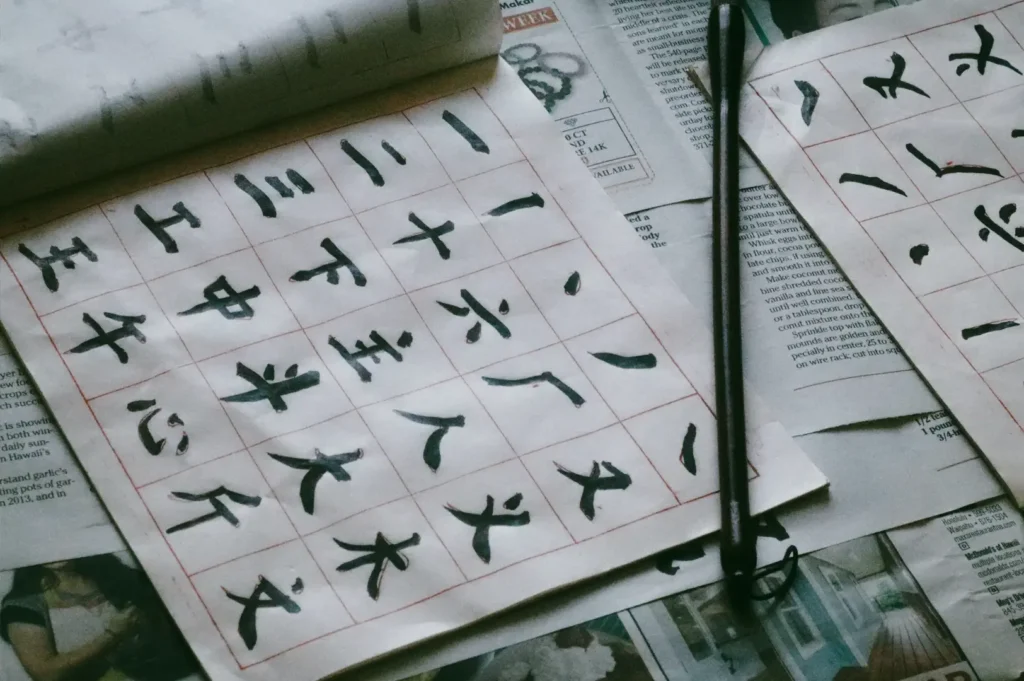
We tend to think of traditional writing arts as skills to acquire, like learning to drive or bake. But I have come to see them differently. They are communities to enter.
If you have ever felt curious about calligraphy classes Singapore offers, I would gently encourage you to look beyond the technique. Yes, your handwriting may improve. Yes, you will learn to hold a brush or pen properly. But the deeper gift is the table you will sit at, the people beside you, and the slow, shared silence that knits strangers into something like friends.
So find a local calligraphy session, a cultural workshop, or a community arts programme near you. Sit down, dip your brush, and let yourself be a beginner. Make mistakes alongside others. Watch, learn, and breathe. You may arrive hoping to write a single beautiful character. You may leave having discovered a quiet community that was waiting for you all along.