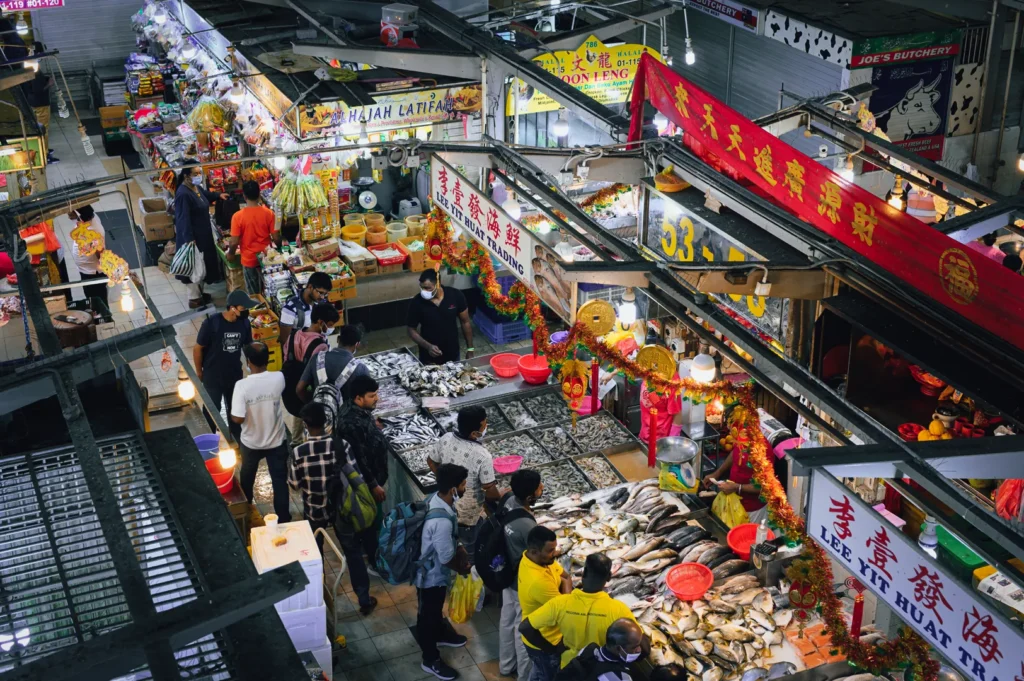
The morning air shifts the moment you step off the pavement and into the wet market. The sterile chill of the modern supermarket fades, replaced by the heavy, humid scent of crushed ginger, damp earth, and ocean salt.
Water pools on the tiled floors, reflecting the harsh fluorescent lights overhead. You hear the rhythmic, heavy thud of a butcher’s cleaver hitting a worn wooden block. This space is far more than a simple place to buy groceries. It is a living, breathing museum of our daily culture.
In a traditional museum, we look at artifacts preserved behind glass. Here, the artifacts are alive and in constant motion. Watch the fishmonger expertly scale a sea bass in mere seconds, a fluid movement passed down through three generations of early mornings.
Look at the vegetable stall, where vibrant mountains of leafy greens are sorted not by barcodes, but by the vendor’s encyclopedic knowledge of the season. Every exchange holds a piece of our history, and you can see more of it at Neighbourhood Life.
The tools they use—the curved knives, the hanging red lamps casting a warm glow on fresh meat, the battered brass weighing scales—tell stories of a Singapore that existed long before the glass skyscrapers took over our skyline.
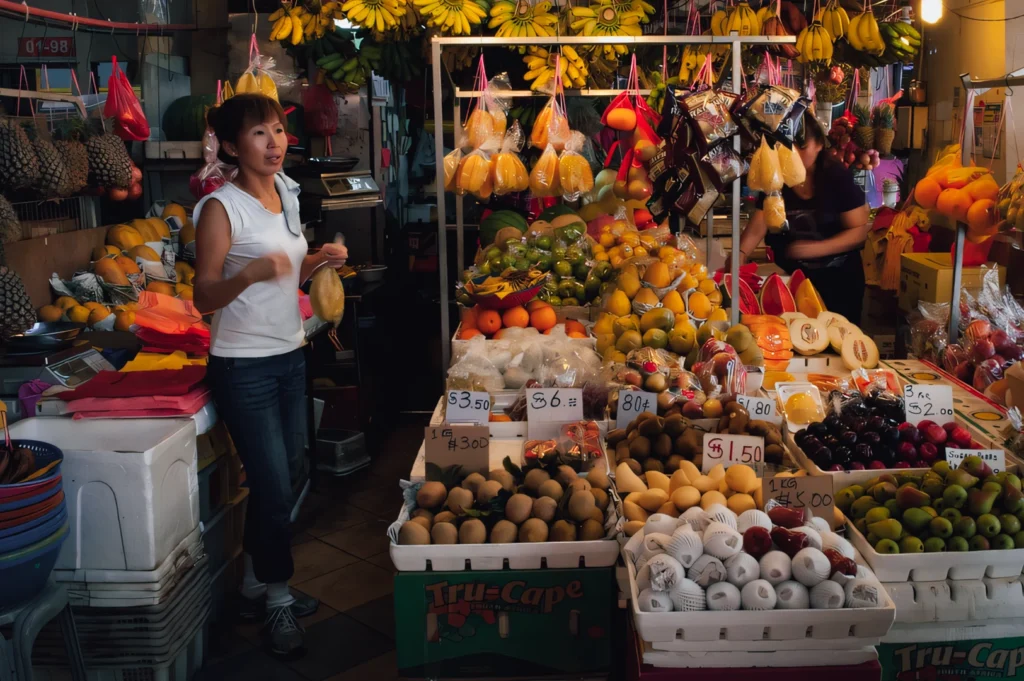
Beyond the fresh produce, the wet market acts as the original neighborhood social network. Stand near the fruit stall for just five minutes, and you will witness a daily masterclass in community building.
You see familiar aunties haggling over the price of sweet mangoes, their sharp negotiations always ending in warm, familiar laughter. You hear vendors asking regular customers about their growing grandchildren or their recent health.
There is a deep intimacy here that digital algorithms and self-checkout machines can never replicate. People do not just come here to check items off a weekly list. They come to be seen, to connect, and to participate in the comforting rhythm of the estate.
Yet, this living museum is not stubbornly frozen in time. It actively adapts to survive. Look closely, and you will see the modern world weaving itself seamlessly into the tradition. A brightly colored QR code for digital payments hangs right next to an ancient, weathered abacus.
Young couples, armed with canvas tote bags and digital recipes on their phones, navigate the narrow aisles alongside grandmothers pulling wheeled carts. The vendors patiently explain to a new generation of home cooks how to choose the absolute best cut of pork for a weekend stew. The wet market beautifully bridges the gap between the past we inherited and the fast-paced future we are building.
When we walk through these damp, noisy aisles, we participate in a ritual that has sustained our communities for decades. We walk out with plastic bags heavy with fresh ingredients, but we also carry away something far more valuable: a profound sense of belonging. The next time you wake up early on a weekend, step into your local wet market.
Take a deep breath, listen to the overlapping voices, and appreciate the beautiful, chaotic masterpiece of our everyday lives.