
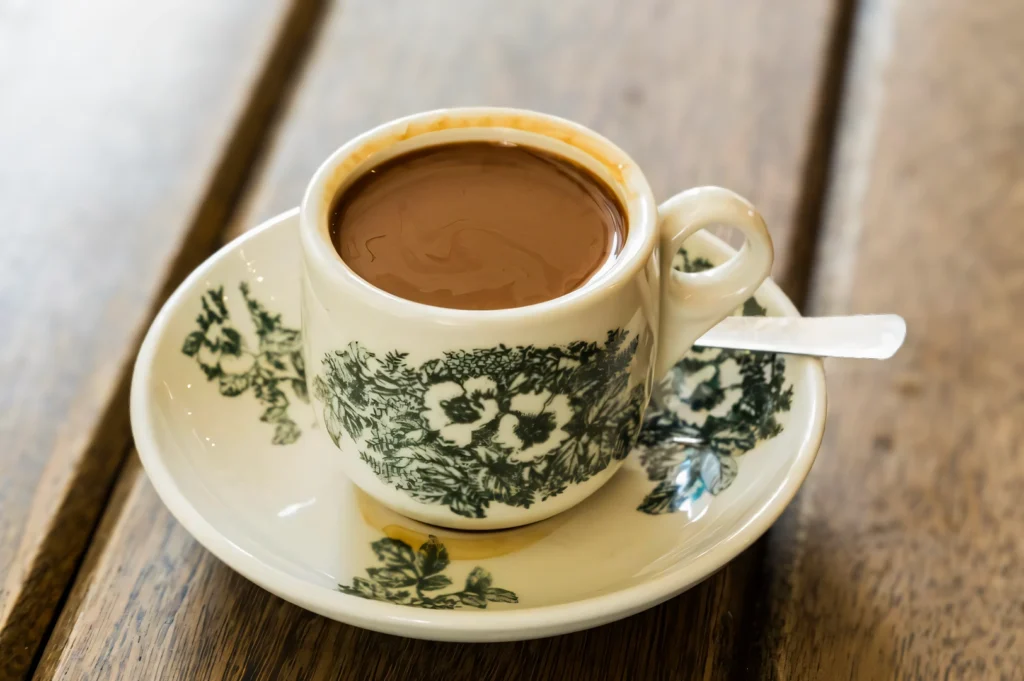
“Kopi. Teh-O. Siew Dai. Peng.”
Ordering drinks at a kopitiam isn’t just about what you say; it’s how you say it. The rhythm is quick, practical, almost musical—a code passed down through generations without a formal lesson.
Yesterday, while queuing at my usual drink stall, the uncle in the white singlet gave me the universal signal—an eyebrow raise. Without thinking, I said, “Kopi-C Kosong, hot.” The words came out automatically, like muscle memory.
When I sat down, staring at the steam curling up from the thick ceramic cup, it hit me: I don’t even like Kopi-C Kosong. It’s bitter, creamy, and stark—missing the sweetness that makes a standard Kopi comforting. But I drink it because my father did. Every morning. For forty years.
We usually think of inheritance as the big things—property, heirlooms, a family resemblance. “You’ve got your mum’s smile” or “Your dad’s temper.” But sometimes, what lingers most are the small, quiet habits we pick up just by being nearby. In Singapore, so many of those habits come through food.
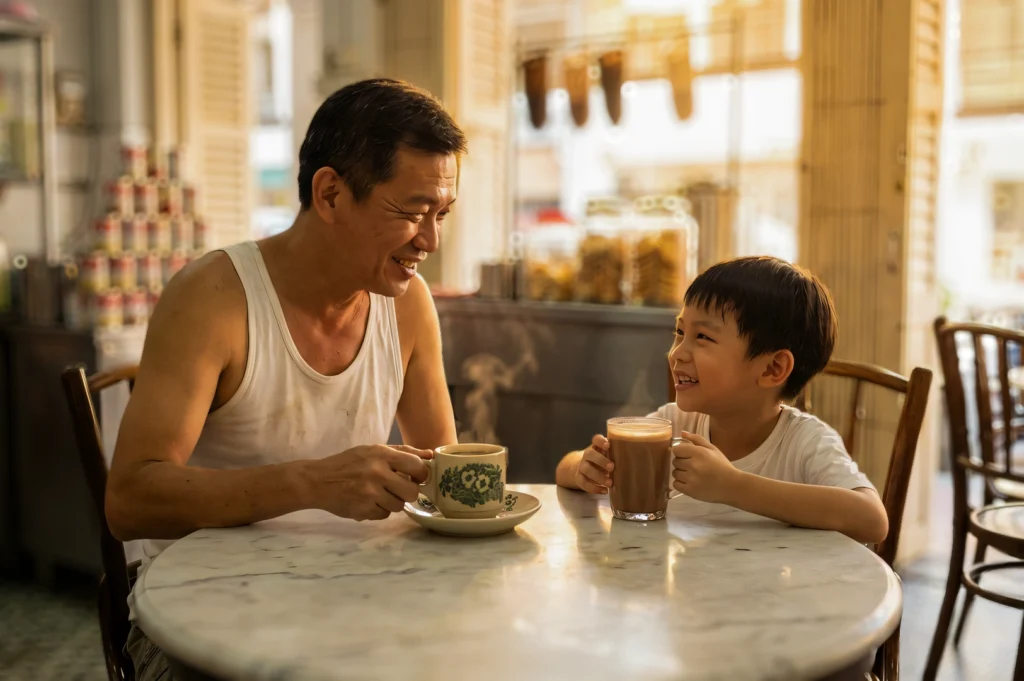
I remember being a kid, sitting at a marble kopitiam table across from my dad. He’d have his Kopi-C Kosong; I’d have my Milo. He had a ritual—three stirs with the porcelain spoon (clink, clink, clink), then either sipping loudly from the cup or drinking off the saucer if it was too hot. He swore sugar gave him headaches. He swore evaporated milk was smoother. I thought the smell was sharp and strange, like burnt rubber. To my child brain, it smelled like adulthood.
Now here I am, decades later, stirring my own cup the same way. Clink, clink, clink.
This isn’t just me. Look around any hawker centre and you’ll see it. A young exec ordering Teh Halia, probably because their grandmother insisted it was good for stomach wind. A teenager asking for Mee Pok, extra vinegar because that’s how their dad taught them to eat it. These aren’t just food preferences—they’re memories, encoded in taste. They’re echoes of home, phantom limbs of our upbringing.
Even when we think we’ve moved on—new jobs, new homes, new friends—these little rituals sneak back in. All it takes is a hawker stall uncle asking, “What you want?” and suddenly, you’re defaulting to the settings your parents installed.
There’s something grounding about this, especially in a place like Singapore. A city that’s constantly evolving—one day it’s a kopitiam, the next it’s a condo. When everything else is changing, these small rituals are anchors. Ordering Kopi-C Kosong connects the 35-year-old who’s stressing over emails to the 7-year-old who watched his dad read the papers.
I took a sip. It was sharp and creamy, coating my tongue in that familiar unsweetened edge. It still tastes like adulthood—serious, unsoftened. I suspect one day, my own kid might stand in a kopitiam queue, order the same thing, and wonder why they didn’t just ask for sugar.
And in that moment, the story won’t end—it’ll keep going, one sip at a time.