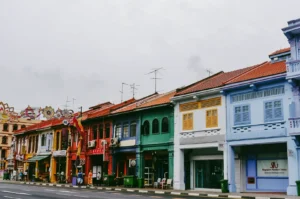
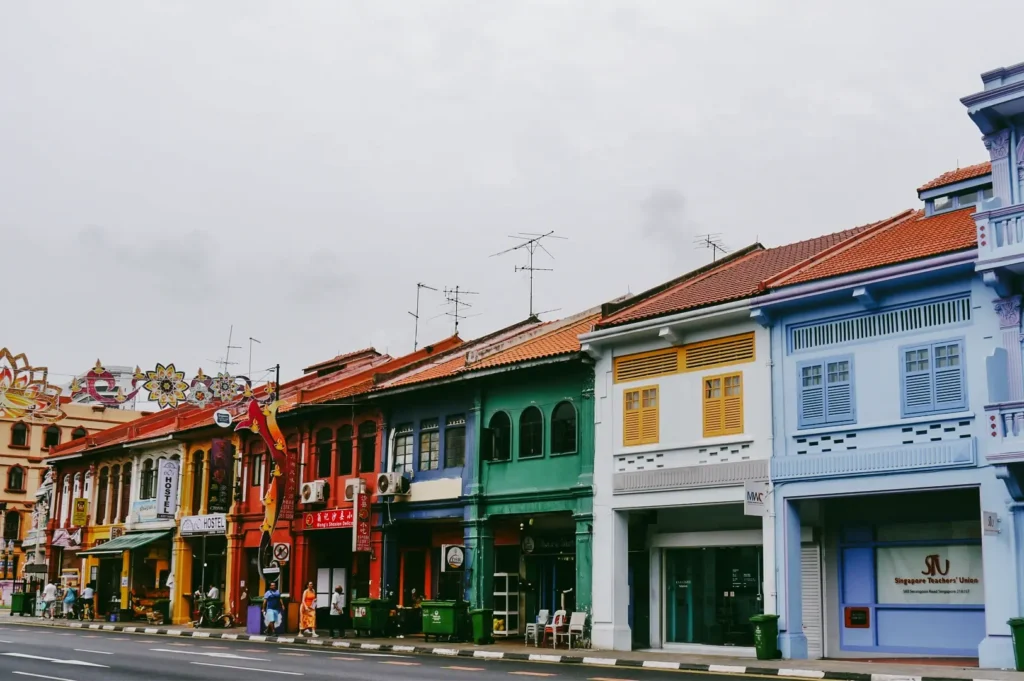
Walk down Serangoon Road, one of the earliest roads in Little India, just as the late afternoon sun begins to dip, and you will notice a distinct shift in the neighborhood’s rhythm. The frantic pace of daytime commerce along the streets and shophouses softens, replaced by the steady, resonant echo of evening prayer bells ringing out over the hum of traffic.
Outside the heavily ornamented gates of the Sri Veeramakaliamman Temple, devotees pause to slip off their shoes, leaving them in neat rows on the pavement. The air grows thick with the sharp, sweet fragrance of jasmine and marigold garlands and the earthy scent of burning incense. Flower vendors along the walkways deftly weave fresh garlands, while families gather quietly after a long day of work.
To the casual observer, these moments might simply look like religious worship. However, if you spend enough time observing Singapore’s Indian community in Little India, you quickly realize that temples here function as far more than places of worship.
They are the beating heart of the district. These sacred sites, including the Sri Veeramakaliamman Temple, are dedicated to various deities and operate as social anchors, cultural gathering spaces, and everyday community hubs that quietly shape the rhythm, identity, and continuity of the neighborhood.
The Historical Role of Little India Temples in Singapore’s Indian Community
To understand the current significance of Hinduism and temples in Little India, we must look back at their origins. When early Indians arrived in Singapore, settling around Race Course Road and Serangoon Road, they faced the immense challenge of navigating a new, unfamiliar land. They built temples not merely to house their deities, but to create vital centers of support and belonging.
These early structures were often humble, but they served an outsized purpose. They connected laborers, traders, and newly arrived families, offering a safe haven where people could speak their native dialects, share news from India, and find practical assistance. The temples acted as employment networks, social welfare centers, and dispute resolution grounds.
This historical legacy of care and community support remains deeply embedded in the walls of these institutions today, continuing to inform how they operate within modern community spaces Singapore provides.
Everyday Life Around the Sri Veeramakaliamman Temple
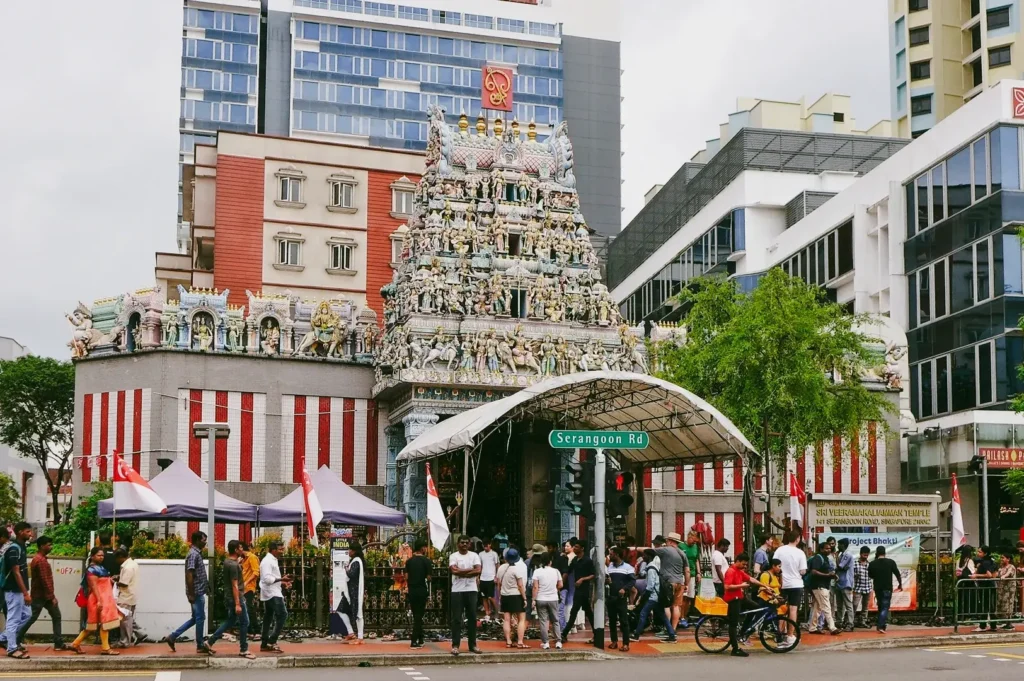
The true social value of a temple like Sri Veeramakaliamman Temple is best observed not during grand ceremonies, but on a regular, unremarkable Tuesday morning. The daily routines surrounding these spaces reveal how deeply integrated they are into the fabric of the neighborhood.
Before the sun fully rises, you will see elderly residents gathering near the entrances, sharing a quiet conversation before starting their day. By evening, families visit after work, treating the temple compound as a place to unwind and reconnect. Volunteers move purposefully through the halls, organizing community activities or preparing meals for food distribution programs.
Informal conversations happen constantly—near the shoe racks, by the washing taps, and around the nearby food stalls. These everyday, unscripted interactions build the trust and familiarity that define a healthy, cohesive neighborhood.
Festivals That Bring the Little India Community Together
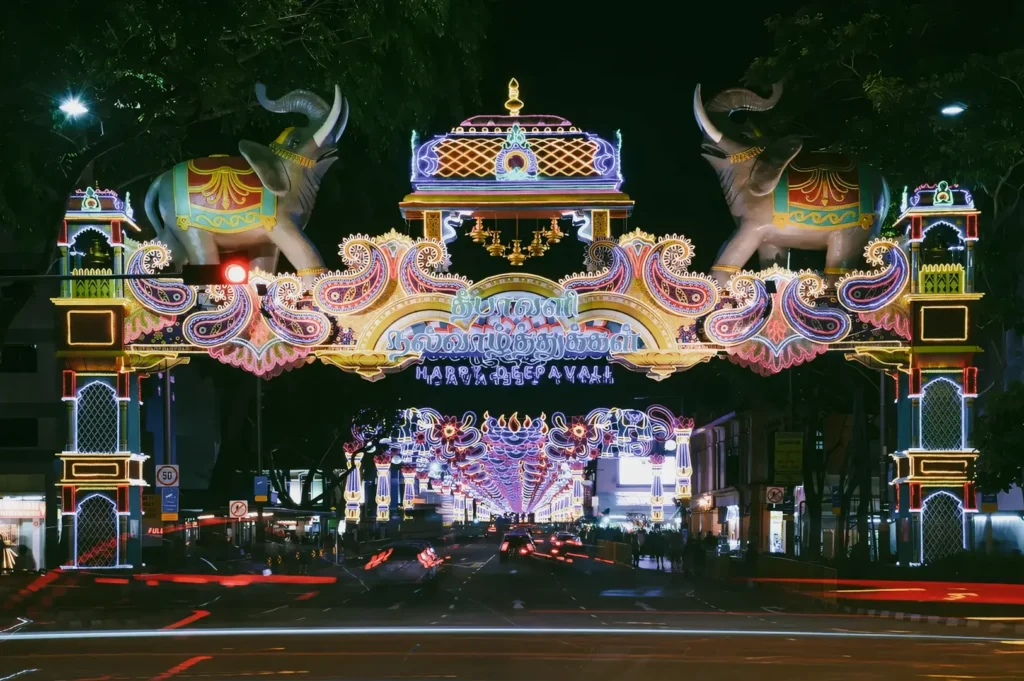
While daily routines build the foundation of community, major celebrations display its full, vibrant strength. Hindu festivals Singapore celebrates, such as Deepavali, Thaipusam, and Navaratri, transform temples into massive gathering points for multiple generations and diverse visitors.
During these periods, the atmosphere in Little India is electric. The streets outside the temples overflow with activity, color, and sound. However, the true beauty of these festivals lies in their communal participation. Preparing for a major festival requires weeks of coordinated volunteer work. Members of the community come together to string decorations, cook massive quantities of food, and manage the logistics of welcoming thousands of visitors.
The temple becomes a focal point where age, occupation, and social status dissolve, replaced by a shared commitment to honoring tradition and celebrating together.
Temples in Little India as Cultural Classrooms
For a culture to survive, it must be continuously passed down to the next generation. Temples serve as some of our most effective, informal cultural classrooms. Younger generations do not just learn about their heritage from textbooks or a written page; they absorb it through active participation in temple life.
Many temples host formal classes, teaching classical dance, traditional music, drumming, and religious education. They play a vital role in language preservation, ensuring that ancient texts and spoken dialects remain active. More importantly, cultural continuity happens through volunteer activities.
When teenagers help serve food during a festival or assist in preparing the temple for a busy weekend, they are learning the values of service, respect, and community responsibility. They are learning what it means to carry their Singapore cultural heritage forward.
The Sensory Landscape of Little India's Temples
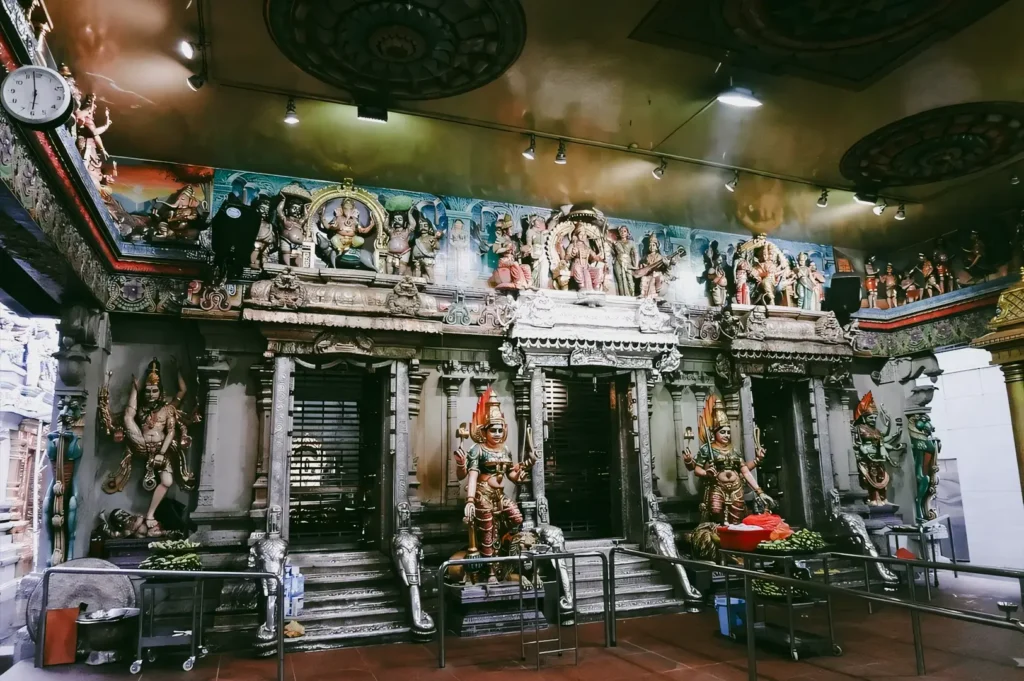
You cannot fully grasp the impact of these spaces without acknowledging their overwhelming sensory presence. Temple culture Singapore experiences is deeply immersive. It is the rhythmic, hypnotic chanting of priests echoing against stone walls. It is the warm, golden glow of hundreds of oil lamps cutting through the evening dusk.
Institutions like the iconic Sri Veeramakaliamman Temple visually anchor the neighborhood. Their towering gopurams (entrance towers), covered in intricate, vividly painted sculptures, serve as unmistakable geographical and cultural landmarks.
The scent of camphor, the sound of breaking coconuts, and the vivid colors of fresh flower garlands all spill out from the temple grounds, blending with the noise of the surrounding streets and shophouses. The nearby streets are equally defined by the aromas of curry leaves, tandoor smoke, and freshly prepared dishes that have become deeply tied to the district’s identity. Those interested in exploring the neighborhood’s food culture further can read more here.
Balancing Tradition and Modern Singapore’s Indian Community
Like all enduring institutions, temples in heritage districts Singapore maintains must navigate the delicate balance between honoring ancient traditions and adapting to contemporary life. They cannot remain entirely static if they wish to serve a modern population.
Today, you will see this adaptation in clear, practical ways. Many temples have introduced digital donation kiosks, allowing younger, cashless generations to contribute easily. They use social media platforms to update the community on upcoming rituals, festival schedules, and volunteer opportunities. Modern crowd management techniques are seamlessly integrated into ancient procession routes.
Younger volunteers bring fresh perspectives, helping to expand community outreach programs to better serve vulnerable populations. This careful modernization ensures that the temples remain highly relevant without sacrificing the sanctity of their historical practices.
Sri Veeramakaliamman Temple: A National Monument and the Heart of Little India
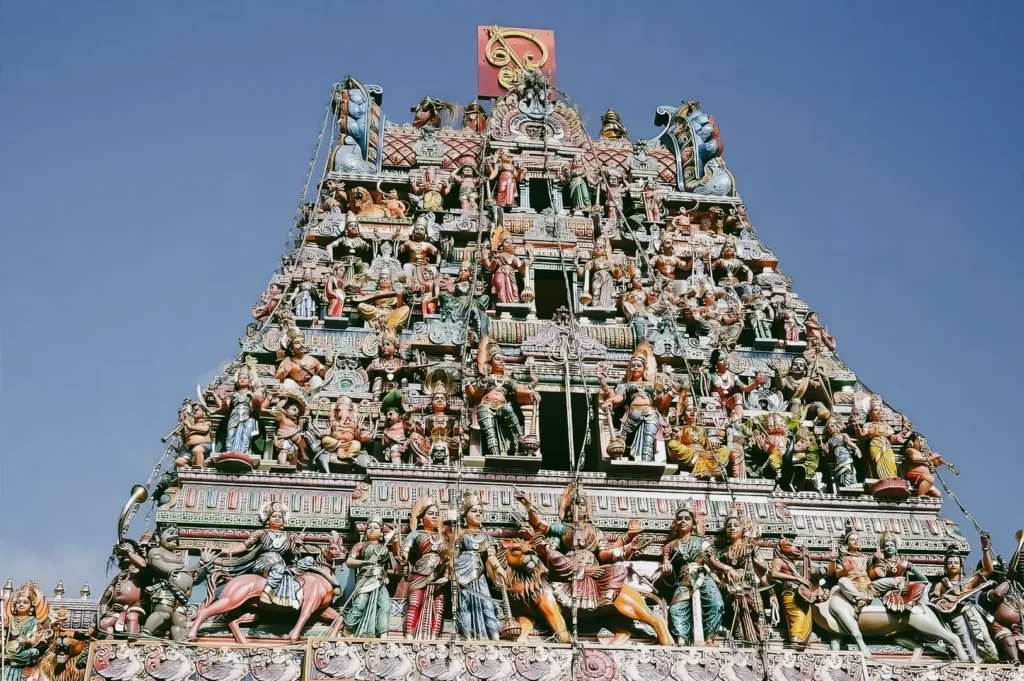
The Sri Veeramakaliamman Temple, dedicated to the Hindu goddess Kali, is not only a central place of worship but also a national monument recognized for its historical and cultural significance. Its presence on Serangoon Road highlights the deep roots of Hinduism and Indian culture that have spread across Singapore over generations. The temple’s history is well documented in various books and written records, including accounts by early community leaders such as Mrs. [Name], who commented on the temple’s role during important occasions and festivals.
This temple stands as a testament to the resilience and spirit of Singapore’s Indian community. It continues to be a place where families gather, culture is celebrated, and the legacy of the earliest roads and shophouses in Little India is preserved.
Why Little India Temples Continue to Matter
In a highly developed, fast-paced city, the quiet, steadfast presence of these community spaces is more important than ever. We live in an era of constant change, where buildings are frequently torn down and neighborhoods are rapidly redeveloped. Temples offer a rare, comforting sense of permanence.
They matter because they provide an antidote to urban isolation. They offer belonging, familiarity, and shared routines that ground us. They remind us that we are part of a continuous story that stretches back generations. The interactions that happen within and around these walls—the shared meals, the passed-down stories, the collective prayers—continue to shape the identity of the neighborhood far beyond religion itself.
They ensure that Little India remains a living, breathing community rather than just a historic postcard.
Conclusion
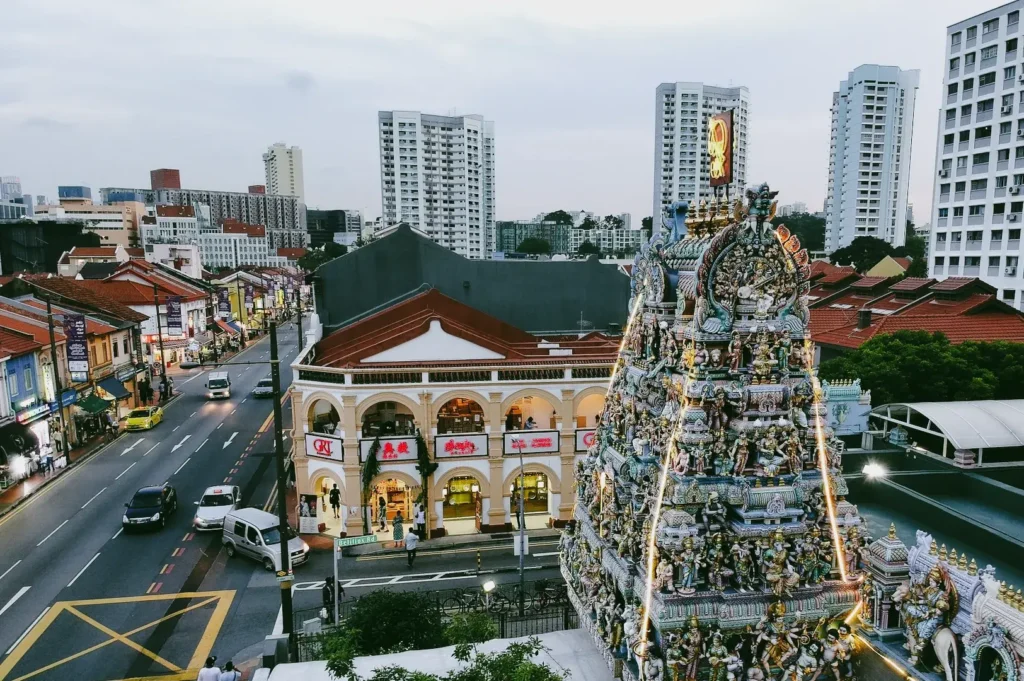
Little India temples, especially the Sri Veeramakaliamman Temple, are not static heritage sites designed simply to be admired from afar. They are living, dynamic community spaces that actively sustain the social and cultural life of the people around them. They hold the memories of the past while continuously adapting to support the needs of the present.
The next time you find yourself walking through Little India, along Race Course Road or Serangoon Road, we encourage you to slow down. Look beyond the striking architecture and the bustling commerce. Observe the quiet conversations happening by the temple gates, the dedication of the volunteers, and the families finding comfort in shared routines.
We invite you to respectfully visit these spaces, support the local businesses that surround them, and take a moment to appreciate the profound role these institutions play in keeping the heart of the community beating.