
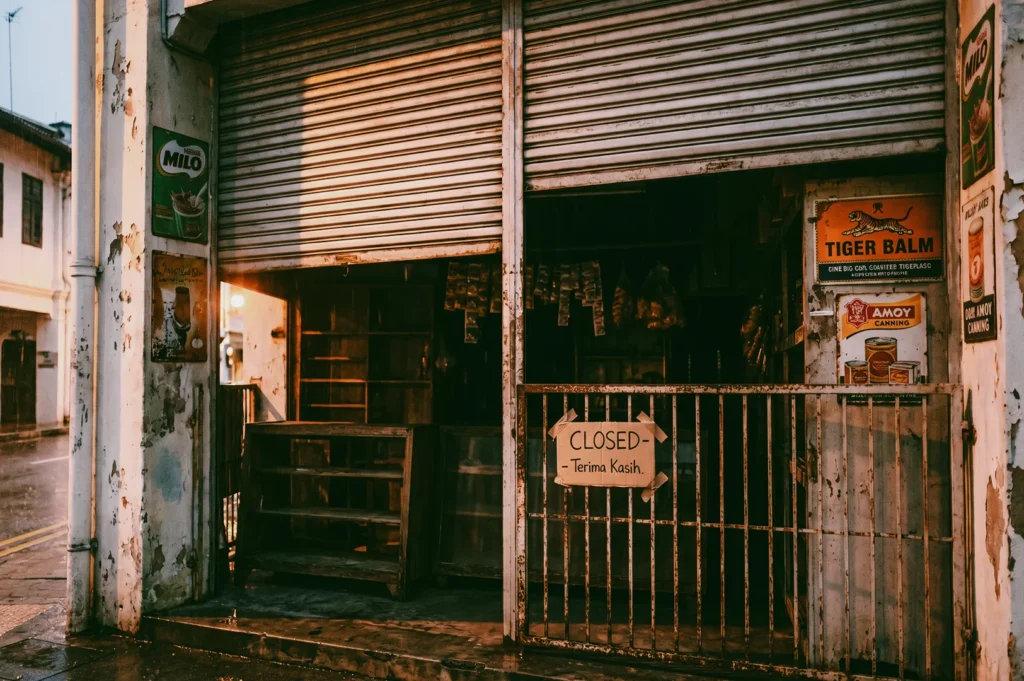
There is often no formal goodbye when a familiar neighbourhood shop closes. One week, the lights are still on behind the counter. The next, the shutters remain halfway down long past opening hours, with a handwritten notice quietly taped to the metal gate.
Across Singapore, these small disappearances happen more frequently than many of us realise. Old provision shops give way to convenience chains. Traditional bakeries become cafés with minimalist interiors and digital ordering systems. Family-run businesses that once anchored entire neighbourhoods quietly fade after decades of operation.
On the surface, these closures may seem inevitable in a rapidly changing city. But when long-running shops disappear, something deeper is lost alongside them.
These businesses often function as informal social spaces woven into everyday life. The uncle running the provision shop remembers which brand of biscuits a family buys every week. The bakery auntie notices when a regular customer has not appeared for several days. Conversations happen naturally across counters stacked with canned goods, warm buns, or newspapers tied neatly with string.
Such spaces create familiarity in ways large commercial environments rarely replicate. They provide continuity within neighbourhoods constantly reshaped by redevelopment, rising rents, and changing consumer habits.
Older businesses also preserve forms of knowledge that rarely appear in official heritage markers. Recipes perfected over decades, handwritten supplier records, traditional preparation methods, and even patterns of speech become embedded within these shops. A single storefront can quietly carry generations of cultural memory.
What makes these closures particularly significant is how subtly they alter the atmosphere of a neighbourhood. Streets may remain physically intact, yet feel fundamentally different. The rhythms change. Familiar smells disappear. Casual interactions become less frequent. Over time, the emotional texture of the area slowly shifts.
Singapore’s neighbourhoods have always evolved. Change itself is not the issue. But these small family businesses remind us that community life is built not only through infrastructure and development, but through repeated human interactions that happen in ordinary spaces every single day. Across stories documented by NeighbourhoodLife.com.sg, these familiar routines and shared spaces continue to reveal how deeply everyday businesses shape the emotional texture of local life.
When familiar shops disappear, we do not simply lose businesses. We lose pieces of the social fabric that quietly made a place feel lived in, remembered, and shared.