At Neighbourhood Life SG, we often notice how easy it is to move through Singapore without really looking at the buildings around us. Most of us keep our eyes fixed straight ahead — watching traffic lights, navigating crowded pavements, or glancing down at our phones while rushing toward the next appointment. In the process, an entire layer of the city quietly disappears above us.
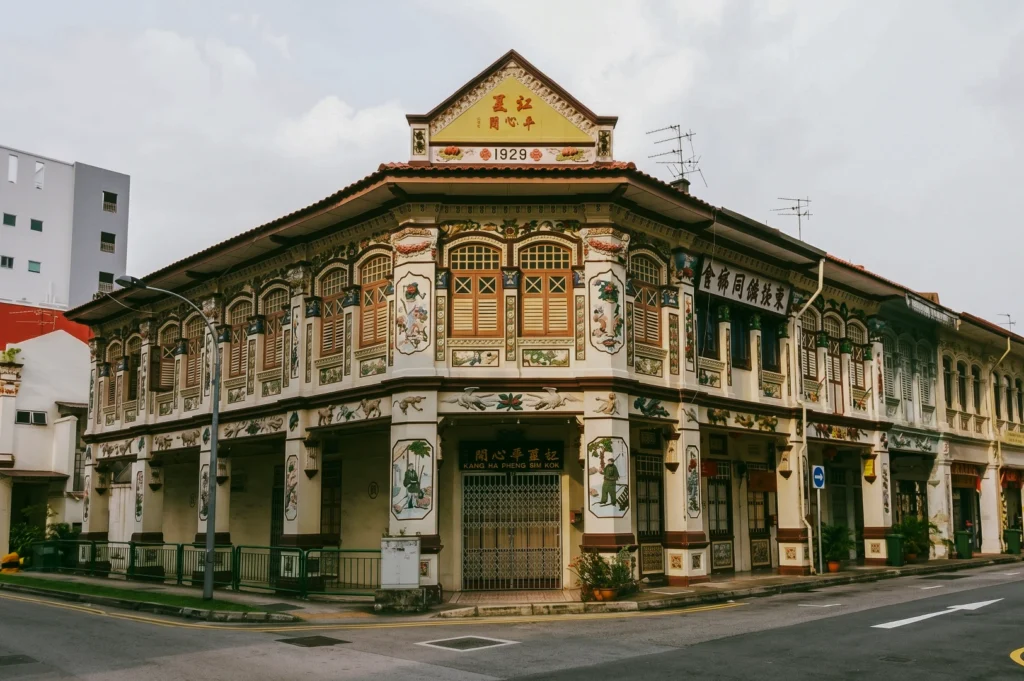
Walk through older districts like Jalan Besar, Chinatown, or Geylang and pause for a moment beneath rows of ageing shophouses. Look beyond the modern storefronts and café signboards occupying the ground floor. Higher up, the buildings begin revealing a different version of Singapore altogether.
Faded Chinese characters still cling to weathered signboards. Wooden shutters remain half-open above busy streets that no longer pause to notice them. Hairline cracks spread slowly across pastel-painted walls softened by decades of rain, heat, and humidity. Decorative plasterwork, once carefully crafted by hand, survives quietly above convenience stores and new cafés.
These upper-floor details often escape attention because they no longer serve an obvious commercial purpose. Yet they continue carrying the visual memory of the neighbourhood.
At Neighbourhood Life SG, we see these older buildings as reminders of how layered Singapore truly is. A single shophouse can contain traces of multiple eras at once — pre-war architecture sitting above minimalist retail interiors, traditional businesses operating beside modern cafés, old family names fading slowly beneath contemporary branding. The city constantly rewrites itself, but fragments of earlier versions remain visible for those willing to slow down and look carefully.
These architectural traces also remind us that neighbourhood life is shaped gradually over time. Every worn staircase, rusting balcony railing, or sun-faded sign reflects decades of ordinary routines repeated within the same streets. Families once lived above many of these shops. Children grew up behind those shuttered windows. Businesses opened before sunrise every morning for generations.
As redevelopment continues across Singapore, many older buildings inevitably disappear or transform beyond recognition. But even when preserved, their quieter details risk becoming invisible if we stop paying attention to them altogether.
Sometimes, understanding a neighbourhood does not require entering a museum or reading a heritage plaque. Sometimes it begins with something far simpler: slowing down beneath an old building and remembering to look up.